Ecosystem Diversity
Ecosystem Diversity and Its Importance
Introduction to Ecosystem Services
- Mr. Andersen introduces the topic of ecosystem diversity, emphasizing the relationship between Earth's life support systems and human economic activities.
- The world gross product is highlighted as $75 trillion, which pales in comparison to the value of ecosystem services provided by nature for free.
Understanding Biodiversity
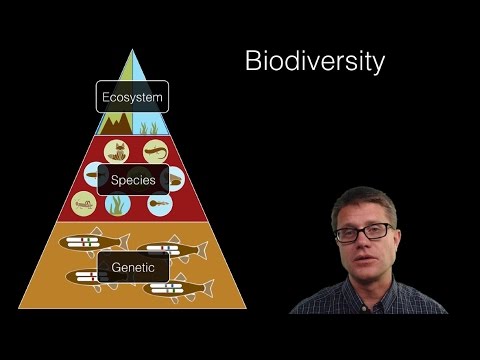
- Biodiversity is defined as a measure of life's variety on Earth, including species diversity, genetic diversity, and ecosystem diversity.
- Speciation (the process of forming new species through evolution) increases biodiversity, while extinction decreases it.
Mechanisms of Speciation and Extinction
- Evolution by natural selection is identified as the primary mechanism driving speciation; all life shares a common ancestor.
- A cladogram illustrates relationships among species like dolphins and hippos, showing how speciation occurs over time.
The Process of Evolution
- Extinction is explained as a process where one species can become zero due to environmental changes or other factors.
- An example involving bacteria demonstrates natural selection's role in evolution; less resistant bacteria are eliminated by antibiotics.
Impact of Environmental Changes
- The separation of fish populations into different ponds serves as an analogy for speciation through adaptation over time.
- Historical context is provided regarding mass extinctions, with humans currently contributing to what scientists call the sixth mass extinction.
The Role of Ecosystem Services
Types of Ecosystem Services
- Ecosystem services are categorized into four main areas: supporting services (e.g., photosynthesis), provisioning services (e.g., food production), regulating services (e.g., climate regulation), and cultural significance.
- Supporting services include oxygen production, soil formation, nutrient recycling, and water filtration—all essential for human survival.
This structured summary captures key insights from Mr. Andersen's discussion on ecosystem diversity while providing timestamps for easy reference.
Ecosystem Services and Biodiversity
The Role of Ecosystems in Water Filtration
- Ecosystems naturally filter water, reducing the need for artificial filtration systems. If ecosystems are lost, the cost of water filtration will significantly increase.
- Decomposition processes contribute to carbon sequestration and climate regulation, showcasing essential ecosystem services.
- Ecosystems also hold cultural significance, providing historical, spiritual, educational, and recreational value to communities.
Economic Value of Biodiversity
- The monetary value of ecotourism linked to biodiversity is substantial; protecting diversity is not only ethical but economically sensible.
- Emphasizing the financial benefits reinforces the argument for conservation efforts beyond moral obligations.
Understanding Biodiversity
- Biodiversity encompasses a variety of life forms measured through species diversity, genetic variation, and ecosystem diversity. Speciation increases species numbers while extinctions decrease them.
- Ecosystems provide vital services that support human life through provisioning resources such as food and clean water.