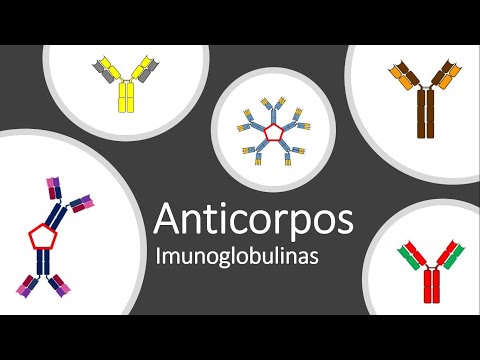
Anticorpo / Imunoglobulina
New Section
In this section, the speaker introduces the topic of monoclonal antibodies and discusses the confusion between the terms "monoglobulina" and "anticorps."
Monoclonal Antibodies vs. Anticorps
- Monoglobulina and anticorp are used interchangeably, referring to the same concept.
- Anticorps have gained attention due to discussions around COVID-19, causing confusion among people regarding their nature.
Understanding Antibodies as Proteins
This part delves into the nature of antibodies as proteins produced within cells based on genetic information.
Antibodies as Proteins
- Antibodies, or immunoglobulins, are protein molecules constructed inside specific cells using genetic information contained in genes.
- The process involves DNA segments encoding genes responsible for messenger RNA synthesis, leading to protein assembly by ribosomes using amino acids.
Role of Immunoglobulins in Circulation
Here, the focus is on immunoglobulins circulating in the bloodstream and their production in response to antigens.
Circulation and Production of Immunoglobulins
- Immunoglobulins circulate mainly in the blood and other bodily fluids as proteins responding to exposure to foreign antigens.
Introduction to Antibodies and Cells Producing Immunoglobulins
In this section, the speaker introduces the concept of antibodies and discusses the cells responsible for producing immunoglobulins.
Antibodies: Proteins in Circulation
- Antibodies are proteins found in circulation, primarily in the bloodstream.
- These proteins are produced when exposed to foreign antigens, leading to autoantibodies if directed against self-tissues.
- Autoantibodies can result in autoimmune diseases.
Cells Producing Immunoglobulins
- The genetic information for antibody production is encoded in DNA.
- B cells, also known as lymphocytes B, produce immunoglobulins.
- B cells synthesize immunoglobulins in the bone marrow but do not immediately secrete them.
Production and Differentiation of B Cells
This section delves into how B cells produce and differentiate to become plasma cells that secrete antibodies.
Production of Immunoglobulins by B Cells
- B cells express immunoglobulin chains during their formation in the bone marrow.
- Antigens stimulate B cells to differentiate into plasma cells that secrete large quantities of antibodies.
Activation and Differentiation Process
- Upon encountering antigens, B cells differentiate into plasma cells that produce and secrete antibodies.
- Plasma cells play a crucial role in opsonization by binding to microorganisms.
Expression of Immunoglobulins During B Cell Maturation
This part focuses on the expression of immunoglobulins during the maturation process of B cells within the bone marrow.
Maturation Process in Bone Marrow
- The bone marrow serves as a site for generating various white blood cell types, including B cells from stem cells.
- Detailed steps of differentiation from stem cell to mature B cell are discussed here.
Expression Patterns and Types of Immunoglobulins
- The transcript explores how different stages impact immunoglobulin expression patterns.
Understanding Immunoglobulins and B Cell Maturation
In this section, the speaker delves into the differentiation process of B lymphocytes in the bone marrow, highlighting the production of immunoglobulins and the stages of maturation.
Differentiation Process of B Lymphocytes
- The initial stage involves the production of IgM by B cells during their maturation process.
- The journey begins in the bone marrow with a hematopoietic stem cell that has pluripotent capabilities.
- Cells undergo differentiation processes as they mature, transitioning into various types without using the term "transformation."
- Transformation is reserved for abnormal cell changes like cancer, emphasizing correct terminology in health sciences.
- Normal cellular differentiation is crucial, distinguishing it from transformation processes like cancer development.
Maturation Stages of B Lymphocytes
- Hematopoietic stem cells differentiate into various white blood cells, including lymphoid and myeloid progenitors.
- Initial differentiation leads to lymphoid progenitors giving rise to different types of lymphocytes such as B cells.
- The lymphoid progenitor further matures into B cells producing various subtypes like B lymphocytes T cells, innate lymphoid cells, natural killer cells, and mucosal-associated invariant T (MAIT) cells.
Production of Immunoglobulins in B Cell Maturation
This segment explores the sequential steps involved in B cell maturation concerning immunoglobulin synthesis and expression on cell membranes.
Sequential Steps in Immunoglobulin Production
- Following differentiation into pre-B cells, there is an initiation of heavy chain immunoglobulin synthesis within these precursor cells.
- Pre-B cells express IgM chains as they progress towards becoming mature B cells capable of antibody production.
- Greek alphabet letters designate different immunoglobulin chains (e.g., M for IgM), aiding in classification but not significantly impacting function.
Expression of Immunoglobulins on Cell Membranes
- As maturation continues, mature B cells express both IgM and IgD on their plasma membranes to serve as receptors for antigen recognition.
Understanding B Cells and Immunoglobulins
In this section, the speaker delves into the maturation process of B cells and the production of immunoglobulins in response to encountering antigens.
Maturation of B Cells
- A mature B cell is referred to as "naive" until it encounters its specific antigen, at which point it becomes activated.
- Upon activation by an antigen, a B cell undergoes isotype switching, changing from producing IgM and IgD to other types like IgG, IgE, or IgA.
- The class-switching of immunoglobulins occurs as the B cell matures, initially producing IgM followed by IgD before switching to other classes post-activation.
Differentiation into Plasma Cells
- Following activation and differentiation into plasma cells, there is a significant increase in immunoglobulin production for secretion.
- Plasma cells exhibit high levels of immunoglobulins on their surface but reduce surface antibody expression after differentiation due to increased secretion demands.
Forms of Immunoglobulins: Membrane-Bound vs. Secreted
This section explores the two forms of immunoglobulins - membrane-bound and secreted - detailing their roles and mechanisms.
Membrane-Bound Immunoglobulins
- Immunoglobulins can exist in two configurations: membrane-bound (B-cell receptors - bcrs) attached to the plasma membrane for antigen recognition.
- When activated, B cells differentiate into plasma cells that secrete antibodies rather than retaining them on their surface.
Secreted Immunoglobulins
- Secreted immunoglobulins are produced post-differentiation and are no longer bound to the cell membrane but released for immune responses.
- The secretion process involves vesicle formation within the cell leading to external exposure of antibodies for effective immune function.
Synthesis and Release Mechanism of Immunoglobulins
This segment elucidates how immunoglobulins are synthesized within cells and subsequently released for immune responses.
Synthesis Process
- Antibody synthesis begins within the cell with subsequent processing through organelles like the endoplasmic reticulum (ER) and Golgi apparatus.
- Gycosylation occurs in the Golgi apparatus where vesicles containing antibodies fuse with the plasma membrane for external exposure.
Release Mechanism
- Upon fusion with the plasma membrane, antibodies transition from being bound within vesicles to being exposed externally for immune defense.
Antibody Structure and Function
In this section, the speaker discusses the structure of antibodies, focusing on their composition and functions.
Antibody Composition
- The antibody molecule has a hydrophobic region that anchors it to the vesicle membrane. If the vesicle fuses with the cell membrane, it becomes a membrane-bound BCR. Otherwise, the antibody is secreted into the vesicle.
- Antibodies consist of two types of chains: light chains and heavy chains. Each antibody has two light chains and two heavy chains regardless of its type.
Antibody Structure
- The antibody structure includes variable regions (yellow) responsible for antigen recognition and constant regions (blue) involved in pathogen removal.
- The fragment AB or FAB binds to antigens, while the Fc region plays a role in protein crystallization studies due to its crystallizable nature.
Antigen Recognition by Antibodies
This section delves into how antibodies recognize antigens through their variable regions.
Variable Regions in Antibodies
- The variability in antibody recognition lies in the variable regions that bind to specific epitopes on microorganisms like viruses or bacteria.
- Each B cell possesses unique variable regions, leading to a vast array of possible B cells with different antigen-binding capabilities.
Antigen Recognition Process
- When an antigen such as a virus enters the body, specific B cells with matching variable regions bind to it, initiating an immune response by producing antibodies against that particular antigen.
Immunoglobulin Structure and Function
In this section, the structure of immunoglobulins is discussed, focusing on the different regions and functions within these molecules.
Immunoglobulin Structure
- Immunoglobulins consist of two heavy chains and have variable and constant regions.
- The Fc region of immunoglobulins aids in antigen removal through opsonization.
- The immune response involves both innate and adaptive components, with antibodies playing a crucial role.
- Opsonization occurs when antibodies bind to antigens, facilitating phagocytosis by macrophages.
- Antibodies have variable regions that bind specifically to antigens, while macrophages possess Fc receptors for recognizing opsonized particles.
Macrophage Function in Phagocytosis
This section delves into the role of macrophages in phagocytosis and their interaction with opsonized microorganisms.
Macrophage Receptors
- Macrophages express Fc receptors to recognize opsonized particles for phagocytosis.
- Macrophages possess pattern recognition receptors for identifying pathogen-associated molecular patterns (PAMPs).
- Despite having various receptors for pathogen recognition, opsonization enhances macrophage phagocytic activity significantly.
- Opsonization increases macrophage efficiency in phagocytosing microorganisms up to 1000 times more than non-opsonized pathogens.
Rodney Porter's Discoveries on Antibody Structure
Rodney Porter's groundbreaking work on antibody structure elucidated key insights into antibody function and antigen binding.
Rodney Porter's Discoveries
- Rodney Porter determined the chemical structure of antibodies through enzymatic cleavage experiments using papain and pepsin.
- Enzymatic cleavage revealed distinct regions responsible for antigen binding (Fab region) and antigen removal (Fc region).
Immunological Response Specificity
In this section, the speaker discusses the specificity of the immune response, focusing on how antibodies bind to specific epitopes on antigens.
Antibody-Antigen Specificity
- Antibodies are highly specific and only bind to particular epitopes on antigens.
- Each antibody will only bind to a specific epitope and not others, showcasing high specificity in immune responses.
- Immunodominant epitopes are those most prevalent in an antigen and elicit responses from B cells.
Cell Proliferation in Immune Response
This part delves into the process of cell proliferation following antigen recognition by B cells during an immune response.
Cell Activation and Proliferation
- Upon recognizing an antigen, activated B cells undergo proliferation, generating identical clones.
- The activated B cell expands its clone by proliferating in response to different immunodominant epitopes.
- This clonal expansion results in a polyclonal response with multiple B cell clones targeting various epitopes.
Specificity of Variable Regions
The discussion centers around the specificity of variable regions in antibody binding during an immune response.
Antibody Binding Specificity
- The high specificity of variable regions ensures precise binding between antibodies and antigens.
Detailed Analysis of Antibodies Structure
In this section, the speaker delves into the details of antibody structure, focusing on the variable region and complementary determining regions (CDRs).
Antibody Variable Region and CDRs
- The variable region of antibodies contains small subregions depicted as pink rectangles.
- These pink regions are known as complementary determining regions (CDRs) or hypervariable segments.
- Antibodies have three CDRs: CDR1, CDR2, and CDR3 within the variable region.
- The CDRs play a crucial role in binding to antigens specifically due to their size of 9 to 12 amino acids.
Understanding Different Types of Antibodies
This part focuses on elucidating the various types of antibodies and their differences.
Types of Antibodies
- Different antibodies are referred to as isotypes or allotypes, with variations such as GM, GD, GG, GE, and GA.
- The colored sections represent constant regions while gray areas indicate non-discussed parts.
- The determination of an antibody's isotype depends on the constant region of the heavy chain.
Comparing Immunoglobulin Isotypes
This segment compares two immunoglobulin isotypes to highlight structural differences.
Comparison Between EGM and EGD
- Comparing EGM with EGD reveals that EGM has an additional constant domain in each heavy chain compared to EGD.
New Section
In this section, the speaker discusses the differences between immunoglobulin isotypes, focusing on the comparison between IgD and IgM.
Differences Between IgD and IgM
- In IgD, there are 6 sugar molecules, while in IgM, there are 10 sugar molecules.
- IgD has a sulfuric tip connecting heavy chains, which is absent in IgM.
- Comparing two immunoglobulins reveals differences in the number of constant domains and sugar molecules.
- The presence of sulfuric tips differs between IgD (1 tip) and IgM (2 tips).
- Variations in constant regions of heavy chains lead to different subtypes within immunoglobulins.
Another Characteristic of Antibodies
This part delves into antibody structures and characteristics related to monomers and oligomers.
Antibody Structures
- Antibodies can exist as monomers or oligomers based on their linkage with other units.
- Monomeric antibodies are individual units, while oligomeric antibodies are linked by J chains.
- Examples include IgA as a dimer linked by a J chain and pentameric forms like secretory IgM.
Functions of Immunoglobulins
Exploring the roles of specific immunoglobulins such as IgG and IgA in immune responses.
Immunoglobulin Functions
- IgG plays a crucial role in opsonization around microorganisms and activates the complement system via classical pathway.
- Additionally, it contributes to neonatal immunity through maternal transfer across placenta during breastfeeding.
- ADCC (Antibody-dependent cell-mediated cytotoxicity) involves cellular toxicity mediated by antibodies like TH2 cells against parasites.
Immunoglobulin GAA Functionality
Discussing the functions of Immunoglobulin GAA specifically related to mucosal immunity.
GAA Functionality
- GAA is involved in mucosal immunity protection against intestinal pathogens like tapeworm infections.
New Section
In this section, the speaker discusses the role of GAA in immediate hypersensitivities and allergies, highlighting how high levels of GAA can indicate allergic reactions.
The Role of GAA in Allergies
- : GAA plays a crucial role in immediate hypersensitivities and allergies.
- : High levels of GAA in the bloodstream are often associated with individuals who are highly allergic.
- : GD functions as a B cell receptor in the IVE, particularly in virgin B cells.
- : EGM and EGD act as B cell receptors in the IVE, facilitating binding to microorganisms and complement activation.
- : Both EGG and EGM activate the complement system, influencing immune responses.
New Section
This part delves into the differentiation process of B cells regarding immunoglobulin production based on encounters with antigens.
Differentiation Process of B Cells
- : Question posed: Do all B cells produce any immunoglobulin isotype?
- : Matured B cells leaving the bone marrow already express EGD and EGM on their membranes.
- : Upon encountering specific antigens, activated B cells differentiate and interact with T cells to alter their antibody production.
- : Interaction with T cells prompts B cells to switch to producing different classes of antibodies like EGGJ instead of EGD or EGM.
New Section
This segment explores how interactions between T cells and B cells influence antibody class switching through cytokine signaling.
Antibody Class Switching Mechanism
- : Encounter between a matured B cell and a T cell leads to cytokine signaling for producing different antibody classes.
- : CD40L on T cells interacts with CD40 on B cells to facilitate class switching via cytokines.
- : Cytokines from T cells induce class switching in B cells from producing EGM/GD to other classes like EGG during infections.
New Section
This section focuses on cellular communication mechanisms during viral infections, emphasizing how cytokines guide antibody production shifts.
Cellular Communication During Infections
- : Viral infections trigger the need for specific antibodies like GG produced by activated B cells under T cell guidance.
- : Communication between T and B cells occurs through cytokines like interferon-gamma for directing antibody class changes.
Diversity, Specificity, and Affinity in Immune Response
In this section, the speaker discusses the importance of diversity, specificity, and affinity in the immune response process.
Diversity of Antigens and Antibodies
- The immune system exhibits a vast diversity to combat various antigens encountered from the environment.
- Cells responsible for producing specific antibodies undergo random gene recombination to create a wide range of antibodies.
- This diversity allows the body to potentially produce antibodies against any antigen on Earth.
Specificity in Antibody-Antigen Binding
- Antibodies exhibit high specificity by binding only to their corresponding antigens.
- Specific binding prevents reactions with self-tissues, avoiding unnecessary immune responses.
Affinity Maturation Process
- Affinity maturation enhances antibody quality over time through somatic mutation in variable region genes.
- Initially produced antibodies may have low affinity but mature into high-affinity antibodies through somatic mutation.
Response Phases in Immune System
This section covers the phases involved in the immune response process.
Recognition and Activation by B Cells
- B cells recognize specific epitopes on microorganisms, leading to activation and proliferation.
- Some activated B cell clones differentiate into short-lived plasma cells before encountering T cells for further maturation.
Early Detection Through Antibody Testing
Antibodies and Immune Response Mechanisms
In this section, the speaker discusses the process of antibody production and the immune response mechanisms in the context of encountering pathogens like viruses.
Cell B's Response to Pathogen Encounter
- Cell B faces a delay in obtaining TDGG, prompting it to proactively differentiate into short-lived plasma cells.
Importance of Early Antibody Production
- Cell B prioritizes early differentiation into plasma cells to produce low-affinity antibodies quickly rather than waiting for high-affinity antibodies.
Immunological Response Continuation
- Cell B interacts with T cells upon encountering a virus, leading to the release of interferon-gamma by T cells.
Differentiation into Long-Lived Plasma Cells
- Upon receiving interferon-gamma, Cell B switches from producing IgD/IgM to IgG, becoming a long-lived plasma cell that migrates to the bone marrow for prolonged IgG production.
Conclusion and Well Wishes
The speaker concludes by summarizing the immune response process discussed and extends well wishes to the audience.
Conclusion of Immune Response Discussion
- The lecture wraps up with an overview of antibody production processes and their significance in combating infections effectively.
Final Remarks and Good Wishes
- The speaker expresses hope that the lesson was informative and beneficial for viewers' knowledge. They extend greetings and encourage continued learning.
Turn any video into a summary like this
YouTube links, meetings, lectures — with transcripts, search, and chat.