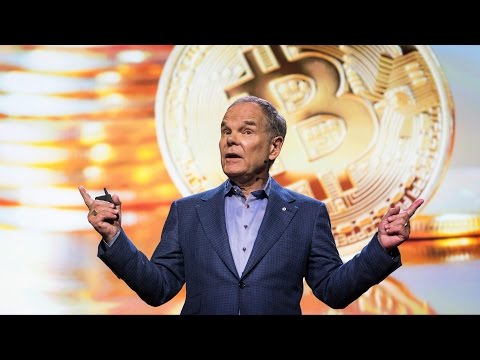
How the blockchain is changing money and business | Don Tapscott
The Impact of Blockchain Technology
Introduction to Blockchain
- The speaker introduces blockchain as the technology likely to have the greatest impact in the coming decades, surpassing social media, big data, robotics, and AI.
- Emphasizes that blockchain represents a new generation of the internet with vast potential for businesses and individuals.
The Internet of Information vs. Internet of Value
- Discusses the limitations of sending copies of assets (e.g., money, stocks), highlighting the "double-spend" problem where one can still possess an asset after sending it.
- Describes reliance on intermediaries (banks, governments) to establish trust in transactions and commerce.
Problems with Current Intermediaries
- Points out issues with centralized systems: vulnerability to hacking, exclusion from financial systems for billions without bank accounts.
- Notes inefficiencies in transaction speeds and high fees charged by intermediaries for services.
Vision for a New System
- Proposes an "internet of value," a global distributed ledger accessible to everyone that allows various assets to be managed without intermediaries.
Emergence of Bitcoin and Blockchain
- References Satoshi Nakamoto's creation of Bitcoin during the 2008 financial crisis as a pivotal moment leading to blockchain technology.
- Clarifies that while Bitcoin is an asset subject to market fluctuations, its underlying technology—blockchain—is what holds transformative potential.
Understanding How Blockchain Works
Trust Protocol
- Introduces blockchain as enabling peer-to-peer transactions without third-party trust through collaboration and cryptography.
Mechanics of Blockchain Transactions
- Explains how digital assets are stored across a global ledger rather than centrally located; transactions are posted globally using advanced cryptography.
Role of Miners in Blockchain
- Describes miners' role in validating transactions every 10 minutes by solving complex problems; they compete for rewards in digital currency like Bitcoin.
Security Features
- Highlights security measures: each block is linked chronologically with timestamps making it extremely difficult to alter past transactions due to encryption across millions of computers.
Exploring Other Blockchains
Ethereum and Smart Contracts
The Future of Financial Services and Wealth Distribution
The Role of Blockchain in Financial Services
- The Ethereum blockchain is being utilized for various projects, including a potential replacement for the stock market and a new model of democracy that holds politicians accountable to citizens.
- The financial services industry is likened to a Rube Goldberg machine, highlighting its complexity where simple transactions involve multiple outdated systems leading to delays in settlements.
- With blockchain technology, payment and settlement can occur simultaneously as changes are made directly on the ledger, prompting upheaval within traditional financial institutions.
Addressing Economic Inequality
- The first internet era increased wealth but did not address social inequality, which has led to global unrest. New approaches are needed to tackle this issue beyond mere wealth redistribution.
- Proposes "pre-distributing" wealth by democratizing wealth creation and ensuring fair compensation for more individuals engaged in the economy.
Land Ownership and Economic Mobility
- A significant portion of landowners globally lack secure titles, hindering their ability to borrow or plan financially. This issue is critical for economic mobility according to economist Hernando de Soto.
- Companies are collaborating with governments to place land titles on blockchains, creating immutable records that could enhance prosperity for billions.
Disruption of the Sharing Economy
- Current sharing economy platforms like Uber and Airbnb do not genuinely share wealth; they aggregate services for profit. A decentralized alternative could empower users directly through blockchain applications.
- An example proposed is a distributed application called B-Airbnb that would allow room owners to manage rentals without intermediaries while maintaining reputation systems via blockchain.
Enhancing Remittances Through Blockchain
- Remittances represent the largest flow of funds from developed countries to developing ones, often costing senders high fees and taking days for delivery.
- A case study illustrates how Analie Domingo used a blockchain app called Abra to send money directly at lower costs (2%) compared to traditional methods (10%), significantly improving efficiency.
Data as an Asset Class
- In the digital age, data has emerged as a powerful asset class surpassing traditional assets like land or money. Individuals generate vast amounts of data daily without ownership rights over it.
The Future of Personal Data Ownership
The Concept of a Personal Virtual Identity
- A personal virtual identity acts as a "black box" that travels with individuals, sharing only essential information for transactions.
- This system allows users to maintain privacy while monetizing their data, emphasizing the importance of privacy in a free society.
Control Over Digital Identity
- There is a need to regain control over our digital identities and manage them responsibly.
- Many content creators are not fairly compensated due to flaws in the current intellectual property system, particularly highlighted in the music industry.
The Music Industry's Compensation Crisis
- Songwriters today earn significantly less from streaming compared to 25 years ago; for example, earning only $36 from a million streams instead of $45,000.
Innovative Solutions: Blockchain in Music
- Imogen Heap has introduced "Mycelia," a blockchain ecosystem for music that includes smart contracts protecting artists' intellectual property rights.
- This platform allows artists to receive direct compensation for their work without relying on intermediaries, enabling them to control their own revenue streams.
Broader Implications for Content Creators
- The benefits of blockchain extend beyond musicians; it can empower all types of content creators—artists, inventors, journalists—by ensuring fair compensation.
Turn any video into a summary like this
YouTube links, meetings, lectures. With transcripts, search, and chat.