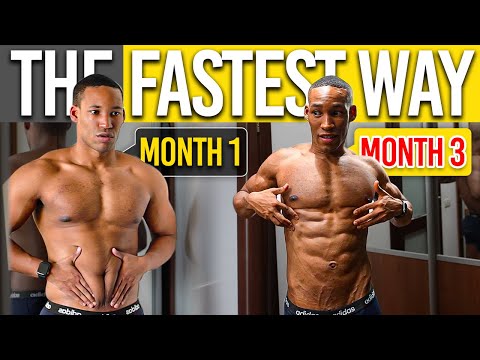
The FASTEST way to go from 30% to 10% BODY FAT
How to go from 30% body fat to 10% in 5 simple steps
In this video, Dr. Michael Diamonds explains how he went from 30% body fat to 10% and how you can do it too. He outlines five simple steps that require attention to detail and discipline.
Step One: Create a Caloric Deficit
- To go from 30% body fat to 10%, you need to be in a caloric deficit.
- A good starting point is a 500 calorie per day deficit if you're very overweight, or a smaller target of 200-300 calories if you're close to getting abs.
- There are three main ways to create a caloric deficit: reduce your caloric intake (diet), increase your caloric output (exercise), or do both.
- Find the ratio that suits your lifestyle and maintain the deficit consistently.
Step Two: Implement Water Intake
- Drinking more water helps accelerate the process of losing fat tissue.
- Aim for at least half your body weight in ounces of water per day.
Step Three: Incorporate Strength Training
- Strength training helps build muscle mass, which increases metabolism and burns more calories at rest.
- Focus on compound exercises like squats, deadlifts, bench press, and pull-ups.
Step Four: Add Cardiovascular Exercise
- Cardiovascular exercise helps burn additional calories and improve heart health.
- High-intensity interval training (HIIT) is an effective way to incorporate cardio into your routine.
Step Five: Track Your Progress
- Keep track of your progress by taking measurements, photos, and tracking your weight.
- Adjust your caloric intake and exercise routine as needed to continue making progress.
Conclusion
Dr. Michael Diamonds outlines five simple steps to go from 30% body fat to 10%. These steps require attention to detail and discipline but can be achieved with consistency and dedication.
Overall, the key takeaways are:
- Create a caloric deficit through diet, exercise, or both.
- Drink plenty of water.
- Incorporate strength training and cardiovascular exercise into your routine.
- Track your progress consistently.
Exercise Intensity and Fat Loss
This section discusses how exercise intensity affects the body's reliance on muscle glycogen versus fat stores for energy, and how this impacts fat loss.
Exercise Intensity and Fuel Sources
- As exercise intensity increases, the body relies more heavily on muscle glycogen for energy over fat stores.
- Low-intensity activities like walking primarily use fat stores for energy, while high-intensity sprints rely heavily on glycogen sources.
- Both moderate and high-intensity interval training can be effective for fat loss, but it depends on personal preference.
Cardio Protocol
- The speaker shares his cardio protocol from weeks 1 to 13, which involved gradually increasing the duration and frequency of low-intensity cardio sessions.
- Walking is an effective way to burn calories and lose fat. The speaker achieved his step goals by waking up early, walking to the gym, and taking short walks between sets.
- Burning an extra pound of fat per week can be achieved by walking 10,000 steps per day.
Intermittent Fasting
This section explains what intermittent fasting is and how it can aid in weight loss.
What is Intermittent Fasting?
- Intermittent fasting is a style of eating that focuses on when you eat rather than what you eat.
- The goal is to spend more time in a post-absorptive low insulin state than a postprandial high insulin state.
- With traditional diets, you eat food every few hours throughout the day. With intermittent fasting, you eat food intermittently within a set window of time.
Personal Experience with Intermittent Fasting
- The speaker followed the 16:8 method of intermittent fasting (fasting for 16 hours and eating within an 8-hour window).
- He found that intermittent fasting helped him stay focused during the day and provided mental clarity.
- During his fast, he drank black coffee, which has been shown to have a fat-burning effect.
- The speaker ate anything that fit within his diet and macros during his eating window, which made it more enjoyable and consistent for him.
How to Improve Energy Levels and See Your Abs
In this section, the speaker discusses how to improve energy levels and see your abs.
High-Intensity Interval Training (HIIT)
- HIIT is a form of interval training that alternates short periods of intense anaerobic exercise with less intense recovery periods.
- Multiple studies have shown that HIIT can be more beneficial for weight loss than moderate-intensity exercise.
- The speaker recommends sprinting for 30 seconds and then walking for a minute and 30 seconds, repeating for a total of 30 minutes. However, this strategy should only be implemented after the body has adapted, and it may not be suitable for those who are too heavy or have knee problems.
Supplements
- Protein supplements like whey protein can help increase satiety, burn more calories during digestion, and build muscle.
- Caffeine supplements like black coffee or pre-workout supplements containing caffeine can speed up fat loss without causing jitters.
Detailed Video on Nutrition
- The speaker offers to make a detailed video on his nutrition plan week by week if enough viewers request it in the comments.
Conclusion
In this section, the speaker concludes the video.
The speaker encourages viewers to utilize a combination of all the tips he provided or just a few of them to achieve their weight loss goals. He also invites viewers to subscribe to his channel if they want him to help them with their transformation.
Turn any video into a summary like this
YouTube links, meetings, lectures — with transcripts, search, and chat.