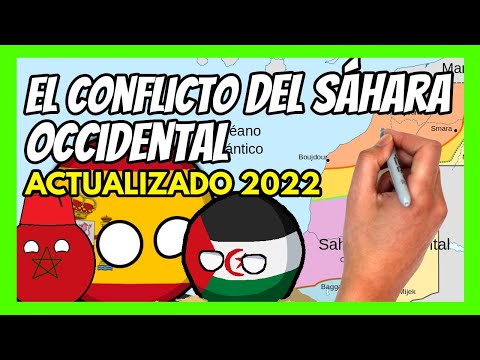
🔥 La CRISIS del SÁHARA OCCIDENTAL en 8 minutos 🔥 | ¿Qué está pasando en el SÁHARA OCCIDENTAL?
Sahara Occidental: A Complex Historical Overview
Introduction to Sahara Occidental
- Sahara Occidental is described as a politically and socially complex region with a unique diplomatic status, historically coveted by Morocco.
- The narrative begins over 500 years ago in 1476 when a Spanish fort was established, marking the start of European interest in the area.
Colonial History and Claims
- In 1885, during the colonial race, Spain claimed Sahara Occidental but only fully occupied it by 1934.
- Post World War II, the UN encouraged decolonization; however, Spain resisted independence movements despite growing nationalist sentiments among Sahrawis.
Emergence of Nationalism
- By the late 1960s, Sahrawi nationalism surged with the formation of groups advocating for independence from Moroccan claims.
- The Franco regime recognized Sahara Occidental as an integral part of Spain rather than merely a colony, granting citizenship to Sahrawis.
Rise of Front Polisario
- Despite initial recognition, tensions escalated leading to uprisings and ultimately the establishment of Front Polisario in 1973 aimed at self-determination for Sahrawis.
- The UN approved a referendum for self-determination in 1970; however, Spain delayed its execution until 1975 amidst geopolitical pressures.
Geopolitical Dynamics and Invasion
- The oil crisis heightened Western interest in Sahara's resources (fishing grounds and minerals), making it strategically valuable.
- Morocco opposed the planned referendum due to internal crises and launched "La Marcha Verde" in 1975 with US support against UN resolutions.
Aftermath of Spanish Withdrawal
- Following Franco's decline and political turmoil in Spain, an agreement was reached allowing Morocco and Mauritania to occupy most of Sahara Occidental.
- Mauritania later withdrew from its claims leaving Morocco largely unchallenged over resource-rich areas while abandoning Sahrawi citizens who were previously considered Spanish nationals.
Conclusion on Current Status
The Sahrawi Arab Democratic Republic and the Western Sahara Conflict
Overview of the Conflict
- The Sahrawi Arab Democratic Republic (SADR) is facing territorial encroachment by Morocco, which has gradually taken over land from the Polisario Front, an organization advocating for self-determination in Western Sahara.
- The United Nations does not recognize Moroccan sovereignty over this territory; instead, it views Western Sahara as a non-self-governing territory pending decolonization, with Spain still considered the administrative authority despite its absence.
Current Situation in Western Sahara
- Morocco has been populating the region with Moroccan citizens while suppressing Sahrawi uprisings violently, including bombings using napalm and white phosphorus.
- A ceasefire was established in 1991 under UN supervision to protect human rights and facilitate a long-promised referendum on self-determination, which Morocco continues to delay.
Recent Developments
- As of November 2020, renewed clashes erupted between the Polisario Front and Moroccan forces after civilians blocked a key road demanding the referendum's implementation.
- Algeria remains one of the few supporters of the Sahrawis. While some African nations recognize SADR, practical support is limited due to Morocco's membership in regional organizations.
International Dynamics
- Various countries have differing stances: Russia shows sympathy towards Sahrawis; however, both Israel and the European Union back Morocco’s claims. The U.S. aligns with France and Germany on recognizing Moroccan sovereignty over Western Sahara.
Spain's Shift in Position
- In March 2022, Spain altered its stance from supporting a referendum to endorsing Moroccan integration of Western Sahara with autonomy provisions.
- This shift appears linked to broader geopolitical negotiations involving energy needs amid tensions between Russia and Ukraine.
Implications of Spain's New Stance
- Spain’s recognition of Moroccan sovereignty may lead to improved relations between Algeria and Morocco while addressing energy supply issues for Europe.
- In exchange for Spanish support, Morocco might agree to halt territorial claims affecting Spanish territories like Ceuta and Melilla while enhancing cooperation on migration control.
Future Prospects
- The new agreements could allow Algeria to reopen gas pipelines through Morocco to Spain amidst rising European demand for alternative energy sources.
Impact of Geopolitical Alliances on Energy Supply
Spain's Position and Challenges
- Spain faces opposition regarding its self-determination, with both Spain and Algeria showing reluctance to support the situation. This creates a complex geopolitical landscape.
European Union's Energy Strategy
- The EU finds an alternative to Russian gas through Algerian resources, which diminishes Russia's influence in North Africa, particularly over Algeria.
France's Mixed Reactions
- France is pleased with Spain supporting Morocco’s sovereignty over Western Sahara but is concerned about competition from Algerian gas affecting its nuclear energy sales to Europe.
Germany's Urgency for Algerian Gas
- Germany is actively seeking increased imports of Algerian gas, indicating a strong demand for alternative energy sources amidst shifting alliances.
Conclusion and Future Engagement