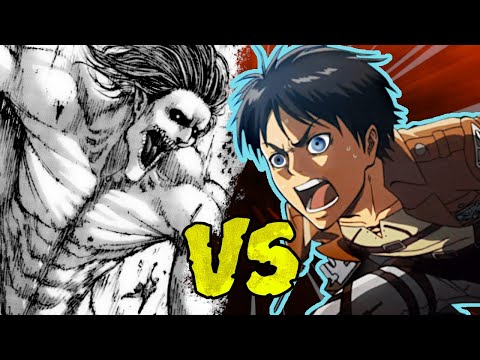
Attack on Titan Anime VS Manga - Part 1 | A Complete Comparison of the AoT's Manga and Anime
The Evolution of Attack on Titan: A Personal Journey
Introduction to Anime and Personal Experience
- The speaker reflects on their early exposure to anime in 2003, watching shows like Kirby Right Back at You and Sonic X.
- In 2015, the speaker's wife introduces them to Attack on Titan, leading to an obsession with the series after binge-watching it within two days.
Impact of Attack on Titan
- The speaker acknowledges the challenge of finding other high-quality anime after experiencing Attack on Titan, which sets a high standard.
- By December 2020, the speaker is deeply involved in creating content about anime, including a multi-part series comparing the manga and anime adaptations.
Art Quality in Attack on Titan Manga
- The initial chapters of the Attack on Titan manga are critiqued for poor artwork, lacking detail and having simplistic backgrounds.
- Despite some strengths in Isayama's illustrations, such as detailed titan depictions, there are moments where titans appear unfinished or awkwardly drawn.
Isayama's Perspective on Artwork
- Isayama himself has commented on his art quality being "poor" but believes that memorable art—whether good or bad—is better than forgettable art.
- Over time, Isayama’s artwork improves significantly throughout the series.
Panel Layout and Composition Analysis
- While panel layouts are not exceptional, they maintain clarity and flow; action scenes utilize sharp angular shapes for emphasis.
- The overall composition lacks organization at times but does not detract from understanding the story.
The Visual Mastery of Attack on Titan Anime
Aesthetic Appeal
- The anime adaptation is praised for its visual polish compared to many other shows; bright colors contrast with its dark themes effectively.
- Detailed backgrounds enhance world-building by providing depth and context within scenes.
Direction and Scene Composition
- Strong direction is noted even during calmer moments; an example highlights a conversation between Mikasa and Eren that feels grounded without excessive action lines or music.
Animation Quality
- Although some animation moments may falter (e.g., panning shots), these instances are rare. Overall, it remains visually impressive throughout.
Musical Score Significance
Music and Voice Acting in Attack on Titan
Musical Composition and Variety
- The soundtrack features dissonance, enhancing the emotional impact of scenes, with high-energy tracks complemented by more restrained piano pieces.
- Varied musical styles are utilized; rock songs punctuate key moments of character development, adding fun to the overall experience.
Voice Acting Quality
- The original Japanese voice acting is praised for its strength, contributing significantly to character depth; Isayama noted how it helped him understand Aaron better.
- The performances convey vulnerability, particularly in Aaron's portrayal, which adds layers to his character.
Adaptation Differences Between Anime and Manga
Faithfulness and Structural Changes
- The first season of Attack on Titan is a faithful adaptation of the manga, with some added content that emphasizes existing themes.
- A major difference lies in structure; while the anime follows a chronological order, the manga jumps around more frequently.
Character Development and Engagement
- In the anime, viewers connect with characters like Reiner and Annie through shared experiences before chaos ensues; this builds emotional investment.
- The anime allows for deeper exploration of characters' relationships during training periods, making their struggles against titans feel more personal.
Character Arcs and Emotional Impact
Aaron's Journey
- Aaron’s transformation from a reckless individual to a leader figure is highlighted through interactions with Mikasa and Armin.
- Key scenes establish dynamics between characters: Aaron's determination contrasts with Armin's strategic mindset while Mikasa prioritizes Aaron’s safety.
Consequences of Adaptation Choices
- The anime’s pacing allows for greater emotional weight when significant events occur; Aaron’s potential death feels impactful due to established character arcs.
Character Development and Narrative Structure in Attack on Titan
Aaron's Flawed Idealism
- The discussion highlights that despite Aaron's flaws, he embodies an ideal that significantly influences other characters, particularly during a pivotal scene with Armin and Mikasa.
- Armin's portrayal as the narrator suggests his strategic intelligence makes him suitable to convey events to the audience, hinting at a narrative shift towards his character.
- The anime follows a common storytelling pattern where a mentor figure dies, prompting growth in remaining characters who carry forward their ideals.
Reactions to Character Resurrections
- Initial disappointment over Aaron's return in Season 1 is contrasted with later appreciation for his role as a complex protagonist central to the story.
- The narrative choice of resurrecting characters is framed as acceptable within the context of the story, emphasizing its uniqueness rather than being a recurring trope.
Improvements Over Manga Adaptation
- The restructuring of events in the anime enhances emotional investment compared to the manga, making it more engaging for viewers.
- Acknowledgment of various differences between the anime and manga adaptation sets up further exploration of these changes.
Enhanced Foreshadowing Techniques
- The anime introduces additional foreshadowing elements not present in the manga, enriching viewer experience through visual cues before significant plot points.
- Specific examples include imagery preceding Aaron’s awakening that hints at future events like titan invasions and deaths among scouts.
Contextual World-Building Additions
- Added scenes provide early insights into world-building elements such as religious groups and societal structures that shape character motivations and plot development.
- Early introductions of key figures like Pastor Nick enhance cohesiveness within the story while establishing thematic depth regarding faith and survival.
Character Dynamics and Political Commentary
- Additional scenes illustrate character interactions (e.g., Erwin, Levi), providing context for their roles while enhancing narrative flow through earlier introductions.
- A chess scene involving royalty reveals their self-serving nature, setting up critical commentary on power dynamics within society.
Discussion on Military Police and Human Nature
Marlow's Frustration with the Military Police
- Marlow expresses his desire to reform the military police, aiming to transform those he perceives as lacking reason into "normal humans."
- Annie counters Marlow's view, arguing that upstanding individuals are not normal but rather special and rare. She believes that normal people are inherently worthless and evil.
The Corruption of the Military Police
- Marlow confronts corrupt military police members who are selling equipment for profit; they attempt to bribe him, leading to a physical altercation.
- Annie offers her assistance in punishing the corrupt but notes that even weak individuals swept along by circumstances should be considered human too.
Contrast Between Military Police and Survey Corps
- The anime emphasizes the normalization of corruption within the military police compared to the harrowing experiences faced by members of the survey corps.
- Irwin’s confrontation with military police highlights internal conflicts among soldiers, showcasing challenges beyond just battling titans.
Added Scenes Enhancing Emotional Depth
Aftermath of Battles
- Following a battle with a female titan, Levi mourns while other characters discuss how to inform families about fallen soldiers.
- A debate arises regarding whether or not to collect missing bodies; Levi maintains a pragmatic stance that "dead is dead."
Consequences of Selfishness
- Two soldiers attempt to recover their friend's body independently but face dire consequences when one dies and another narrowly escapes from a titan.
- Levi gives one soldier a patch from his own squad member instead of their friend’s, symbolizing sacrifice for emotional support amidst loss.
The Burden of Leadership
Emotional Toll on Leaders
- The act of giving away something sentimental illustrates Levi's struggle between maintaining authority and showing compassion towards his soldiers.
- Added scenes depict families waiting for returning soldiers, emphasizing the emotional weight leaders carry when facing death under their command.
Pacing and Character Development in Anime Adaptation
Episode Pacing Techniques
- Some alterations in scenes may serve to extend episode length while enhancing character dynamics through teamwork moments.
Analysis of Repeated Content in Anime
Critique of Recap Usage
- The speaker expresses frustration with the frequent repetition of content at the beginning of episodes, noting that it can take 3 to 5 minutes to transition into new material.
- While acknowledging that long-running anime often employ this technique, the speaker argues that its prevalence does not justify its annoyance, especially when trying to skip past repeated segments.
Characterization Changes in Aaron
- The discussion shifts to changes in Aaron's characterization within the anime, highlighting subtle tweaks that enhance his portrayal without being extreme.
- A small interaction between Aaron and his mother is noted as significant; it adds depth to their relationship before a pivotal moment in the story where she faces danger.
Emotional Weight and Internal Conflict
- The added dialogue enriches viewers' understanding of Aaron's emotional stakes regarding his mother's fate, emphasizing her importance as a driving force behind his actions against titans.
- Similar moments are mentioned for other characters like Armin, but the focus remains on how these interactions deepen audience engagement with Aaron’s motivations.
Doubts and Stakes in Action Scenes
- In contrast to the manga, anime Aaron exhibits more uncertainty about critical decisions (e.g., plugging a hole), which adds layers to his character development.
- Additional scenes illustrate characters expressing doubts about Aaron's abilities, making the stakes feel more personal and urgent through specific details shared by Rico.
Transformation Struggles and Humanity Themes
- The internal conflict surrounding Aaron’s transformation into a titan is explored; he struggles with self-doubt during crucial moments that heighten tension.
- Unlike in the manga where hesitation has less impact, here it leads to significant consequences requiring alternate plans due to his inability to transform immediately.
Exploration of Humanity vs. Monstrosity
- The anime emphasizes themes around sacrificing humanity for greater goals; this is illustrated through contrasting portrayals of Annie and Aaron during combat situations.
- A sense emerges that if Aaron had fully abandoned his ties and humanity earlier, outcomes could have been different—highlighting moral dilemmas faced by characters throughout their battles.
Adaptation Quality and Future Content
Overview of Adaptation Quality
- The adaptation maintains core ideas from the original manga, showcasing strong fidelity to the source material.
- The speaker expresses minimal complaints, noting only occasional lengthy recaps at the beginning of episodes as a minor issue.
- Overall satisfaction with season one is highlighted, setting a positive tone for discussions about future content.
Transition to Season Two
- The speaker indicates plans to discuss season two in an upcoming video due to time constraints in the current video.
- Acknowledges that the current video has exceeded 30 minutes, necessitating a break before moving on to new topics.
Sponsorship Segment
- Introduction of Skillshare as a sponsor, emphasizing its vast array of classes aimed at creative individuals.
- Personal interest in music production classes is shared, particularly after enjoying the soundtrack of "Attack on Titan."
Skillshare Insights
- Mention of Young Guru's class on music mixing; highlights practical tips for instrument placement within mixes as particularly useful.