39. ICSE. Militares en retirada
Introduction to the War of Malvinas and Its Effects
Overview of the Topic
- Professor Enrique García introduces the subject matter, focusing on the War of Malvinas and its implications for society and government in Argentina.
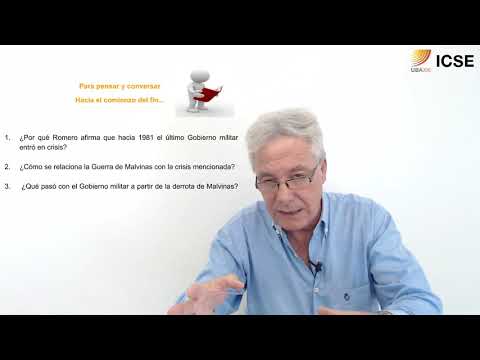
- The discussion aims to explore three critical questions regarding the military government's crisis leading up to 1981, the relationship between this crisis and the war, and the aftermath of their defeat.
Key Questions for Discussion
- Students are prompted to consider why Romero claims that by 1981, the last military government was in crisis.
- They are also asked how the War of Malvinas relates to this crisis and what happened to the military government following their defeat.
Crisis of Military Government
Factors Leading to Crisis
- By 1981, there was a significant deterioration within both society and military ranks; divisions existed among branches like the navy and army due to personal ambitions.
- Economic decline characterized by deindustrialization, rising unemployment, and falling real wages contributed heavily to societal unrest.
Role of Malvinas in Context
- The War of Malvinas emerged as an attempt by military leaders to regain legitimacy amidst growing discontent from labor movements prior to April 2, 1982.
- The conflict represented a strategy for internal consolidation during a time marked by economic hardship and social instability.
Consequences Following Defeat
Aftermath of Malvinas
- Post-defeat, efforts were made for a negotiated settlement with U.S. intervention; however, these were rejected by Argentine military leaders who sought sovereignty recognition from Britain that was never granted.
- European nations did not provide support due to concerns over human rights violations occurring under Argentina's regime at that time. Instead, they offered verbal support without military collaboration.
Political Ramifications
- The war led to increased diplomatic isolation for Argentina's armed forces while highlighting their retreat from power as political parties began demanding elections more forcefully post-war.
Restoration of Democracy in Argentina
The Role of Military and the National Pacification Decree
- The military's involvement in the restoration of democracy included a controversial decree known as the "National Pacification Decree," which acknowledged that Argentina had experienced a war, during which excesses were committed.
- This decree indicated that those responsible for these excesses had already been judged by the armed forces, while others remained subject to "divine justice."
- A significant aspect of this period was the introduction of the "Self-Amnesty Law," which protected military personnel from prosecution for crimes committed during the dictatorship.
Raúl Alfonsín's Election and Legislative Changes
- In 1983, as elections approached, Dr. Raúl Alfonsín pledged to repeal the Self-Amnesty Law upon taking office, marking a pivotal stance against impunity.
- The elections held on October 30, 1983, resulted in a surprising victory for Alfonsín and his Radical Civic Union party (Radicalismo), despite predictions favoring Peronism.
Historical Significance of Alfonsín's Presidency
- Dr. Raúl Alfonsín officially assumed presidency on December 10, 1983; this marked a historic moment as it was the first time Peronism faced defeat in an election.