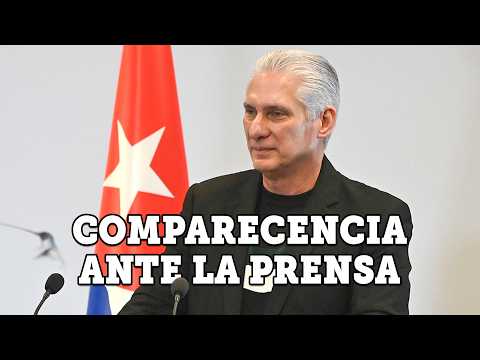
Comparecencia del Presidente Díaz-Canel ante medios de prensa
Opening Remarks and Context
Introduction by President Miguel Díaz-Canel
- President Miguel Díaz-Canel greets attendees, acknowledging the complexity of the current situation in Cuba and expressing gratitude for their interest in this meeting.
- He highlights public concerns stemming from recent events and intense media campaigns aimed at undermining the government.
- The meeting serves as an opportunity to discuss strategies for overcoming challenges and outlines the government's commitment to addressing these issues.
Government Priorities
- The president mentions a recent important meeting that necessitated prioritizing certain governmental actions.
- A specific focus was placed on updating plans to tackle acute fuel shortages, indicating a pressing issue within the country.
Questions on U.S.-Cuba Relations
Inquiry by Oliver Zamora
- Oliver Zamora from RT Russia Tud asks about the U.S. narrative of collapse regarding Cuba post-January 3rd events, seeking clarity on dependency between Cuba and Venezuela.
- He also inquires whether international solidarity towards Cuba could translate into practical support despite U.S. threats.
Response to Dependency Narrative
- President Díaz-Canel critiques the "collapse" theory as part of a broader U.S. strategy to characterize Cuba negatively, linking it to historical economic pressures since the 1960s.
- He emphasizes that while economic aggression has been persistent, it does not equate to a failed state but rather showcases Cuban resilience against significant external pressures.
Resilience Against Economic Pressures
Historical Context of Blockade
- The president reflects on how generations of Cubans have lived under economic blockade conditions, facing ongoing hardships yet demonstrating resilience.
- He argues that perceptions of collapse are rooted in imperialist ideology rather than reflecting Cuban reality or spirit.
Concept of Creative Resistance
- Emphasizing "creative resistance," he asserts that Cubans will overcome difficulties through collective effort and conviction in their ideals.
Relationship with Venezuela
Nature of Bilateral Relations
- Díaz-Canel clarifies that relations with Venezuela should not be viewed merely as dependent but rather as cooperative partnerships based on solidarity and integration principles.
Integration Between Cuba and Venezuela
Historical Context of Collaboration
- The collaboration between Cuba and Venezuela began over 25 years ago, focusing on leveraging each country's strengths for mutual benefit.
- The agreement encompasses various sectors including energy, food sovereignty, education, human resource development, industry, mining, telecommunications, cultural exchange, and political cooperation.
Expansion of Collaborative Efforts
- Four years after the initial agreement, ALBA TCP emerged to extend these collaborative concepts to other Latin American and Caribbean nations.
- ALBA TCP also supported Petrocaribe projects aimed at social justice and equity in energy distribution across the region.
Social Achievements Through Integration
- ALBA TCP is noted for achieving significant social successes in a short time frame compared to other regional integration blocs.
- A key initiative was "Misión Milagro," which restored vision to over 3.5 million Latin Americans through non-commercial healthcare approaches focused on social justice.
Educational Advancements
- Four countries achieved literacy milestones by declaring themselves free from illiteracy using Cuba's "Yo Sí Puedo" method.
- This achievement highlights the importance of complementary relationships based on humanitarian principles rather than selfish interests.
Economic Relations and Challenges
- Economic relations included significant projects where medical services were exchanged for fuel; however, recent sanctions have impacted this exchange.
- Venezuela's current situation has led to challenges in meeting Cuba's fuel needs due to external pressures affecting trade routes.
Future Prospects of Collaboration
- The future of Venezuelan-Cuban relations hinges on their ability to navigate current adversities while maintaining solidarity in collaboration efforts.
- Despite challenges such as U.S. sanctions impacting oil supplies, both nations remain committed to supporting each other’s sovereignty and collaborative initiatives.
International Support for Venezuela
- There has been notable international support for Venezuela from various global leaders and organizations since early February.
- Prominent figures include Russian officials and members of the European Parliament expressing solidarity with Venezuela amidst its struggles.
Support for Cuba and Global Political Dynamics
Overview of International Support for Cuba
- The Secretary General of the South African Government Party, ANC, discusses Mexico's support for Cuba during daily press briefings.
- Mention of various international figures including Dimitre Pescov from Russia and representatives from other nations expressing solidarity with Cuba.
- A declaration from non-aligned countries and a statement from UN Charter defense group members highlight global political alliances.
Recent Diplomatic Engagements
- Notable phone conversations occurred between Chinese President Xi Jinping and Russian President Putin, reaffirming their commitment to collaboration with Venezuela and Cuba.
- Emphasis on the hidden complexities behind public statements of support, indicating ongoing challenges faced by Cuba due to external pressures.
Challenges Faced by Cuba
- Discussion on the severe financial and energy blockades against Cuba, necessitating creative strategies to navigate these obstacles.
- Assurance that despite adversities, there are numerous entities willing to assist Cuba in overcoming these challenges.
Global Solidarity Actions
- Inquiry into what actions Southern countries can take to concretely support Cuba amidst increasing energy blockades.
- Reflection on lessons learned from Venezuela’s situation as a cautionary tale for global responses to U.S. policies towards Latin America.
Understanding the Nature of Current Conflicts
- Call for awareness among nations regarding the ideological war being waged globally, which includes political, cultural, and media components.
- Explanation of how this conflict aims to impose hegemonic thought patterns while undermining local cultures and identities.
Strategies for Resistance
- Urging unity among nations in the Global South against imperialistic pressures through collective action rather than mere rhetoric.
- Advocacy for economic cooperation and integration among like-minded countries as a means to defend multilateralism against unilateral actions by dominant powers.
This structured summary encapsulates key discussions surrounding international support for Cuba amid geopolitical tensions while providing timestamps for easy reference.
Grupo de los 77 y Movilización Antiegemónica
Context of Global Mobilization
- The discussion revolves around the Grupo de los 77, emphasizing its role in anti-hegemonic mobilization and antifascist articulation.
- The speaker draws a parallel between current aggressions against nations and historical actions of Hitler's hordes, highlighting the severity of international conflicts.
Challenges Faced
- There is an acknowledgment of extrajudicial actions taken against individuals and countries without legal justification.
- The speaker expresses confidence that pathways exist to address these challenges but stresses the need for courage from global south representatives.
Dialogue with the United States: Opportunities and Conditions
Willingness to Engage
- The speaker reiterates Cuba's openness to dialogue with the United States, seeking clarity on principles guiding such discussions.
Historical Context
- Acknowledges a long history marked by asymmetry due to economic sanctions imposed on Cuba by the U.S., which have intensified over time.
Potential Topics for Discussion
- Identifies various topics for potential dialogue including migration, security, drug trafficking, terrorism, environmental issues, scientific collaboration, and academic exchanges.
Principles for Dialogue
- Emphasizes that any dialogue must occur under conditions of equality and respect for sovereignty without preconditions or pressures.
Cuban Perspective on U.S. Relations
Mutual Respect and Cultural Recognition
- Highlights that Cubans do not harbor hatred towards Americans; instead, they recognize shared values in culture and history.
Impact of Political Policies
- Critiques U.S. policies as detrimental to both nations' peoples due to ongoing blockades that hinder cooperation across various sectors.
National Defense Preparedness
Public Sentiment on Defense Readiness
- Addresses public concerns regarding national defense preparations amidst external threats while noting active participation from citizens in this process.
Military Doctrine Overview
- Describes Cuba’s military doctrine as one focused on national sovereignty rather than aggression towards other nations; asserts Cuba is not a threat to the U.S.
Defending the Revolution: A Response to U.S. Aggression
The Context of U.S. Aggression
- The current rhetoric surrounding aggression towards Cuba is primarily driven by the United States government, as noted in the discussion about defending the revolution.
- It is emphasized that a revolution must be defended and strengthened to survive, referencing Fidel and Raúl's explanations on this matter.
Preparation for Defense
- In light of recent events, particularly those occurring on January 3rd in Venezuela, there is a sovereign duty to prepare for potential aggression against Cuba. This includes analyzing threats in Latin America and the Caribbean.
- A comprehensive plan has been established for national defense preparation involving all levels of territorial defense systems across Cuba, from local municipalities to national councils.
National Defense Activities
- Recent activities by the National Defense Council have included updating plans to counteract potential aggressions based on lessons learned from past international conflicts. This reflects an ongoing commitment to readiness.
- The council has also prepared a plan for transitioning to a state of war if necessary, which was publicly announced as part of their strategic preparations rather than being hidden from view.
Public Participation and Transparency
- There is active participation from the Cuban populace in defense preparations, including military exercises and educational initiatives aimed at enhancing national readiness against aggression. Visits to military units have been made to foster engagement with students involved in these efforts.
Addressing Media Questions
- During a media session, questions arose regarding accusations that Cuba sponsors international terrorism and whether foreign military forces are present on Cuban soil or if discussions are underway for establishing intelligence bases in Cuba. These topics reflect ongoing tensions between narratives presented by different governments regarding security issues related to Cuba.
- Historical context was provided about U.S.-led terrorist actions against Cuba since the revolution began, highlighting over 600 assassination attempts against key figures like Fidel Castro as evidence of long-standing hostilities faced by the nation. This history underscores the need for vigilance and preparedness within Cuba's defense strategy.
Terrorism Accusations Against Cuba
Historical Context of Terrorism and U.S. Involvement
- The speaker emphasizes that various acts of terrorism have been organized, financed, and supported by successive U.S. governments, highlighting a pattern of external aggression against Cuba.
- A notable incident mentioned is the bombing of a Cuban airliner over Barbados in which 73 people died, underscoring the emotional impact on victims' families and the Cuban community.
Current Threats and U.S. Manipulation
- The speaker claims there are ongoing plans for terrorist actions against Cuba being prepared in the United States, asserting that they will provide evidence when appropriate.
- They argue that it is hypocritical for the U.S., which has perpetrated terrorism against Cuba, to accuse Cuba of being a terrorist state, labeling such accusations as immoral and manipulative.
Political Maneuvering Regarding Terrorism Designation
- The discussion includes how recent U.S. administrations have manipulated lists designating countries as supporters of terrorism without substantial evidence; Biden removed Cuba from this list only for Trump to reinstate it shortly after.
- This inconsistency raises questions about whether these designations reflect genuine assessments or political motivations tied to U.S. interests rather than factual evidence regarding terrorism support by Cuba.
Defense Against Terrorism Accusations
- The speaker asserts that Cuba does not pose any threat to U.S. security nor supports terrorists, emphasizing that there are no foreign military bases on Cuban soil except for the illegal Guantanamo base maintained by the U.S., which contradicts their claims of combating terrorism globally.
- They challenge the notion of who truly engages in state-sponsored terrorism by citing examples like U.S.-backed actions in Venezuela and Gaza as instances where real terror is enacted under government auspices rather than through nations like Cuba.
Energy Strategy Amidst External Pressures
- Transitioning to energy concerns, the speaker acknowledges current challenges faced by Cuba due to restricted access to international fuels exacerbated by recent executive orders from the U.S., impacting electricity generation strategies significantly.
- They mention ongoing efforts within national discussions aimed at updating long-term energy strategies focused on renewable sources with goals set towards 2050 while addressing immediate concerns related to energy supply stability amidst geopolitical tensions.
Energy Transition Strategies and Challenges
Overview of Energy Strategy
- The discussion centers on the updated energy strategy aimed at transitioning to renewable energy sources, reducing dependence on fossil fuels.
- Emphasis is placed on the importance of this transition in light of U.S. coercive measures that have led to an energy blockade, reinforcing the need for renewable energy.
Results from Previous Year
- A review of last year's results highlights challenges faced in implementing the energy strategy amidst financial constraints and fuel shortages.
- Despite recovering over 900 MW in distributed generation capacity, the impact was limited due to ongoing fuel supply issues.
Generation Capacity Insights
- The country has experienced a significant deficit in peak power generation, with figures reaching up to 2000 MW during critical times.
- Thermal generation capacities were also recovered but did not significantly alleviate deficits due to insufficient fuel availability.
Renewable Energy Investments
- Notable investments were made in renewable energy despite economic difficulties, resulting in over 1000 MW of new photovoltaic capacity installed across 49 parks.
- This investment increased the contribution of renewable sources from 3% to 10% within a year, marking a substantial growth rate.
Daily Energy Management
- The newly installed solar parks generate approximately 38% of daily energy needs during operational hours, helping manage daytime deficits effectively.
- Without these solar installations, the country would face continuous blackouts due to inadequate generation capacity throughout the day.
Energy Challenges and Strategies in Cuba
Current Energy Deficits and Economic Prioritization
- The energy situation is complicated by various factors, including fuel shortages and a weaker sun, leading to persistent deficits in electricity generation.
- Despite maintaining similar daily deficits from January to February, the focus has shifted towards prioritizing electric generation for economic activities rather than solely for the population's needs.
- The halt of economic activities, including agriculture and industry, necessitated a reallocation of energy resources to support essential sectors like rice production, aiming for self-sufficiency.
Agricultural Focus and Export Support
- A significant portion of energy is now directed towards agricultural irrigation, particularly for rice cultivation, with a target of 200,000 hectares this year to cover 30-40% of national consumption.
- Energy has also been allocated to export-oriented entities such as tobacco production, which is crucial for the economy amidst ongoing challenges.
Regional Disparities in Energy Access
- The capital city of Havana experiences more pronounced energy deficits due to its higher demand and capacity to contribute economically through energy allocation. This has led to perceptions of greater shortages among the population.
- The strategy involves balancing energy distribution across provinces while acknowledging that prioritizing economic recovery may lead to increased deficits in residential areas.
Long-term Energy Strategy and Renewable Sources
- A comprehensive approach is being developed not just for electricity but for overall national energy sustainability using local heavy crude oil and renewable sources like solar and biomass. This aims at reducing dependency on imported fuels.
- Plans include increasing renewable energy contributions significantly by 2030, targeting up to 25% generation from renewables while maintaining thermal power as a base source during the transition period.
Infrastructure Improvements and Electrification Efforts
- Ongoing maintenance programs for thermal power plants are critical since they allow generation without relying on imports; investments are also being made into renewable sources with storage capabilities for stability in supply.
- Initiatives include installing domestic photovoltaic systems (2 kW each) in previously unelectrified homes, aiming toward complete electrification across the country while ensuring stable electricity access even in remote areas. This could transform living conditions significantly for many households lacking reliable power supply.
Energy Transition Initiatives in Cuba
Improving Energy Access for Vulnerable Populations
- 5,000 homes previously reliant on limited energy supply have been improved, addressing issues caused by dependency on fuel plants and poor electrical connections.
- An additional 5,000 photovoltaic modules are being installed in vital centers to ensure continuous energy supply, benefiting maternal homes that often face power outages.
- Special attention is given to "dependent children" with health conditions requiring constant electricity; installations for 121 more children are planned this year alongside support for elderly homes and clinics.
Financial Implications of Energy Solutions
- Power outages hinder banking operations, affecting the economy; new systems aim to resolve these financial disruptions by ensuring operational continuity at banks and commercial offices.
- The initiative encompasses all 169 municipalities in Cuba, aiming for a comprehensive approach to energy access across various sectors.
Expansion of Photovoltaic Systems
- A total of 10,000 photovoltaic systems are being prioritized for educational and healthcare workers, enhancing their living conditions significantly.
- Incentives are introduced for individuals wishing to co-generate energy or contribute to community power solutions through affordable payment options.
Wind Energy Developments
- Plans include recovering wind generation capabilities in existing parks while also investing in new wind energy projects located primarily in La Tuna region.
Technological Advancements and Training
- The country has developed training programs for personnel involved in constructing and operating photovoltaic technology, reducing installation time from three months to just 45 days.
- Collaboration with scientists from the University of Havana focuses on innovative approaches to enhance investment effectiveness within the renewable sector.
Addressing Domestic Oil Resources
- Discussion highlights the importance of utilizing domestic oil resources despite skepticism about its quality; emphasis is placed on increasing exploitation of local petroleum and associated gas resources.
Energy Crisis and Government Response
Current Energy Situation in Venezuela
- The energy crisis is exacerbated by a naval blockade that began in December, leading to a significant shortage of fuel in the country.
- This shortage affects not only electricity generation but also essential activities impacting the population's daily life. A meeting of the Council of Ministers was convened to address these issues.
Government Measures and Directives
- The government is referencing historical directives from the "Comandante en Jefe" during special periods, adapting them to current circumstances for effective management of fuel shortages.
- Detailed information regarding measures will be communicated to the public within a week as discussions continue among vice prime ministers and ministers.
Sovereignty and Fuel Rights
- Despite the blockade, the government asserts its right to receive fuel imports, emphasizing ongoing efforts to secure supplies for the nation. This stance reflects a commitment to sovereignty amidst external pressures.
- The government aims to minimize impacts on citizens' lives and economic development despite facing challenges due to U.S.-imposed energy blockades.
Psychological Impact of Blockade
- There is considerable fear among shipping companies and potential suppliers due to aggressive U.S. policies, which complicates efforts to obtain necessary fuel supplies. The government condemns these actions as unjustifiable aggression against Cuba.
- The blockade's implications extend beyond Cuba, affecting international trade relations and violating principles outlined in international law and human rights agreements.
Consequences of Fuel Shortages
- Fuel shortages hinder vital services such as food transportation, healthcare operations, public transport, education systems, agricultural production, and overall economic activity—raising concerns about how society functions without adequate fuel supply.
- The government acknowledges that while immediate measures may require sacrifices from citizens, they are necessary for survival and resilience against external pressures; surrendering is not an option for Cuba’s future or dignity.
Call for Solidarity and Action
- Emphasizing national pride and historical sacrifices made by Cubans for independence reinforces a collective resolve against adversity; recent losses are still felt deeply within society as symbols of resistance against oppression are highlighted.
- A call is made for unity in facing challenges ahead while promoting conservation measures amid limited resources; this includes adjusting consumption patterns even when it seems difficult or distant from everyday realities faced by citizens today.
Energy Strategies and Sovereignty in Cuba
Promoting Awareness and Responsibility
- The speaker emphasizes the need for collective responsibility in energy usage, advocating for discussions to raise awareness about energy scarcity.
- It is suggested that everyone can contribute to addressing the energy crisis, even if it seems distant from their immediate concerns.
Enhancing Fuel Storage Capacity
- Actions are being taken to increase fuel storage capacity after losses due to a supertanker fire.
- The goal is to recover lost storage capabilities and ensure a consistent supply of fuel through enhanced storage solutions.
Increasing National Oil Production
- There is a focus on boosting national crude oil production, referred to as "equivalent oil," which includes both crude oil and associated gas extraction.
- Increased availability of gas has led to higher electricity generation, with plans to expand access for more consumers using manufactured gas.
Diversifying Energy Sources
- Plans include utilizing additional crude oil for electricity generation in thermal plants while exploring new technologies for efficient energy use.
- Research initiatives aim at refining Cuban crude oil to improve quality and produce derivatives like gasoline and diesel.
Sustainable Energy Development
- The speaker discusses leveraging renewable energy sources such as solar power for cooking and drying food, alongside biogas production from waste.
- Biogas systems can provide cooking fuel, lighting, and even generate electricity through gas generators, promoting sustainability amidst challenging conditions.
International Solidarity Against Economic Pressures
- The speaker highlights global support against economic pressures faced by Cuba, emphasizing the importance of international solidarity.
- A call is made for the international community to reject economic sanctions that threaten sovereignty and advocate for cooperation among nations.
Basic Needs and Urgency in National Life
Addressing Basic Survival Needs
- The discussion begins with the emphasis on essential needs for survival, such as food, water, basic services, electricity, communication, health, and education. How should the country prioritize these urgent needs?
Local Production Emphasis
- There is a call to focus on local food production within communities to meet consumption needs. This approach acknowledges limitations in mobility and suggests replicating successful local experiences under adverse conditions.
Sense of Urgency in Leadership
- A concern is raised about the perceived lack of urgency in translating discussions into tangible results for people's lives. What changes are necessary in party leadership to ensure that urgent matters yield quick outcomes?
Constructive Consensus Building
- The speaker highlights recent provincial plenary sessions as spaces for debate and consensus-building aimed at transforming reiterated concepts into actionable results amidst a pressing context. These sessions have shown a willingness not just to resist but also to innovate and overcome challenges.
Complex Challenges Ahead
- The conversation touches upon the complexity of issues faced by Cubans today, emphasizing that all variables are interconnected within a complex equation affecting their lives. Successful ideas require time to mature and need visible success stories for broader acceptance among the populace.
Strategic Responses to Economic Pressures
Addressing Economic Aggression
- In light of economic pressures and potential military aggression, there is an urgent need to enhance the functioning of various state institutions—including government bodies and armed organizations—to prepare for defense against external threats. Prioritizing political mobilization is crucial during this period.
Mobilization Plans
- A significant aspect of political mobilization discussed includes public demonstrations honoring fallen comrades from Venezuela, showcasing Cuba's solidarity through mass participation against perceived injustices. This reflects a commitment to collective action among citizens during critical times.
Political Mobilization and Unity in Cuba
Community Engagement and Political Mobilization
- The speaker emphasizes the importance of community involvement across provinces and municipalities, highlighting how the public participated in significant events, marking a pivotal moment in political mobilization.
Economic Strategies and International Solidarity
- There is a call to continue efforts related to Cuba's defense, support for Venezuela, and denouncing imperialist actions against nations globally. This includes implementing fundamental economic transformations outlined in government programs.
Addressing Imperialism through Communication
- The need for effective political communication is stressed, particularly during times of crisis. The speaker notes that current media narratives often distort realities, aiming to undermine leaders and justify imperialist actions.
Importance of Unity within the Party
- Unity is identified as a core strength for the party. Discussions should be open and critical but ultimately lead to collective action. Silence or lack of honesty can fracture unity.
Participation as a Key Element of Strength
- Active participation from all members fosters identity, commitment, and strength within the party. Engaging with communities directly enhances understanding of their needs and aspirations.
Transformative Engagement Beyond Visits
- The concept of "vinculación" (linkage) goes beyond mere visits; it involves transformative actions that address community issues effectively rather than just fulfilling attendance records.
Democratic Practices within the Party Structure
- The party's role extends beyond its members; it must engage non-members like youth and workers to foster inclusive discussions on solutions to societal problems. Historical examples illustrate successful democratic engagement strategies used by the revolution.
Economic Transformation and Popular Participation
Importance of Popular Participation
- Emphasizes the need for enriching government programs through popular consultation, highlighting that daily actions often fall short of this goal.
- Stresses the significance of youth involvement in popular participation and the necessity for public accountability in all governmental actions.
Key Pillars for Government Work
- Identifies three essential pillars: political communication, digital transformation, and the application of artificial intelligence to address societal issues.
- Notes that complex problems require multiple solutions, advocating for a scientific approach to innovation as taught by Fidel Castro.
Addressing Corruption and Urgent Transformations
- Highlights the critical need to combat corruption to support ongoing processes effectively.
- Discusses urgent transformations required in governance, emphasizing rapid decision-making based on public consensus from government program debates.
Economic Direction and Planning
- Calls for an updated economic management system balancing centralization with decentralization while maintaining socialist leadership principles.
- Mentions systematic evolution in decision-making regarding currency allocation for economic activities.
Restructuring State Apparatus
- Advocates for restructuring state institutions due to demographic challenges and inefficiencies within existing frameworks.
- Points out the necessity of enhancing state enterprise autonomy while ensuring efficient resource allocation without duplicating functions.
Autonomy of State Enterprises
- Discusses granting true autonomy to state enterprises, allowing them to operate independently while still adhering to national priorities.
- Explains that enterprises must generate their own revenue through exports rather than relying solely on central planning for resources.
Municipal Autonomy and Local Development
- Argues that municipal autonomy is crucial for local problem-solving without undermining national unity or planning efforts.
- States that developing municipalities will lead to provincial growth, which ultimately contributes to national development.
Understanding Local Economic Development
The Role of Municipal Enterprises
- The speaker questions the number of business entities in a municipality, highlighting that while there may be many, only a few are municipal enterprises.
- Emphasizes the limited local economic development potential when most businesses are under provincial or national control, with only one agro-industrial and one commercial enterprise locally owned.
- Argues for the necessity of local autonomy to foster productive systems within municipalities rather than relying heavily on external entities.
Food Production and Distribution Challenges
- Discusses the importance of producing food locally, especially given current fuel shortages affecting transportation.
- Critiques the existing food distribution model that relies on imports and centralized decisions, advocating for a shift towards local production.
- Highlights issues with equal distribution of resources regardless of individual circumstances, calling for equitable support based on need rather than equal allocation.
Addressing Inequities in Resource Distribution
- Stresses that true equity involves redistributing resources to those who need it most rather than providing uniform support which perpetuates existing disparities.
- Points out that simply distributing resources equally does not address underlying inequalities; effective redistribution is necessary to close gaps between different socioeconomic groups.
Promoting Local Autonomy and Economic Growth
- Advocates for municipalities to develop their export capabilities and generate income through local production initiatives.
- Suggests moving away from a centralized import-based economy towards one where communities actively seek out production opportunities.
Collaborative Efforts Between Sectors
- Calls for increased participation from various stakeholders in solving food supply issues by expanding involvement beyond just a few entities.
- Acknowledges that progress will vary across regions but emphasizes building a culture of productivity and correcting imbalances through central redistribution efforts.
Transformative Strategies for Economic Development
- Discusses renegotiating external debt and fostering better relationships between state-owned and private sectors as crucial steps toward economic reform.
- Encourages leveraging foreign investment opportunities while also involving Cuban expatriates in projects aimed at national development.
Success Stories in Agricultural Independence
- Shares examples of agricultural enterprises achieving independence through innovative practices leading to successful exports despite initial technological limitations.
- Concludes with an observation that successful local initiatives can lead to lower prices for essential goods like rice, benefiting consumers directly.
Energy Transformation and National Production
Prioritizing National Production
- Emphasis on producing everything possible within the country, with imports limited to essential inputs that enhance national production.
- Importance of addressing vulnerabilities in society; decisions must consider who may be disadvantaged and how to compensate them.
Economic Modernization
- Need for updates in financial systems, including banking and monetary policies, to support economic goals.
- Focus on advancing science, innovation, digital transformation, and artificial intelligence as key priorities for economic growth.
Youth Engagement and Resilience
The Role of Youth in Society
- Recognition of young people's leadership potential; their innovative ideas are crucial for future development.
- Acknowledgment of the resilience shown by the Cuban people amidst adversity; youth exemplify creativity and determination.
Participation and Unity
- Stressing that unity cannot exist without youth involvement; their participation is vital for continuity in societal progress.
- Examples of youth engagement include protests against injustices and commemorative events honoring fallen heroes.
The Power of Collective Action
Youth Mobilization During Crisis
- Young people demonstrate a strong sense of agency during crises, such as mobilizing efforts during the COVID pandemic.
- Engaging with youth provides fresh perspectives that can lead to more contemporary solutions for national challenges.
Conclusion on Youth Contributions
- The audacity and commitment of young individuals contribute positively to national aspirations; their insights are invaluable for shaping future strategies.
Youth's Role in History
The Legacy of Youth in Historical Context
- The speaker emphasizes the crucial role that youth have historically played, asserting that today's young people continue to inherit and share this legacy.
- Notable figures such as Cespedes, Agramonte, Maceo, and Martí are highlighted as examples of young leaders who made significant contributions at a young age.
- The speaker reflects on the impact of youth during pivotal moments in history, including the revolution of 1933 and the literacy campaign initiated by young people in the 1960s.
Current Youth Engagement
- There is a call for unity among today's youth, stressing their importance in maintaining resilience amidst current challenges faced by Cuba.
- The speaker questions perceptions about youth who have left Cuba, noting that many remain committed to the revolution and are concerned about national issues.
Future Outlook
- The speaker expresses confidence in today’s youth as they represent both the present and future of the nation, emphasizing the need to nurture their potential.
- A commitment to ongoing communication with journalists is mentioned, indicating an openness to discuss further details regarding these topics.