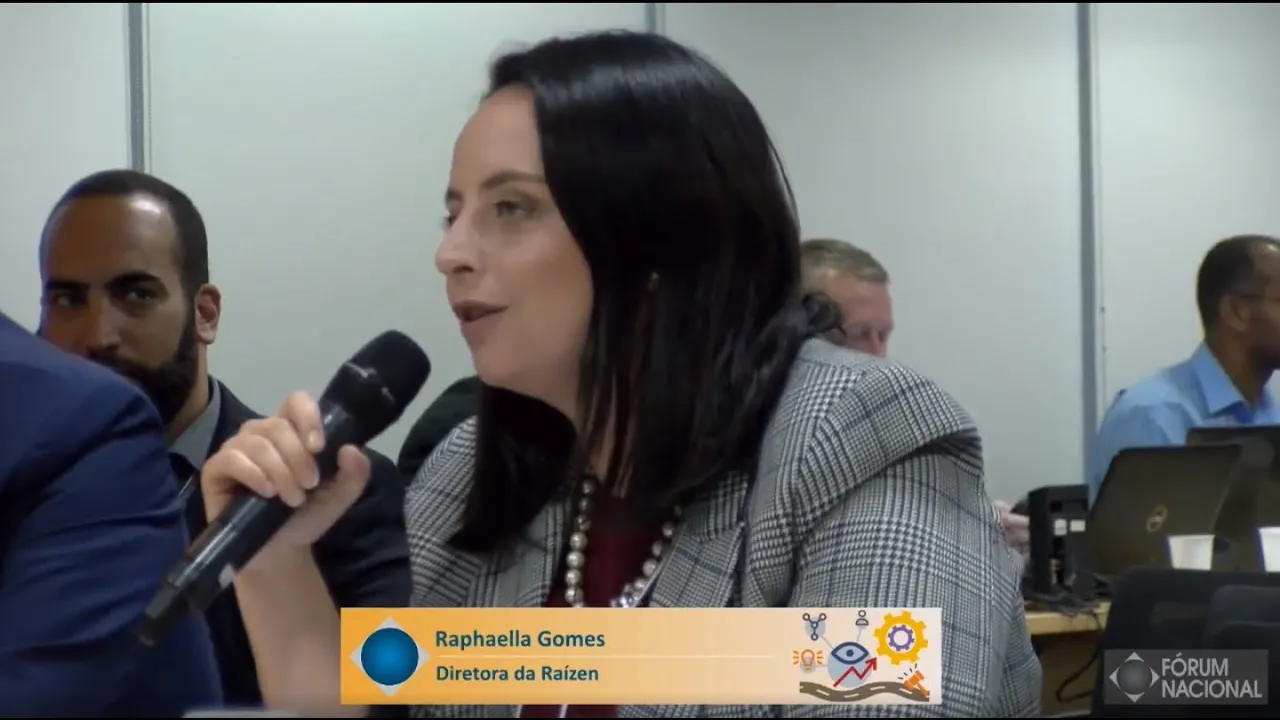
31º Fórum Nacional - Painel II - Raphaella Gomes
Innovation and Biomass in Brazil
Introduction and Acknowledgments
- The speaker expresses gratitude for the invitation to participate in the panel, acknowledging colleagues and specifically thanking Tiago for his contributions.
- Highlights the inspiring work of Mariana Nada Gros Marte, who is creating an agricultural technology startup in Brazil.
Global Context of Innovation
- Discusses global trends impacting innovation, particularly population growth and rising income levels, which are increasing demand for energy and resources.
- Emphasizes the challenge of meeting this additional demand while managing waste generation effectively.
Transitioning Economies
- Quotes a professor about the shift from a fossil fuel-based economy to one focused on renewable resources, highlighting its significance.
- Suggests that addressing new demands will require a focus on biomass and renewable products as populations rise out of poverty.
Regulatory Framework and Energy Sources
- Notes ongoing discussions around regulations that adapt to new economic realities, especially regarding distributed generation.
- Mentions how proximity between consumption sources can reduce transmission costs, reflecting global trends also seen in Brazil.
Brazil's Biomass Potential
- Argues that Brazil has immense potential for biomass utilization due to its biodiversity and existing capabilities.
- Points out that advancements in genetic manipulation can unlock new solutions from Brazil’s rich biodiversity.
Examples of Biomass Utilization
- Introduces examples from Raízen's projects utilizing biomass to meet energy demands sustainably.
- Explains cogeneration using sugarcane bagasse as a resource for electricity production, showcasing an integrated process within sugar and ethanol production.
Current Capabilities and Future Prospects
- Describes Raízen's capacity to produce energy autonomously through its 26 plants while exporting surplus energy.
Energy Production and Biomass Utilization
Hydric Energy Challenges
- The operation of energy plants is affected by water levels in rivers, which are typically high at the beginning and end of the year. During mid-year, when water levels drop, biomass becomes a significant opportunity for energy production.
Innovative Biomass Projects
- A pioneering project since 2011 focuses on converting sugarcane bagasse into ethanol. This initiative has received substantial support from BNDES and stands out globally due to its unique approach.
- Raízen is one of the few companies worldwide with a commercial-scale plant producing second-generation ethanol, allowing for a potential 50% increase in ethanol production without requiring additional land or resources.
Scalability and Replicability
- The Raízen plant has produced 35 million liters of ethanol since its commissioning in 2015. The project is viewed as scalable and replicable based on lessons learned over the years.
- Current technological barriers are being addressed, making it feasible to replicate this project across Brazil to meet carbon reduction targets effectively.
Biogas Production Potential
- Raízen's new biogas plant aims to convert vinasse and filter cake into biogas, with an installed capacity of 21 megawatts. If expanded across all Raízen facilities, this could yield an additional 500 megawatts of power.
- Utilizing vinasse for biogas generation allows for consistent energy production throughout the year, even outside the sugarcane harvest season.
Environmental Impact and Future Directions
- In the previous year alone, approximately 30 billion liters of vinasse were produced within Raízen operations, highlighting significant potential for biogas conversion.
- Biogas can be purified and compressed for use as a natural gas substitute. This transition presents both cost savings and a substantial reduction in carbon footprint (up to 85%).
Broader Implications of Biomass Use
- Biomass can replicate many functions traditionally served by fossil fuels—producing first and second-generation ethanol, generating electricity through biogas, and even creating plastics from sugars derived from biomass.
- Brazil's challenge lies in balancing growth while maintaining its renewable energy matrix (over 80% renewable). New sources like solar power will play crucial roles alongside existing hydropower systems.
Biomass and Sustainable Solutions
Exploring Sustainable Biomass Options
- The discussion highlights the importance of sustainable models, emphasizing the use of pelletized biomass in new coal plants to reduce emissions while utilizing renewable sources.
- Advances in genetic mapping allow for diverse applications, including the production of sweeteners, fragrances, and vitamins from biomass, showcasing the potential for innovation in this field.
Brazil's Potential in Biomass Technology
- Brazil is positioned uniquely with its rich biomass resources, agricultural technology, and investment support from various sectors. This creates an opportunity for global leadership.