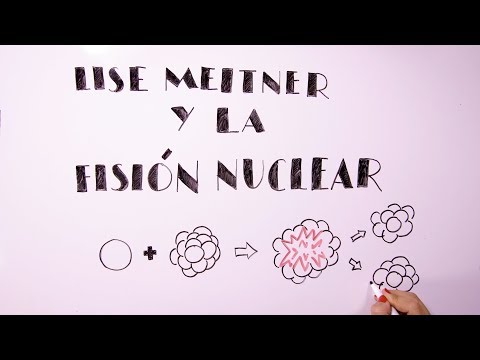
Lise Meitner y la fisión nuclear | Grandes historias de la ciencia | CIEN&CIA 3x05
The Overlooked Contributions of Lise Meitner in Nuclear Fission
Early Collaborations and Challenges
- For 50 years, nuclear fission was primarily credited as a chemical achievement, overshadowing Lise Meitner's contributions despite her significant reputation in physics.
- Meitner and Otto Hahn became friends at age 28, collaborating closely; however, she faced gender-based discrimination that often relegated her work to the background.
- Women were prohibited from working in laboratories due to safety concerns about hair catching fire, highlighting systemic barriers within scientific institutions.
Key Discoveries and Historical Context
- During World War I, Meitner took charge of their laboratory when Hahn was called to serve; they later discovered the element protactinium together.
- After Hitler's rise to power in 1933, Meitner, an Austrian Jew, fled Germany in 1938 under perilous circumstances while maintaining correspondence with Hahn.
Theoretical Breakthrough: Nuclear Fission
- They hypothesized that adding a neutron to uranium would create a heavier element but instead found it produced a lighter one—leading to confusion over the results.
- In Sweden, alongside her nephew Otto Frisch, Meitner theorized that the nucleus split into two parts—a process they named nuclear fission.
Recognition and Legacy
- In January 1939, Hahn published findings on uranium's rupture; shortly after, Meitner and Frisch released their theoretical explanation.