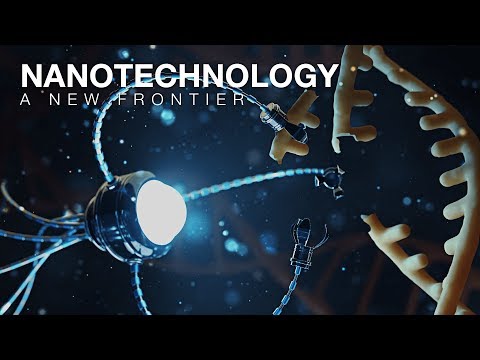
Nanotechnology: A New Frontier
Introduction to Nanotechnology
In this section, the speaker introduces the concept of nanotechnology and its potential applications.
What is Nanotechnology?
- Nanotechnology refers to any technology on a nanoscale that has real-world applications. It involves working at a level billions of times smaller than the average scale we work at today.
- A nanometer is incredibly small - for comparison, the tip of a pen is around a million nanometers wide, while a single sheet of paper is around 75,000 nanometers thick.
- Nanotechnology allows scientists to manipulate and fine-tune material properties by taking advantage of quantum effects that occur naturally at the nanoscale.
- The properties of materials change when they are made smaller, leading to various applications in different fields.
Applications of Nanotechnology
- Nanoscience and nanotechnology have already led to numerous commercial products with enhanced properties. Examples include water-resistant and scratch-resistant films on surfaces, lightweight materials for vehicles, miniaturized computer chips with increased memory capacity, and nano generators for charging smartphones while walking.
- Nanotechnology has revolutionized computing and electronics by enabling faster, smaller, smarter, and more portable systems. The miniaturization of microprocessors and the use of magnetic tunnel junctions have played significant roles in these advancements.
Advancements in Computing and Electronics
This section focuses on how nanotechnology has contributed to advancements in computing and electronics.
Miniaturization of Transistors
- Transistors are switches that enable modern computing. Over time, their size has drastically reduced from roughly 250 nanometers in 2000 to just one nanometer in 2016.
- This miniaturization has allowed for faster systems and may soon enable storing the memory for an entire computer in a single tiny chip.
- Nanoscale magnetic tunnel junctions have also been used to save data effectively during system shutdowns, leading to faster boot times.
Flexible and Bendable Electronics
- Semiconductor nanomembranes, which are monocrystalline structures with thicknesses of less than a few hundred nanometers, have enabled the development of flexible, bendable, and stretchable electronics.
- These advancements in nanotechnology have made it possible to create electronic devices that can be folded or stretched while maintaining their functionality.
Conclusion
Nanotechnology offers immense potential for various applications across different fields. By working at the nanoscale and taking advantage of quantum effects, scientists can manipulate material properties and create innovative products with enhanced functionalities. Advancements in computing and electronics through nanotechnology have led to faster systems, miniaturized components, and flexible electronics. The future possibilities of nanotechnology are vast and continue to expand as researchers explore its capabilities further.
Nanotechnology and Environmental Protection
This section discusses the potential of nanotechnology in contributing to environmental and climate protection by saving resources, reducing waste, and detecting and cleaning up contaminants.
Nanotechnology's Contribution to Environmental Protection
- Nanotechnology has the potential to save raw materials, energy, and water while reducing greenhouse gases and hazardous waste.
- It can increase the durability of materials, leading to longer lifespans and reduced waste.
- Nanotechnology can improve insulation materials, making them more efficient. For example, paper towels can absorb 20 times their weight.
Addressing Water Pollution with Nanotechnology
- The availability of clean drinking water is a pressing issue linked to population growth, urbanization, pollution, and climate change effects.
- Nanotechnology can detect pollutants in water and help filtrate and purify it. For instance, ultra-small specks of dust can remove arsenic from groundwater naturally present at high levels in some countries.
- Developing nanoparticles for water purification holds promise as a cost-effective alternative to traditional treatment methods that require pumping water out of the ground.
Considering Environmental Impacts
- While nanotechnology offers great potential for the environment, it is essential to assess both positive and negative effects throughout a product's life cycle - from production to disposal.
- Concerns exist that nanotechnology may increase energy consumption and environmental costs due to the production process requiring significant amounts of energy, water, and environmentally problematic chemicals.
Nanomedicine: From Science Fiction to Reality
This section explores how nanomedicine is already being incorporated into medical tools, therapies, and research. It highlights the potential of nanotechnology in disease treatment, tissue growth, vaccine delivery, and the emergence of nanobots.
Nanomedicine in Disease Treatment
- Nanomedicine applies nanotechnology to prevent, diagnose, and treat diseases.
- Nanoparticles can encapsulate medication and deliver it directly to cancer cells while minimizing damage to healthy tissue. This could revolutionize cancer treatment and reduce chemotherapy's toxic effects.
- Imaging and diagnostic tools enhanced by nanotechnology improve success rates for various therapies. Quantum dots, tiny semiconductor particles with unique properties, have numerous applications in different sectors.
Environmental Concerns and Green Solutions
- Creating quantum dots using conventional methods generates a significant amount of waste and poses environmental concerns due to their expensive production process.
- However, scientists have recently developed a low-cost method using green leaf extracts (e.g., tea leaves) to create quantum dots with non-toxic by-products. These tea leaf-derived quantum dots show promising results in reducing cancer cell growth when applied topically on the skin.
Advancements in Nanomedicine
- Nanotechnology has the potential to revolutionize medical treatments beyond cancer therapy.
- Researchers are exploring ways to grow complex tissues for organ transplantation using nanotechnology.
- Nanotechnology can improve vaccine delivery methods without needles.
- The emerging era of nanomedicine introduces the concept of nanobots - tiny automated machines capable of sensing, responding, detecting friend or foe within the body, delivering payloads at the nanoscale.
Nanobots in Medicine
This section discusses the potential of nanobots in medicine, including artificial antibodies, artificial blood cells, and antiviral nanobots. It also mentions their durability and ability to address health problems beyond cancer.
Potential Applications of Nanobots
- Nanobots offer opportunities such as artificial antibodies, artificial white and red blood cells, and antiviral nanobots. They have the potential to operate for years without damage.
- Besides cancer treatment, nanobots can be used for unblocking blood vessels and performing procedures in hard-to-reach areas.
- The field of medical nanorobotics holds promise for advancing medical progress.
Challenges in Implementing Surgical Nanobots
- There are several challenges and roadblocks to overcome before surgical nanobots can reach clinical trials.
- Scientists need to ensure safe travel of nanobots within the body and their ability to stay in specific locations long enough to carry out procedures.
- Finding ways to prevent destruction or expulsion of nanobots from the body is another challenge.
Progress and Future Prospects
- While there are challenges ahead, past progress suggests that viable treatments using nanobots may not be too far off.
- Nanotechnology holds potential for addressing various medical and technological issues.
The Future of Nanotechnology
This section explores the future implications of nanotechnology in daily life. It introduces Brilliant as a platform for learning more about nanotechnology and other science-related subjects.
Prominence of Nanotechnology
- The role of nanotechnology in daily life raises questions about its prominence in the future.
- Brilliant is recommended as a platform for learning more about math, science, computer science, and specifically nanotechnology.
Learning Opportunities on Brilliant
- Brilliant offers interactive courses covering various science-related interests.
- Courses include computational biology, discussing Richard Feynman's argument for nanotechnology and the limits of RNA enzymes.
- Visual examples and challenges are provided to enhance understanding.
Benefits of Learning on Brilliant
- Learning through Brilliant is considered easier than traditional methods like books or YouTube videos.
- With over 60 courses and new ones constantly added, there are ample opportunities to learn something new.
- A free trial is available, and a premium subscription provides access to all courses.
Conclusion
Nanobots hold significant potential in the field of medicine, but there are challenges to overcome before they can be implemented in clinical trials. Nanotechnology also has implications beyond healthcare. Platforms like Brilliant offer opportunities to learn more about nanotechnology and other science-related subjects.