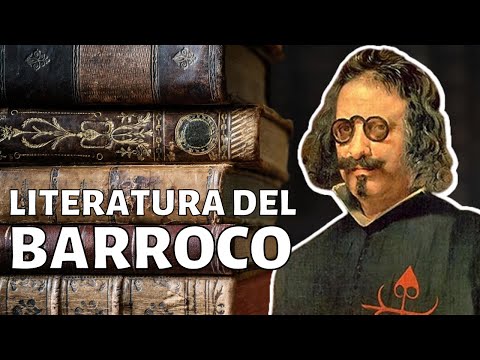
La LITERATURA DEL BARROCO: sus géneros, características y autores📝
Introduction to Baroque Literature
This section provides an introduction to Baroque literature, its historical context, and its characteristics.
Baroque Literature and its Manifestation
- Baroque literature emerged in Europe after the Renaissance and coincided with the Spanish Golden Age.
- It was most prominent in Spain during the 17th century.
- Baroque literature is part of a broader artistic movement that includes painting, music, and architecture.
Characteristics of Baroque Literature
- Baroque literature is known for its overloaded and ostentatious style, characterized by the excessive use of literary devices such as metaphor and antithesis.
- It arose during a time of social, political, economic, and existential tensions.
Relationship with the Renaissance
- Baroque literature emerged as a response to the crisis of the Renaissance.
- It represented a departure from the balanced and serene literary proposals of the Renaissance.
- The links between the Renaissance and Baroque are extensive and complex.
Origin of the Term "Baroque"
- The term "baroque" was coined during romanticism as a pejorative label for this artistic movement.
- Etymologically, it comes from the Portuguese word "barroco," meaning "irregular or deformed pearl."
- The term aimed to brand baroque manifestations as grotesque or amorphous.
Ideological Nature of Baroque Literature
- While there was an exaggerated use of formal resources in writing, baroque literature possessed a strong ideological charge.
- Writers' works reflected various crises in society and showed attachment to religious conceptions, particularly those of the Catholic Church.
Themes in Baroque Literature
- Baroque literature magnified themes from the Renaissance but focused on their decadence.
- Works depicted pessimism due to societal crises such as plague, hunger, laziness, and begging.
- There was a notable presence of faith and spirituality, reflecting support for the Catholic Church during the Protestant reform.
Baroque Literature as a Renovating Current
- Baroque literature brought significant innovations in terms of modes and techniques.
- It spread throughout Europe, with Spain experiencing particularly extensive growth.
- Spanish writers adapted literary manifestations from neighboring countries to their language, resulting in new stanzas in the Hispanic tradition.
Break from Renaissance Stability
- The baroque period marked a destabilization and conflict between aesthetics and form.
- This characteristic was evident across Europe, with each country adapting it to its specific production context.
Excessive Use of Literary Resources
- The abuse of resources became a common characteristic of baroque literature, especially among culteranos.
- Wild adjectives, antithesis, metaphors, and other rhetorical devices were used to overload works.
Baroque Literary Genres
This section explores the main literary genres within the baroque period and their characteristics.
Baroque Poetry
- Poetry became one of the most exploited forms of expression during the baroque period due to its ability to convey feelings effectively.
- Authors utilized various poetic forms such as eclogues, tenths, sonnets, and others.
- Cultured poetry was prevalent within culterana and conceptist works.
Baroque Prose
- Spain played a significant role in developing baroque prose during the Spanish Golden Age.
- Written productions like novels gained importance during this time. Miguel de Cervantes y Saavedra emerged as one of the greatest exponents of baroque prose.
Baroque Theater
- Theatrical texts had a profound impact during the baroque period as they reached all strata of society directly.
- Common themes included religious, mythological, and historical representations.
- Authors aimed to please the ruling class through their works.
Conclusion
This section concludes the discussion on baroque literature, highlighting its significance and impact during its time.
- Baroque literature was a significant artistic movement that emerged after the Renaissance and coincided with the Spanish Golden Age.
- It was characterized by an overloaded and ostentatious style, reflecting the social, political, economic, and existential tensions of the time.
- Baroque literature had a strong ideological nature, often depicting themes of decadence, faith, and spirituality.
- It brought innovations in modes and techniques, particularly in Spain where it experienced extensive growth.
- The excessive use of literary resources became a common characteristic of baroque literature.
- The main genres within baroque literature were poetry, prose (including novels), and theater.
New Section
Authors and Outstanding Works Luis de Góngora y Argote (1562-1627)
Luis de Góngora y Argote (1562-1627)
- The fable of Polifemo and Galatea (1612).
- The Solitudes (1613).
- Fable of Pyramus and Thisbe (1618).
New Section
Francisco de Quevedo y Villegas (1580-1645) Outstanding works
Francisco de Quevedo y Villegas (1580-1645)
- Speech of all the devils or amended hell (1628).
- History of the life of the Buscón called don Pablos; example of tramps and mirror of stingy (1626).
- The Court of Just Vengeance (1635).
New Section
María de Zayas (1590-1661?) Outstanding works
María de Zayas (1590-1661?)
- Amorous and exemplary novels (1637).
- Novels and soirees (1647).
- Amorous disappointments (1649).
New Section
Félix Lope de Vega Carpio (1562-1635) Outstanding works
Félix Lope de Vega Carpio (1562-1635)
-The beauty of Angélica, with various other rhymes(1602).
-The Dorothea(1632).
-The Gatomachy(1634).
New Section
Pedro Calderón de la Barca(1600 - 1681) Outstanding works
Pedro Calderón de la Barca(1600 - 1681)
- Love, honor and power (1623).
- Life is a dream (1635).
- The mayor of Zalamea (1651).