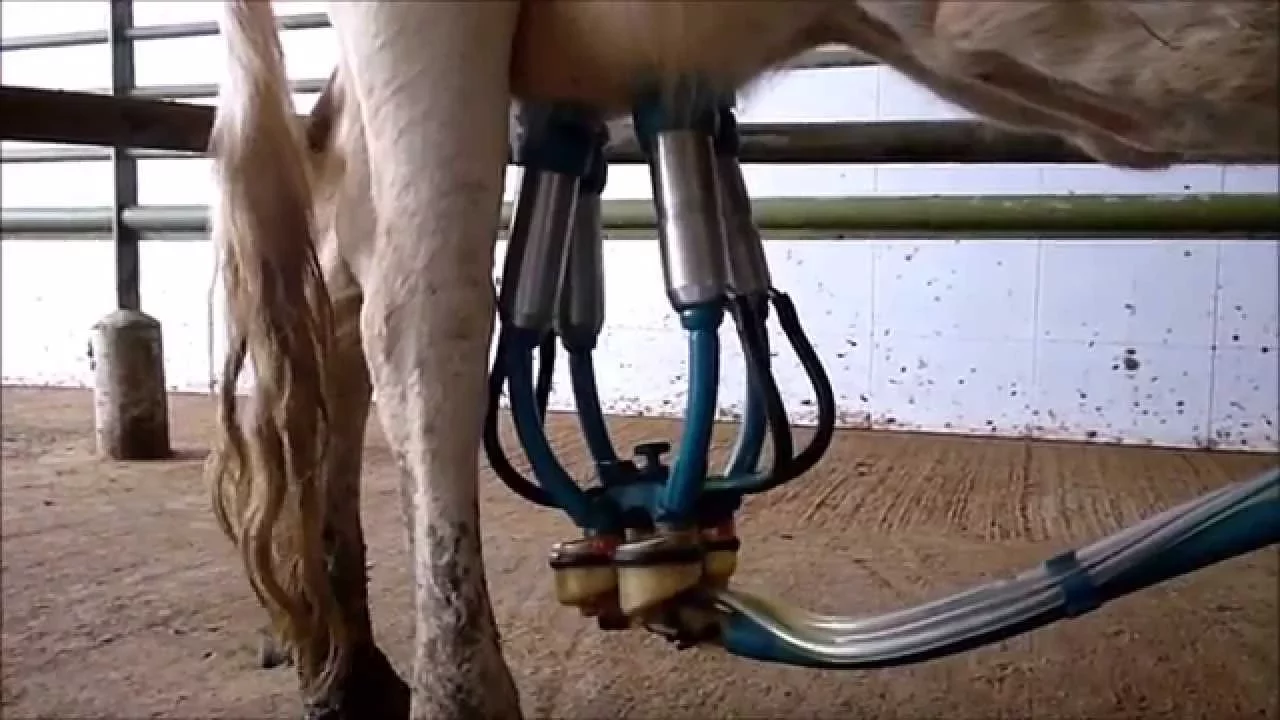
Ordeño mecánico, así funciona el equipo - Gabriel Serrano Díaz
How a Mechanical Milking System Works
In this video, the functioning of a mechanical milking system is explored. The discussion delves into the physics behind extracting milk from cows using equipment, focusing on the role of pressure differentials and vacuum in milk extraction.
Cow's Udder as a Milk Storage
- The cow's udder acts as a storage for milk produced in its four separate compartments.
- Milk exits through the teat opening, controlled by a sphincter muscle that requires pressure to overcome external pressure for milk flow.
Calf vs. Machine Milking Process
- Calves create suction by positioning the teat sphincter between their palate and tongue to generate lower external pressure than inside the udder, allowing milk release.
- Mechanical milking machines increase internal pressure within the teat to prevent milk backflow, unlike calves that rely on vacuum force.
Components of a Mechanical Milking System
This section outlines the key components required in a mechanical milking system and their functions in extracting and handling milk efficiently.
Essential Components
- A mechanical milking system comprises vacuum generation, pulsation for managing vacuum application during milking, teat cups for direct milk extraction.
- The system includes a vacuum pump powered by an electric or diesel motor to create and maintain vacuum levels necessary for milking efficiency.
Vacuum Pump Operation
- The vacuum pump extracts air through tubing connected to a tank storing vacuum. It operates inversely compared to compressors by creating negative pressure within the tank.
- The pump setup involves an exhaust mechanism preventing impurities from entering while expelling extracted air efficiently.
Adaptations for Power Supply in Remote Areas
Addressing power challenges in remote locations, adaptations using alternative energy sources are discussed to ensure continuous operation of mechanical milking systems.
Power Generation Adaptation
Vacuum System Components and Operation
In this section, the speaker discusses the components of a vacuum system and their functions to maintain stable vacuum pressure.
Vacuum Pressure Regulation
- The vacuum pressure around the pipeline is determined by the vacuum pump. Variations in vacuum pressure can occur due to pump operation or leaks in equipment.
- The regulator's role is to allow air into the system when there is excessive vacuum pressure to maintain stability.
Pulsators in Vacuum Management
- Pulsators are devices that manage vacuum levels by transferring vacuum from the main line to milking units through hoses.
- There are different types of pulsators: pneumatic, electronic, each with specific functions and power requirements.
Milking Unit Components
- Milking units consist of teat cups, liners for direct milk flow, a milk conduit system, a milk collector, and discharge hose.
- Teat cups are metallic and rigid with rubber liners forming an internal cavity for milk flow towards the collector.
Milking Process Phases and Timing
This part delves into the phases of milking cycles, alternating between massage and milking phases for efficient dairy operations.
Milking Cycle Phases
- Milking units operate in massage and milking phases at approximately 60 cycles per minute for optimal efficiency.
- The ideal ratio between massage and milking phases should be around 40% massage time and 60% milking time for effective milk extraction.
Pulsation Mechanism
- Pulsators control air inflow to teat cups alternately, ensuring proper massage and milking phases during each cycle.
- Alternating air supply to teat cups allows continuous milk flow while maintaining proper pressure differentials for efficient milking operations.
Ordering Equipment in Milking Systems
The discussion focuses on the importance of having a well-coordinated milking team and the synchronization between video phases and actual milking equipment operations.
Importance of Team Coordination
- The efficiency of a milking system relies on a well-functioning team.
- Milk from multiple teats is collected into a single collector, emphasizing the need for precise coordination to prevent contamination.
- Variations in milk production among udder quarters necessitate strategic ordering to avoid overmilking and potential health issues.
- Modern units feature individual collectors per teat, enhancing precision and preventing cross-contamination.
Milk Transfer and Collection
This segment delves into the process of transferring milk post-milking, highlighting different methods such as direct transfer to a tank or through intermediate devices like final units.
Milk Transfer Methods
- After extraction, milk must be directed somewhere; one method involves connecting the collector to a transparent tank using vacuum pressure.
- An alternative approach includes extending vacuum lines to connect with final units for efficient milk transportation.
- Final units contain sensors that regulate milk levels, activating pumps for timely discharge into storage tanks or designated locations.
Measuring Milk Quantity
The discussion shifts towards measuring milk quantity through manual or electronic means within milking systems.
Quantifying Milk Production
- Measurement devices track milk flow, ensuring accurate collection without spillage or contamination risks.
Vacuum Administration for Milking Units
In this segment, the speaker discusses the process of vacuum administration for milking units, detailing how it facilitates milk discharge either manually controlled or automatically to a final unit that monitors and pumps the milk.
Components of Portable Milking Equipment
- The administration of vacuum on units conducting milking involves either manual control at cantinas or direct discharge to a final unit that assesses and pumps the milk flow.
- Portable milking equipment comprises basic components such as a motor, vacuum pump, tubing for suction, and an exhaust outlet for milk discharge.
- Unlike traditional setups, this vacuum tubing lacks a regulator but includes only a pressure indicator. The main challenge lies in maintaining consistent vacuum stability during milking operations.