The European Union Explained*
Where is the European Union?
Overview of EU Membership
- The European Union (EU) has unclear boundaries, similar to the European continent itself.
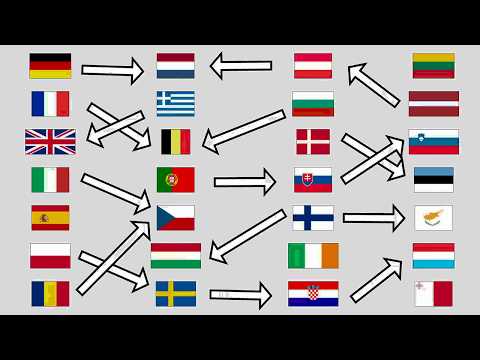
- Official members of the EU include Germany, France, the United Kingdom, Italy, Spain, Poland, Romania, and others in decreasing order of population.
- There are ongoing efforts by other countries to join the EU, indicating potential future expansion.
How Does the EU Function?
- Key aspects of how the EU operates:
- Countries pay membership dues.
- Member states vote on laws that must be followed.
- Citizens of member countries are also considered EU citizens.
Freedom of Movement
- EU citizenship allows individuals to live and work in any member country without restrictions.
- Norway, Iceland, and Liechtenstein are not part of the EU but allow free movement for EU citizens due to their participation in the European Economic Area (EEA).
EEA and Its Implications
- The EEA arrangement requires non-EU members like Norway to pay fees while not having a say in certain laws they must follow.
- Notably excludes some areas such as farming and fishing from this obligation.
Understanding Borders: Schengen Area
Schengen Agreement
- The Schengen Area allows for passport-free travel between participating countries; no border checks exist within this zone.
- Switzerland participates in Schengen but remains outside the EU framework.
UK and Ireland's Stance
- The UK and Ireland maintain stricter border controls due to their island status; passports are required for entry.
Economic Structures: Eurozone
Currency Usage
- The Euro is used by most but not all EU members; those using it form an economic union known as the Eurozone.
- Some countries like Denmark and Sweden have opted out permanently from adopting the Euro despite meeting financial criteria.
Unique Cases with Currency
- Four small nations (Andorra, San Marino, Monaco & Vatican City), though not part of the EU, can use Euros due to special arrangements.
Complex Relationships with Territories
Outermost Regions
- Portugal and Spain retain islands from colonial times that remain part of the EU (Madeira & Canary Islands).
France's Overseas Territories
- France maintains several overseas territories that extend its influence globally while still being considered part of France under EU law.
Complicated Colonial Legacies
European Union Territories and Citizenship
Overview of Associated Countries
- The European Union law generally does not apply to associated countries, yet residents are typically EU citizens due to their citizenship from these territories.
- Citizens from associated countries can live anywhere in the EU, highlighting a unique relationship between these regions and the EU.
Movement Restrictions
- Other EU citizens face restrictions when trying to move freely to these associated territories, creating a complex dynamic within the EU framework.
- These areas act as a "semipermeable membrane," indicating that while some movement is allowed, it is not entirely unrestricted.
Unique Cases and Exceptions
- Various unique cases exist within this context, such as:
- The Isle of Man and its distinct status.
- Spanish cities in North Africa that have special considerations.
- Gibraltar's ambiguous identity as part of Southwest England at times.
- A region in Greece where discriminatory practices against women are legally permitted.
- Saba and other Caribbean islands linked to the Netherlands but lacking EU membership despite Dutch citizenship.