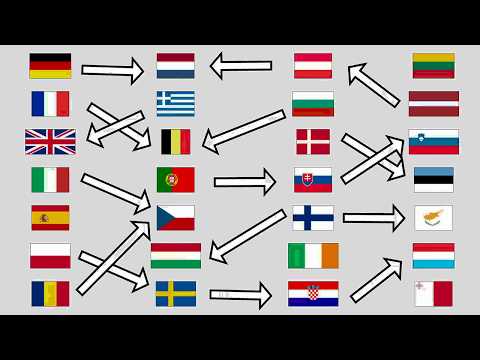
The European Union Explained*
Where is the European Union?
Overview of EU Membership
- The European Union (EU) has unclear boundaries, similar to the European continent itself.
- Official members of the EU include Germany, France, the United Kingdom, Italy, Spain, Poland, Romania, and others in decreasing order of population.
- Membership entails three key aspects: countries pay dues, vote on laws applicable to all members, and citizens of member states are also EU citizens.
Freedom of Movement and Exceptions
- Citizens from Norway, Iceland, and Liechtenstein can live in EU countries despite not being members due to agreements allowing free movement.
- These non-EU countries pay membership fees for this privilege but do not participate in EU law-making.
Economic Areas and Currency
- The European Economic Area (EEA) allows some exceptions for non-EU members regarding specific laws like farming and fishing.
- The Schengen Area permits passport-free travel across many European borders; however, Switzerland participates without being an EU member.
Complications with Borders
- The UK and Ireland maintain stricter border controls compared to other EU nations due to their island status.
- Not all EU members use the Euro; Denmark, Sweden, and the UK have permanent exemptions from adopting it.
Unique Territories within Europe
- Some small countries like Andorra and Monaco can use Euros without being part of the EU due to special arrangements.
- Colonial islands held by Portugal and Spain are included in the EU despite their locations off Africa's coast.
Outermost Regions & Overseas Territories
- France retains several overseas territories that extend its influence globally while remaining part of the EU framework.
European Union Territories and Their Unique Status
Movement Restrictions within the EU
- Other European Union citizens face restrictions when attempting to move to certain territories, creating a unique situation where these areas act as a "semipermeable membrane" between the EU and non-EU regions.
- The discussion highlights that while some territories are associated with the EU, they do not allow for free movement of all EU citizens, complicating their status.
- Examples of such territories include the Isle of Man, Spanish cities in North Africa, and Gibraltar, which sometimes claims affiliation with Southwest England.