2.4 Gramática - Personas del Pronombre 2ºda Presentación
Understanding Singular and Plural Forms in Spanish
Introduction to Singular and Plural
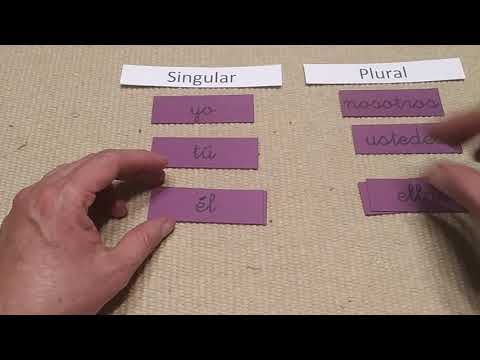
- The child identifies plural forms: "ustedes," "ellos," and "nosotros" as plural terms, while noting that "yo" is singular. This establishes a foundational understanding of singular versus plural in Spanish.
First Person, Second Person, and Third Person
- The lesson progresses to categorize pronouns by person:
- First Person: "yo" (singular) and "nosotros" (plural).
- Second Person: "tú" (singular) or "ustedes" (plural).
- Third Person: "él/ella" (singular) and "ellos/ellas" (plural). This classification helps clarify the use of different pronouns based on number.
Organizing Pronouns
- The instructor emphasizes organizing pronouns for clarity:
- First person is represented by “soy yo” in singular form.
- In plural form, it becomes “somos nosotros.”
- This structured approach aids the child in grasping the concept of personal pronouns effectively.
Engaging with the Lesson
- The teacher prompts the child to identify specific forms:
- Asking for second person singular leads to identifying “tú.”
- Requesting first person plural results in finding “nosotros.”
- This interactive method reinforces learning through active participation.
Conclusion of Lesson Structure
- By systematically addressing each category of pronoun, the lesson builds a comprehensive understanding of how singular and plural forms function within Spanish grammar.
- The focus on interaction encourages retention and application of knowledge regarding personal pronouns.