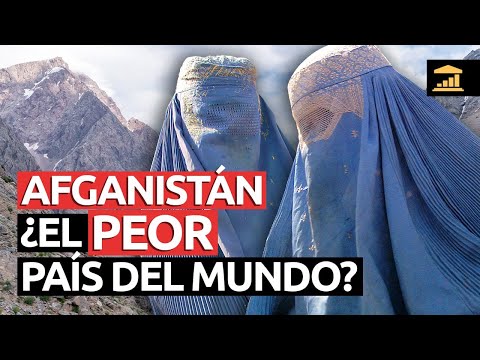
¿Cómo es el nuevo AFGANISTÁN de los TALIBANES? - VisualPolitik
The Return of the Taliban: A Two-Year Review
Overview of Global Attention on Ukraine and Afghanistan
- The ongoing war in Ukraine has dominated international news since February 2022, overshadowing other significant events, including the situation in Afghanistan.
- In August 2021, following the withdrawal of U.S. troops, Afghanistan fell back under Taliban control, marking a critical shift in governance.
- The video aims to explore the current state of Afghanistan under Taliban rule nearly two years later and its implications for the Afghan people.
Current Crisis in Afghanistan
- Afghanistan is experiencing one of its worst humanitarian crises, with aid no longer reaching those in need as it did before the Taliban's return.
- The Taliban's regime has led to severe restrictions on individual freedoms and has turned Afghanistan into a haven for radical groups once again.
Historical Context: Rise of the Taliban
- The Taliban originated from "muyahidines," Islamist fighters who opposed Soviet occupation during the late 20th century.
- After a civil war among various factions post-Soviet withdrawal (1992–1996), the Taliban emerged victorious and established their first government in 1996.
Brutality Under First Government
- The initial Taliban regime was notorious for human rights abuses, including public executions and extreme restrictions on women's rights.
- Women were stripped of education, employment opportunities, and freedom of movement unless accompanied by male guardians.
Fall and Resurgence of the Taliban
- The first Taliban government collapsed not due to internal dissent but through U.S. military intervention following the September 11 attacks.
- Despite initial defeat, by 2005, the Taliban began regrouping with support from Pakistan and funding from opium trade.
U.S.-Taliban Agreement and Aftermath
- In 2020, President Trump negotiated an agreement with the Taliban to withdraw U.S. troops without Afghan government involvement.
What Has Happened Since the Taliban's Return?
Current State of Afghanistan Under the Taliban
- The new Taliban regime has largely mirrored its previous governance style, despite attempts to present a more moderate image. However, the reality is that Afghanistan has reverted to a dire situation.
- Women in Afghanistan face severe restrictions; they are barred from universities and secondary education, prohibited from working with NGOs or UN agencies, and must adhere to strict dress codes if employed.
- The Ministry of Virtue Promotion and Vice Prevention has replaced the former Ministry for Women, enforcing these oppressive measures against women's rights.
- Ethnic Tajiks, who are critical of the Taliban and represent the second-largest ethnic group in Afghanistan after Pashtuns (the majority among the Taliban), are also facing brutal repression including arbitrary detentions and extrajudicial killings.
- Contrary to prior assurances that Afghanistan would not become a terrorist haven again, groups like Al-Qaeda have reestablished themselves within the country. Notably, Al-Zawahiri was killed in Kabul in 2022.
Economic Management by the Taliban
- While engaging in conflict with ISIS-Khorasan due to power struggles rather than any agreement with Trump’s administration, analysts note some surprising aspects of Taliban economic management post-initial shock.
- The Afghan economy saw stabilization efforts leading to a recovery of currency value through stringent control over dollar outflows. Corruption rates at customs reportedly dropped significantly due to harsh Sharia law penalties.
- The Taliban have managed to pay salaries for approximately 800,000 public employees despite international isolation and sanctions affecting economic conditions severely.
- Large-scale projects are being initiated by the regime; however, these efforts do not indicate an overall positive outlook for national stability or prosperity given ongoing humanitarian crises.
Humanitarian Crisis and International Recognition Challenges
- Following their return to power, Afghanistan experienced complete international isolation resulting in a staggering 35% drop in GDP between 2021 and 2022. This led to widespread unemployment and destruction of local economies.
- Currently, about 97% of Afghans live in poverty with humanitarian needs skyrocketing from six million people needing assistance in 2019 to twenty-eight million today amidst rising famine conditions.
Tensions Between Pakistan and the Taliban
Overview of Current Relations
- After two years back in power, the Taliban faces distrust even from close allies like Pakistan due to ongoing regional tensions.
- The Durand Line, established by the British Empire in 1893, remains a significant source of conflict between Pakistan and Afghanistan.
Border Conflicts and Agreements
- Despite historical border skirmishes, recent agreements (May 8, 2023) indicate efforts to enhance trade and reduce tensions between Pakistan and Afghanistan.
- Pakistan accuses Afghan Taliban of providing safe haven to Pakistani Taliban militants who have resumed attacks since breaking a ceasefire in November 2022.
Regional Security Concerns
- China shares similar security concerns regarding the East Turkestan Islamic Movement, fearing that the Taliban may harbor Uighur militants threatening Xinjiang.
- Russia is less concerned about direct threats but has not yet recognized the Taliban as legitimate rulers despite engaging with them economically.
Economic Engagement with the Taliban
- Both China and Russia are moving towards economic cooperation with the Taliban; China has lifted tariffs on Afghan products and invested significantly in infrastructure projects.
- Recognition of the Taliban government by these nations would not be surprising given their historical resistance to Western norms.
The Debate on U.S. Recognition of the Taliban
- Analysts suggest that U.S. recognition could influence Afghan governance positively; however, this remains contentious among policymakers.
- Former Afghan ambassador Javid Ahmed argues for recognition to prevent Afghanistan's isolation but acknowledges it would be seen as a betrayal by many Afghans.
Future Considerations
- The likelihood of Biden recognizing the Taliban seems low without credible assurances from them regarding human rights compliance.