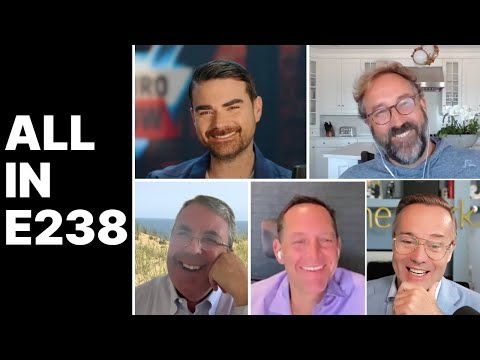
OpenAI's GPT-5 Flop, AI's Unlimited Market, China's Big Advantage, Rise in Socialism, Housing Crisis
Introduction and Context What’s Happening on the Podcast?
Opening Remarks
- The host mentions a conversation with Freeberg about nicotine pouches, indicating a humorous tone regarding energy levels.
- The host jokes about Jason's attempts to monetize the podcast, suggesting he wants to turn it into an infomercial while also selling items on eBay.
Episode Continuation
- The host welcomes listeners back to the "Be Allin Podcast," emphasizing its popularity as the number one podcast.
- Freeberg expresses frustration over co-host absences, highlighting a lack of professionalism due to last-minute cancellations.
Guest Introductions Who’s Joining Today?
Guest Lineup
- Gavin Baker joins from the beach, balancing work and leisure while discussing public company earnings.
- Ben Shapiro is introduced as a fellow broadcaster and co-founder of The Daily Wire, promoting his upcoming book titled "Lions and Scavengers."
Ben Shapiro's Book Insights What Is His New Book About?
Themes of Civilization
- Shapiro discusses his book's premise: contrasting builders of civilization against those who seek to tear it down, reflecting societal tensions observed in recent elections.
Personal Reflections
- He shares that journaling inspired his writing process during troubling times, making this book more personal than previous works.
Cultural Commentary Understanding Current Events
Societal Observations
Energy Discussion: Solar Batteries vs. Clean Coal
Introduction to the Energy Debate
- The discussion opens with a comparison between solar batteries and clean coal, suggesting that solar batteries may be superior.
- Phil Deutsch is introduced as a guest, noted for his political family background, emphasizing the importance of public service over politics.
All-In Summit Announcement
- A plug for the upcoming All-In Summit highlights an impressive lineup including notable figures like Dave Ricks (CEO of Eli Lilly), Joe Sai (Alibaba co-founder), and others.
- The hosts tease additional announcements leading up to the event, encouraging viewers to visit their website for more information.
AI Developments: GPT-5 Release
- The conversation shifts to recent developments in AI, specifically mentioning the release of GPT-5 by Sammy the Bull Alman.
- Initial reactions indicate disappointment due to a messy presentation and underwhelming performance compared to previous models like ChatGPT 4.0.
Star Wars Discussion: Cultural Impact
- A light-hearted debate ensues about favorite Star Wars films, with participants sharing their rankings and opinions on various movies in the franchise.
- One participant critiques the overarching anti-technological message within Star Wars, suggesting it reflects a dystopian view of progress.
Insights on AI Benchmarking Challenges
- Gavin discusses potential diminishing returns in large language model (LLM) advancements, noting that OpenAI's latest model did not outperform its predecessors decisively.
AI Model Comparisons and User Experience Enhancements
Performance of AI Models
- Grock 4 has shown significant improvement since its release, outperforming GPT-5 in benchmarks like RKGI2, which measures tasks easier for humans but challenging for AIs.
- While Grock 4 is slightly ahead in artificial analysis, this marks the first instance where OpenAI's model does not decisively surpass a competitor across all metrics shortly after launch.
- Anticipation builds for Grock 5, with optimism about its capabilities due to XAI's resources; however, there are concerns regarding OpenAI's ability to maintain a competitive edge.
Release Strategy and Market Dynamics
- The decision to release Chat GPT-5 despite not being a clear winner raises questions about innovation challenges within OpenAI and potential impacts from talent loss (brain drain).
- The upgrade introduces multimodal functionality that allows users to interact without needing to select specific models manually, enhancing user experience significantly.
User Experience Improvements
- The new system intelligently selects the appropriate underlying model based on the complexity of user queries, streamlining interactions and improving efficiency.
- This self-selection feature enhances usability by eliminating confusion over model choices, making it more accessible for users unfamiliar with technical specifications.
Initial Challenges Post-release
- There were initial issues with the auto-select router not functioning properly during the first hours post-launch, potentially affecting performance scores.
Integration into Workflows
- Users in various sectors are beginning to integrate AI tools into their workflows. For example, investors find AI efficient for data gathering and analysis.
AI Investment and Productivity Gains
The Question of Justifying AI Investments
- A participant expresses skepticism about whether the productivity gains from AI will justify the significant investments being made, likening it to past technological advancements.
- They note that a large portion of S&P 500 gains is concentrated in a few companies, raising concerns about whether current AI technologies can deliver rapid returns similar to the internet boom.
Estimating Market Potential
- Discussion shifts to estimating the Total Addressable Market (TAM) for AI, with projections suggesting substantial revenue potential based on business user metrics.
- The speaker emphasizes that calculating TAM early in the investment cycle is challenging but necessary for understanding future growth.
Economic Returns from AI Investments
- It’s noted that public companies investing in AI are reporting improved returns on invested capital, indicating positive economic impacts from these investments.
- Specific examples include Meta's recent revenue growth attributed to enhanced ad targeting through AI, showcasing tangible benefits already realized.
Comparison with Past Tech Investments
- The conversation contrasts current AI investments with those during the internet era, highlighting differences in capital deployment and utilization rates.
- Unlike previous tech bubbles characterized by unused infrastructure (dark fiber), current investments are actively utilized due to high demand for GPU resources.
Energy Demands of AI Technologies
- The discussion introduces energy implications tied to AI development, suggesting they may surpass legislative impacts like those from the Inflation Reduction Act.
Energy Production and Global Comparisons
Overview of Energy Demand and Production
- Discussion on the shift towards clean energy demand, highlighting its significance in reducing reliance on government policies.
- Noted that 50 megawatts represents about 5% of total U.S. electricity production, contrasting with China's rapid addition of one terawatt every 18 months.
China’s Energy Sources
- Inquiry into where China sources its gas and coal, emphasizing their dependency on imports compared to the U.S.
- Clarification that while hydro and nuclear are non-import dependent, coal and gas present challenges for China’s energy strategy.
Solar Energy Growth
- Caution against misinterpreting statistics regarding electricity sources; U.S. additions are primarily solar and wind but installed capacity is lower.
- Highlighting that China's solar panel additions surpassed all other countries combined in a single year, indicating significant growth in renewable energy.
Policy Implications
- Question raised about the importance of solar energy data for policymakers; suggests current strategies may not adequately address emerging challenges.
- Mention of China's extensive nuclear deployment plans as part of their broader energy strategy.
Existential Race in AI Development
Perspectives on AI Competition
- Inquiry into whether the race for AI dominance is existential; participant expresses belief in its critical nature due to implications for global power dynamics.
Military and Economic Consequences
- Concerns raised about how advancements in AI could enhance China's military capabilities, affecting global economic stability and alliances.
Cultural Commentary on Capitalism
Reactions to Chinese Business Practices
- Reference to a recent event involving Luckin Coffee's entry into the U.S. market, highlighting cultural perceptions around capitalism versus communism.
Social Media Influence
- Discussion about TikTok's role as a tool for propaganda by China, illustrating concerns over data control and influence through technology.
Conclusion: The Future Landscape
Reflections on Market Dynamics
The Competitive Landscape: China vs. the U.S.
The Theory of Competition
- Discussion on the competitive threat posed by Chinese companies, particularly in sectors like automotive and technology, with examples such as BYD producing cars at significantly lower prices than American counterparts.
- Acknowledgment that China's economic model is not true communism but rather state-sponsored corporatism, allowing for substantial resource allocation to specific industries.
Tariffs and Trade Strategies
- Emphasis on the importance of tariffs against China, suggesting a strategy of isolating China from free trade networks while engaging with other nations.
- Concerns about China's ability to circumvent tariffs through strategic maneuvers in various markets, including technology sectors like Nvidia chips and social media platforms like TikTok.
Perspectives on Global Competition
- Introduction of Bill Gurley's perspective that competition does not have to be zero-sum; multiple entities can succeed simultaneously in a global market.
- Comparison between the internet's evolution and AI's development, highlighting that no single entity will dominate these fields due to their open nature.
Military and Economic Advantages
- Insight into drone warfare as an emerging competitive field where China holds advantages in manufacturing and supply chain capabilities.
- Recognition that both countries will have varying strengths across different dimensions of competition influenced by advancements in AI.
Entrepreneurship Under Pressure
- Analysis of how the Chinese Communist Party (CCP) manages entrepreneurship levels, throttling it back when individual capital accumulation threatens its control.
- Reference to a decline in new company formations post-2018 due to policy changes affecting venture capital investment and entrepreneurship within China.
Historical Context of Economic Growth
The Impact of Super Intelligence and Capitalism in China
The Race for Super Intelligence
- Discussion on the potential impact of oil prints compared to Alibaba, highlighting a significant investment opportunity in China that was abruptly halted.
- Mention of existential beliefs surrounding super intelligence, with strict regulations for employees at Deep Seek regarding interactions with Americans while in China.
China's Entrepreneurial Landscape
- Xi Jinping's dinner with entrepreneurs indicates a focus on physical goods production over social networks, suggesting a strategic shift in priorities.
- Historical reference to the Soviet Union's agricultural reforms illustrates the effectiveness of entrepreneurial systems over socialist models, emphasizing capitalism's advantages under resource constraints.
Capitalism vs. Government Control
- Debate on whether capitalism combined with democracy or communism is more advantageous long-term; concerns about government intervention favoring certain industries like BYD cars.
- Emphasis on the necessity of rule of law for innovation; personal experiences shared about challenges faced in Chinese factories due to lack of stable legal frameworks.
The Role of Rule of Law
- Agreement on the essential nature of rule of law for successful capitalism; historical context provided regarding internet entrepreneurs' rise and subsequent challenges posed by their power relative to the CCP.
Centralization and Political Authority
- Reference to Jack Ma’s disappearance following critical comments about government leadership, illustrating risks faced by powerful business figures in China.
Understanding Corporatism and AI's Impact on Capitalism
The Nature of Corporatism vs. Capitalism
- Corporatism allows the government to focus resources on a single target, contrasting with capitalism, which mobilizes resources across various targets.
- Initial economic growth under corporatism can appear beneficial, especially in unstable democratic systems where leadership lacks full control.
Concerns About AI Consolidation
- The consolidation of AI resources among a few companies raises concerns about competition and innovation.
- There is a fear that if adversarial nations like China achieve superintelligence first, it could lead to a corporatist victory.
Federal vs. State Authority in AI Regulation
- The discussion around federal versus state authority may be misleading; it's more about preventing state-level authoritarian measures that could stifle competition.
Political Dynamics in Supporting Private Sector
- Investors find it challenging to distinguish between Democratic and Republican approaches to supporting private sectors due to both parties' activist tendencies.
- Centralized power has historically led to poor outcomes for private industry by favoring certain winners over others.
Industrial Policy and Subsidies Debate
- There's a preference for no government intervention in picking winners; however, some argue that rational subsidies are necessary for consistent support across administrations.
- While subsidies have benefited renewable energy sectors, they have also created disincentives for investing in nuclear energy.
Consequences of Energy Subsidies
- Subsidies aimed at promoting solar and wind energy inadvertently hindered nuclear investment, leading to technological lag behind countries like China.
The Rise of the Imperial Presidency
Political Debates and Governance Trends
- The speaker discusses lively political debates with their parents, focusing on the trend of an "imperial president" in America, which they believe has accelerated under both Biden and Trump.
- They hypothesize that Congress is largely ineffective at legislating, leading to governance being increasingly handled by the judicial branch. This shift raises concerns about accountability.
Preference for Elected Leadership
- The speaker expresses a preference for an elected executive branch over an unelected judiciary, arguing that voters can hold presidents accountable through elections.
- They trace the roots of the imperial presidency back to the early 20th century's administrative state, asserting that a large federal government leads to increased power concentration.
Legislative Abdication of Responsibility
- The discussion highlights how legislators often pass vague omnibus bills to avoid responsibility, delegating authority to unelected bureaucrats who manage policy implementation.
- This strategy allows politicians to claim credit for funding while avoiding backlash from constituents regarding controversial decisions made by regulators.
Acknowledging Government Workers
- The speaker emphasizes the importance of recognizing dedicated government employees who perform essential work despite low pay and public criticism.
- They clarify that blame should be directed at Congress for abdicating its responsibilities rather than at civil servants executing their duties within a flawed system.
Solutions and Future Directions
- The conversation shifts towards potential solutions, suggesting that new political movements could help restore legislative responsibility and counteract trends toward centralized power.
Political Strategies and Economic Concerns
State-Level Political Strategy
- The America party aims to focus on state legislatures rather than attempting to take over the federal government, suggesting that winning governorships and implementing libertarian policies at the state level is a more feasible approach.
Public Discontent with Government Spending
- A town hall in Nebraska highlighted widespread dissatisfaction among citizens regarding government spending, particularly concerning Medicare and Medicaid cuts, indicating a general frustration across political lines.
Predictions of Socialism's Rise
- There are concerns about socialism gaining traction in the U.S., with predictions that it could become a significant issue, potentially worse than previous societal challenges related to "woke" culture.
Economic Struggles and Inflation
- Rising costs of living, including groceries and rent, have affected all Americans. Many feel stagnant wage growth amidst increasing expenses, leading to frustrations expressed through social media platforms like TikTok.
Government Employment Impacting Economy
- Nearly half of Americans are employed by or dependent on government funding. This reliance contributes to inefficiencies in capital allocation and rising costs across various sectors.
Energy Policy Discussions
Resilience of American Capitalism
- Despite fears of socialist policies taking hold for an extended period, there is confidence in America's resilience and ability to rebound from economic challenges historically faced by both parties.
Nuclear Energy Regulation Challenges
- The discussion emphasizes that nuclear energy faces regulatory hurdles rather than cost issues. Effective regulation is crucial for fostering innovation within the nuclear sector.
Subsidies for Renewable Energy Sources
- There's debate over whether subsidies for wind and solar should come at the expense of nuclear energy support. It’s argued that different energy sources require distinct approaches due to their operational differences.
Growth of Solar Energy Adoption
Energy Generation and Market Dynamics
The Impact of Incentives on Energy Generation
- The OBB chart illustrates that removing incentives leads to a decrease in energy generation, raising concerns about the need for abundant energy for artificial intelligence (AI).
- Emphasizes the importance of diversifying energy sources, advocating for solar, wind, and small modular reactors (SMRs) to maintain national security and technological dominance.
Investment Trends in Energy Technologies
- Highlights the trend of private market capital favoring solar and wind due to high returns, which detracts from investments in nuclear technology development.
- Discusses regulatory burdens as a factor inhibiting nuclear technology investment while noting missed opportunities to advance Gen 4 nuclear systems that are being deployed in China.
Future Prospects for Nuclear Energy
- Secretary Wright's statement indicates potential progress with Gen 4 reactor production expected within 18 months in the U.S., but acknowledges significant delays due to lack of investment.
- Critiques government involvement in markets, suggesting it creates financial bubbles and diverts capital away from optimal long-term energy solutions.
Market Responses and Government Influence
- Notes that investment flowed into SMRs when major tech companies expressed demand, indicating a shift when government reduced bureaucratic barriers.
- Argues that neither government subsidies for solar/wind nor direct intervention were responsible for revitalizing interest in SMR technologies.
Socialism and Political Dynamics
Charismatic Leadership and Policy Implications
- Discusses the charismatic nature of political figures like Adams or Cuomo, emphasizing their potential impact on policy outcomes despite disagreement with their views.
- Raises concerns about the consequences of socialist policies if implemented, citing historical failures such as defunding police initiatives.
Economic Backlash Against Socialism
- Predicts that failed socialist policies could lead to significant economic downturns reminiscent of past crises, potentially resulting in public backlash against wealth inequality.
- Suggests that delayed effects of these policies may cause widespread discontent before people recognize their failures.
Public Perception and Trust Issues
- Observes current public trust in leadership amidst economic stability; however, warns that any downturn could amplify calls for redistributionist policies.
The Impact of Government Policies on Housing and Mobility
The Political Landscape in California
- Discussion on the lack of Republican leadership in San Francisco and Los Angeles, highlighting a long-standing trend where policies have not shifted despite decades of attempts.
- Mention of wealthy individuals relocating to Florida to escape high tax rates, contributing to a changing demographic landscape.
Understanding Policy Dynamics
- Emphasis on the non-binary nature of political ideologies; policies evolve gradually rather than through abrupt shifts.
- Explanation of how government programs tend to expand rather than contract when faced with challenges, leading to increased dependency on government support.
The Cycle of Government Intervention
- Critique of the unidirectional approach in policy-making where failures lead to calls for more government intervention instead of reducing its role.
- Argument that increasing taxation and regulatory burdens are often seen as necessary solutions by socialist movements, ultimately aiming for greater control over production.
Housing Crisis and Economic Solutions
- Proposal for alternative solutions like super funds similar to Australia’s model, advocating for market participation and deregulation in housing.
- Observations about young people's shift towards trade degrees due to oppressive education costs and housing issues, indicating a change in career aspirations.
Geographic Mobility Trends
- Insights into how reduced geographic mobility reflects broader societal issues; people are less likely to move due to reliance on government assistance.
- Reflection on the changing definition of the American dream from exploration and innovation towards stability within familiar environments.
Entrepreneurship vs. Dependency
- Discussion about traditional American values emphasizing movement and entrepreneurship versus current trends favoring local stability.
- Historical context provided regarding Americans' willingness to relocate for opportunities compared to modern attitudes shaped by governmental safety nets.
Job Mobility and Housing Market Dynamics
The Impact of Job Mobility on Real Estate
- Discussion on job mobility highlights the necessity for individuals to adapt to changing market conditions, including relocating to areas with more affordable real estate.
- Mention of young people benefiting from moving to new areas, such as San Diego, indicates a trend where relocation is becoming essential for economic opportunities.
Tariff Policies and Economic Implications
- Overview of tariff revenue reaching $30 billion in July 2025, indicating significant financial implications from recent policies.
- Concerns raised about potential inflation increases due to rate cuts in the coming months, suggesting a trade-off between economic growth and inflation control.
Tariff Revenue Predictions
Future Projections for Tariff Revenue
- Current predictions suggest that U.S. tariff revenue could reach between $200 billion and $500 billion by 2025, with 86% of participants in a poll believing this will occur.
- Analysis indicates that achieving high revenue figures may be challenging since tariffs were only implemented mid-year; annualized estimates are discussed.
Evaluating Tariff Policy Effectiveness
- Debate over whether the benefits of tariffs justify their costs; concerns about long-term sustainability and impacts on energy prices are highlighted.
- Discussion around international perceptions of tariffs, particularly regarding Japan's investments, raises questions about the legitimacy and future stability of these agreements.
Globalization vs. Supply Chain Security
Balancing Globalization with Domestic Needs
- Acknowledgment that while globalization has historically benefited economies, current trends towards supply chain security may undermine those gains.
Uncertainty in Economic Strategies
- Recognition that no clear consensus exists on whether current policy shifts represent a positive or negative long-term trend; uncertainty remains prevalent among experts.
Inflation Trends Amidst Tariffs
Observations on Inflation Rates
- Notable lack of inflation despite expectations suggests demand may have decreased rather than increased due to tariffs; this could lead to fluctuating tariff revenues over time.
Federal Reserve's Role in Economic Management
Understanding Investor Sentiment and Economic Policies
Current Investor Confusion
- Investors are experiencing confusion and uncertainty, feeling as if they are navigating choppy waters without stability. They desire clarity on economic conditions to understand the situation better.
Trump's Economic Paradigm
- President Trump operates from a zero-sum perspective, viewing tariffs as a means of ensuring that one party wins at the expense of another. This contrasts with a more holistic approach to economic growth.
- His tariff strategies focus on trade deficits rather than actual tariff rates, indicating a fundamental misunderstanding of international trade dynamics. For example, his proposed reciprocal tariffs did not align with Vietnam's actual tariff rates but were based on the U.S.'s trade deficit with them.
Tariff Implications
- The imposition of high tariffs (e.g., 39% on Swiss goods) raises questions about their rationale since these countries produce limited goods relevant to U.S. interests, such as cuckoo clocks and chocolate. This suggests an arbitrary application of tariffs rather than strategic economic policy.
- Trump's belief in reclaiming what he perceives as "fair" for the U.S. is evident in his approach to international negotiations, which often lacks a comprehensive systems view and focuses instead on winning isolated battles for headlines.
Systemic Changes Under Trump
- Three significant systemic changes attributed to Trump's policies include:
- Low Taxes: Seen positively by investors and beneficial for business growth.
- Deregulation: Also viewed favorably; both factors contribute to investor confidence.
- Tariff War: Considered detrimental, dampening overall economic growth despite stock market performance being flat since January when compared to when he took office.
Economic Performance Analysis
- The current state of the stock market indicates stagnation despite various economic interventions; it raises questions about potential outcomes had there been no trade war or if deregulation had continued unimpeded. Speculations suggest that without these issues, job creation could have been significantly higher.
Comparing Presidential Terms
- A notable contrast exists between Trump's first term (characterized by tax cuts and deregulation) versus Biden's term where wage growth has reportedly stalled under current policies—highlighting how different approaches impact economic outcomes over time. Additionally, upcoming tariffs against India may further complicate trade relations due to their punitive nature regarding oil purchases from Russia amidst geopolitical tensions.
Future Outlook on Tariffs
Economic Predictions and Tariff Policies Discussion
Uncertainty in Economic Outcomes
- The discussion highlights a refreshing perspective on economic policies, but there is concern about the rapid changes in positions and their long-term effects.
- If the economy deteriorates towards the end of the term, it could lead to significant global instability, affecting various political figures and parties.
- A 50/50 chance is suggested regarding whether current economic strategies will succeed or fail, indicating a high level of uncertainty about potential unintended consequences.
Historical Context of Tariffs
- The conversation emphasizes that we are in uncharted territory with tariffs not seen for over a century, raising concerns about lack of firsthand experience among decision-makers.
- Participants express skepticism about predicting economic outcomes due to unprecedented circumstances surrounding tariff wars.
Flexibility and Responsiveness in Policy
- There is an acknowledgment that while predicting the economy is challenging, flexibility in policy-making can be beneficial if adjustments are made quickly when necessary.
- Stability is deemed essential for successful economic growth; however, there’s recognition that constant change may attract media attention rather than foster stability.
Perspectives on Current Tariff Strategies
- The group discusses whether they believe current policies will work or not, with some leaning towards optimism based on market sensitivity from leadership.
- One participant notes that recent tariff strategies might be beneficial as they allow for experimentation to determine effectiveness.
Evaluating Early Returns on Tariffs
- It’s noted that tariffs have historically been associated with Democratic policies but are now being tested under different political leadership.
- Initial assessments suggest tariffs have been less damaging than anticipated; retaliation has not occurred as expected, which may indicate leverage against other countries.
Discussion on Trade and Tariffs
Insights from a Recent Speech
- Freeberg highlights a statement made in a speech regarding the irrelevance of knowing every country, suggesting focus should be on top companies instead. This may indicate a strategic shift or endgame in negotiations.
Perception of Negotiation Strategy
- The speaker reflects on the unpredictability of negotiation tactics, indicating that the speaker has effectively utilized game theory principles to maintain an element of surprise.
Concerns Over Government Spending
- There is apprehension about tariffs potentially creating new revenue streams for the federal government, which could lead to increased spending rather than fiscal responsibility.
Smuggling Nvidia GPUs into China
Recent Arrests and Smuggling Operations
- Two Chinese nationals were arrested for allegedly smuggling Nvidia GPUs into China, highlighting ongoing issues with export control violations and illegal trade practices.
Scheme Details
- The individuals operated under ALX Solutions, purchasing GPUs in the U.S., shipping them to Singapore and Malaysia before rerouting them to China. This method is common in smuggling operations.
Scale of Smuggling Activities
- Reports suggest over $1 billion worth of Nvidia chips have been smuggled into China recently, with significant demand leading to a black market where prices are inflated by 50%.
Challenges in Controlling Chip Exports
Difficulty in Enforcement
- Gavin expresses skepticism about stopping chip smuggling due to its high value and importance; compares it to challenges faced in controlling illegal drug trafficking.
Impact Assessment
- While acknowledging the scale of smuggled GPUs, Gavin argues that this amount is insufficient to significantly impact China's technological advancements compared to larger investments being made domestically.
Apple's Share Buybacks: A Critical Look
Overview of Apple's Financial Moves
- Apple has repurchased $700 billion worth of shares over the past decade, raising questions about their investment strategy versus innovation output during this period.
Comparison with Other Companies
- Discussion includes how Apple's buyback amounts dwarf those of other major companies like Google. Speculation arises around potential acquisitions that could have been made instead.
Investment vs. Buybacks Debate
Apple's Strategic Decisions and Market Position
Discussion on Apple's Buybacks vs. R&D
- Gavin discusses the dichotomy between buybacks and research & development (R&D), suggesting that Apple could afford to do both, potentially leading to better outcomes.
- He mentions a hypothetical scenario where Apple could have allocated $200 billion less for buybacks and invested in data centers to enhance their competitiveness in AI.
Apple's Market Timing and Product Quality
- Gavin expresses concern over Apple's comfort with being late to market trends, citing examples like the iPhone and iPad not being first movers.
- He criticizes the quality of Apple's AI products, particularly Siri, stating they are getting worse instead of improving.
Leadership Critique
- The discussion shifts towards Tim Cook's leadership style, with Gavin suggesting that his background in supply chain management may limit innovation.
- Ben echoes this sentiment, noting a lack of exciting new products from Apple in recent years.
Future Prospects for Apple
- Phil suggests it might be time for Tim Cook to consider stepping down in favor of someone more product-focused.
- Despite criticisms, there is optimism about potential future innovations like augmented reality glasses that align with Apple's strengths.
Innovation Concerns and Historical Context
- The conversation touches on historical skepticism regarding Apple's innovation capabilities, referencing past controversies surrounding product launches like the iPad.
- Participants reflect on how initial doubts about products can change dramatically once they gain market traction.
Current Product Experiences
- A participant shares their experience trying out Apple Vision but notes its limitations compared to competitors' offerings.
The Future of Home Energy Management
Integration of Smart Home Technologies
- Discussion on the potential for a comprehensive energy management system that integrates various technologies such as backup generators, solar panels, and electric vehicles (EVs). The speaker suggests that there will be significant infrastructure development in the U.S. to facilitate this integration.
- Mention of smart circuit breakers that can be controlled via an app, allowing users to monitor and manage their energy consumption on a breaker-by-breaker basis. This innovation aligns with Apple's capabilities in home automation.
Electric Vehicles as Power Sources
- Estimation of 30 million electric vehicles by 2030, each with substantial battery capacities (80 to 200 KWH), leading to a total storage capacity ranging from 2400 to 3300 gigawatts. This presents opportunities for flexible power distribution.
- Concept introduced about using fleets of electric trucks (e.g., Cybertrucks) during natural disasters to provide power to affected areas. The idea emphasizes the dual functionality of EVs as both transportation and emergency power sources.
Management Systems for Distributed Energy
- Discussion on the importance of managing large numbers of EV batteries parked in locations like corporate parking lots. Effective control systems will be crucial for optimizing energy use and distribution.
Summer Reading Recommendations
Book and Show Suggestions
- Transition into summer reading recommendations where participants share books or shows they have enjoyed recently, indicating a cultural interest in storytelling during leisure time.
- Introduction of "Department Q," a Netflix show focused on cold case investigations, noted for its engaging writing style.
Personal Reading Experiences
- One participant shares enjoyment of post-apocalyptic fantasy literature, specifically mentioning "Empire of the East" by Fred Saberhagen and "Moonfall" by James Rollins, highlighting the slow world-building typical in fantasy genres.
- Another participant discusses reading "Project Hail Mary" by Andy Weir but expresses disappointment over certain plot assumptions regarding advanced alien technology's understanding of radiation.
Reflections on Author Interactions
- Anecdote shared about Andy Weir's early career before his success with "The Martian," illustrating how he was once struggling financially yet had great potential recognized within industry circles.
Media Consumption Habits
Daily News Engagement
What Are the Latest Recommendations and Insights?
Recent Reads and Media Reviews
- The speaker recently finished reading a biography of Elon Musk, describing it as "phenomenal" despite acknowledging being late to the discussion.
- They are currently reading a challenging book on the making of the King James Bible, which they find worthwhile for its intellectual depth.
- A review of Superman by Ben Shapiro is recommended; however, the speaker expresses disappointment in the film's execution, calling it "super meh" and overly comedic.
Film and Series Opinions
- The speaker rates F1 as a B+ film experience, suggesting it could have been better.
- Praises for "The Penguin" series and "Dope Thief," indicating strong enjoyment of these shows.
- Mentions subscribing to monle.com for curated content on design, art, and fashion, highlighting its uncompromising quality.
Biographies That Made an Impact
- The speaker shares enthusiasm for biographies read over the summer, including "All About Me" by Mel Brooks—an engaging audiobook.
- Discusses Barry Diller's biography "Who Knew," noting Diller's remarkable career trajectory at a young age in Hollywood.
Notable Collaborations and Works
- References Larry Charles' work in comedy with films like Borat and Bruno; highlights his collaboration with Larry David.
- Recommends Keith McNally’s autobiography “I Regret Almost Everything,” praising its self-deprecating humor and insights into his restaurant career.
Upcoming Events and Opportunities
- Invites Ben Shapiro to attend the All-In Summit in September, offering VIP treatment for him and his family.
- Announces scholarships available for young fans or those early in their careers who cannot afford tickets to the summit.
- Acknowledges team efforts behind organizing the All-In Summit while encouraging applications for discounted tickets.
Turn any video into a summary like this
YouTube links, meetings, lectures. With transcripts, search, and chat.