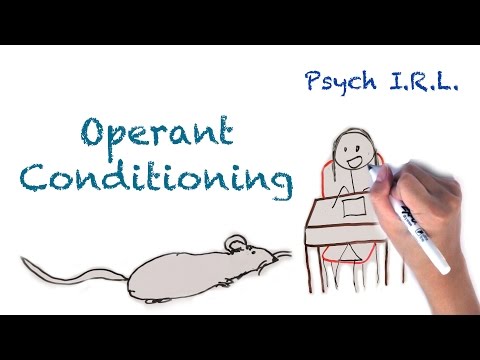
What is Operant Conditioning?
Operant Conditioning Explained
Introduction to Classical Conditioning
- The video begins with a brief overview of classical conditioning, defined as the association of stimuli.
- An example is provided involving Bob and Linda, where a song becomes associated with positive feelings due to their relationship.
- The speaker encourages viewers to check out additional resources for more detailed information on classical conditioning.
Transition to Operant Conditioning
- Operant conditioning is introduced as a different learning process where the subject actively chooses to respond.
- B.F. Skinner is highlighted as a key figure in operant conditioning, known for his experiments using the Skinner Box.
Understanding the Skinner Box Experiment
- The Skinner Box experiment involves a rat that learns to pull a lever for food through trial and error.
- Initially unaware of the mechanism, the rat eventually associates lever pulling with receiving food.
Key Concepts of Operant Conditioning
Categories of Learning
- Operant conditioning can be divided into two main categories: reinforcement and punishment.
Reinforcement Types
- Reinforcement strengthens behavior; it can be positive (adding a pleasant stimulus like food).
- A personal example illustrates positive reinforcement: earning money for achieving 100% on spelling tests.
Negative Reinforcement
- Negative reinforcement involves removing an unpleasant stimulus; an example includes stopping parental nagging after completing tasks correctly.
Punishment in Operant Conditioning
Positive Punishment
- Positive punishment adds an unpleasant stimulus; an anecdote about twins learning not to touch a hot lamp exemplifies this concept.
Negative Punishment
- Negative punishment removes a rewarding stimulus, such as taking away privileges (e.g., phone usage), teaching consequences for bad behavior.
Conclusion and Further Learning Resources
- The speaker invites viewers interested in deeper understanding of operant conditioning to explore additional resources linked in the description.