Ciclo del ácido cítrico | Video HHMI BioInteractive
The Role of Mitochondria in Energy Production
Introduction to Mitochondria
- Mitochondria are dynamic organelles within living cells responsible for energy production and biosynthesis.
- They contain metabolic enzymes that catalyze a series of chemical reactions known as the citric acid cycle.
The Citric Acid Cycle Overview
- The citric acid cycle gradually separates two carbon atoms from glycolysis, capturing electrons and channeling them to the electron transport chain, producing carbon dioxide as waste.
- It begins with oxaloacetate, a 4-carbon molecule, which combines with acetyl-CoA (a 2-carbon group from glycolysis).
Key Steps in the Citric Acid Cycle
Step 1: Formation of Citrate
- Acetyl-CoA transfers its acetyl group to oxaloacetate, forming citrate (6 carbons), which is crucial for fatty acids and cholesterol biosynthesis.
Step 2: Isomerization
- An enzymatic reaction converts citrate into isocitrate by changing the position of an oxygen atom.
Step 3: Decarboxylation
- One carbon atom is removed from isocitrate, releasing CO₂ and converting it into α-ketoglutarate (5 carbons), while transferring electrons to NADH.
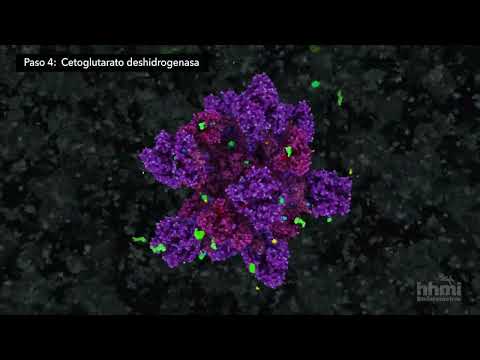
Step 4: Further Decarboxylation
- A large multi-enzyme complex facilitates further reactions that remove another carbon from α-ketoglutarate, generating CO₂ and linking succinyl-CoA to coenzyme A.
Step 5: GTP Production
- Enzymes separate succinyl-CoA from coenzyme A, breaking a high-energy bond to produce GTP, essential for RNA synthesis and protein production.
Final Steps in the Cycle
Step 6: Oxidation of Succinate
- An enzyme on the inner mitochondrial membrane oxidizes succinate to fumarate while transferring electrons to coenzyme Q.
Step 7: Hydration Reaction
- Fumarate reacts with water to form malate (4 carbons), setting up for regeneration of oxaloacetate in the final step.
Final Regeneration of Oxaloacetate