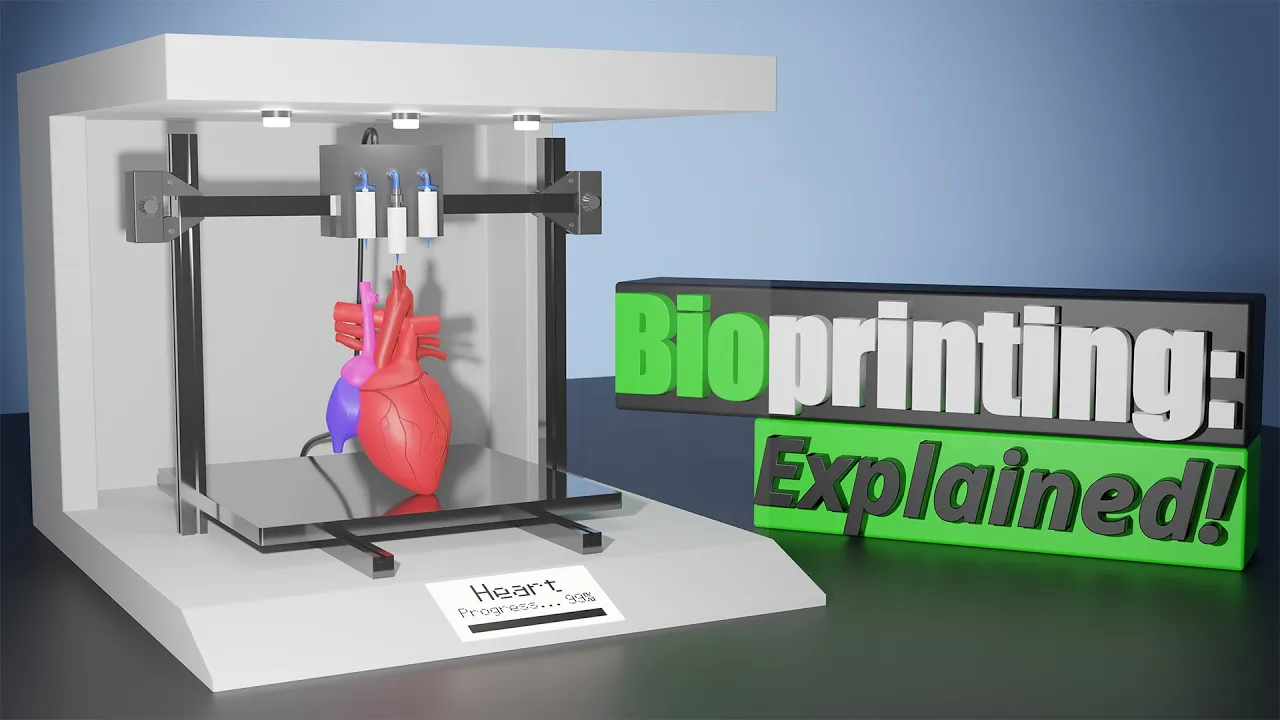
What 3D Bioprinting Is and How It Works
3D Bioprinting Technology Overview
This section introduces 3D bioprinting technology, explaining the concept of using bioink composed of cells to fabricate tissues and organs.
Introduction to 3D Bioprinting
- Bioinks are composed of cells suspended in a hydrogel for protection and nourishment.
- Three categories of bioprinting methods: extrusion-based, droplet-based, and energy-based.
Extrusion-Based Bioprinting
- Involves forcing continuous filaments of bioink through a nozzle using pneumatic or mechanical pressure.
- Stabilization of bioink is crucial for retaining shape during printing.
Droplet-Based Bioprinting
- Deposits discrete volumes of bioink onto a surface using methods like inkjet-based and micro-valve based bioprinting.
- Inkjet-based bioprinting utilizes thermal or piezoelectric mechanisms to eject droplets.
Energy-Based Bioprinting
- Utilizes focused energy sources like lasers to solidify or stabilize bioink.
- Stereolithography is a notable method where a laser hardens light-sensitive bioink on a platform.
Bioprinting Methods Comparison
This section discusses the pros and cons of different bioprinting methods and the importance of efficiency in organ printing.
Pros and Cons Analysis
- Laser-induced forward transfer bioprinting offers high precision but is expensive and time-consuming.
- Different methods are used based on specific needs for efficiency in organ printing.
Maximizing Efficiency in Organ Printing
- Approaches combining various bioprinting methods are being developed to enhance efficiency.
Bioprinting Methods and Applications
This section discusses the details of bioprinting methods, including the importance of resolution in printing different parts efficiently. It also touches on the concept of 4D bioprinting and the use of hydrogels to mimic the extracellular matrix.
Bioprinting Optimization
- High-resolution printing is crucial for some parts, while others can be printed at lower resolutions to save time.
4D Bioprinting
- Bioprinting involves cells that proliferate, interact, and change over time, known as 4D bioprinting.
- Chemical additives in bioink influence cell behavior and development over time.
Hydrogels and Extracellular Matrix
- Hydrogels degrade slowly to mimic the native extracellular matrix.
- Hydrogels resemble the non-living material that cells secrete to support cell structure.
Applications of Bioprinting
This section explores various applications of bioprinting, focusing on organ printing, personalized organs from patient cells, and the potential benefits for drug testing.
Organ Printing Advancements
- Bioprinting enables printing entire functional organs from scratch with unique challenges due to organ complexity.
- Custom organs from a patient's own cells reduce rejection risks compared to donor-derived organs.
Stem Cells in Bioprinting
- Stem cells offer flexibility in creating personalized organs even when acquiring specific cells is challenging.
- Stem cells can be induced into different cell types needed for bioprinted organs' creation.
Tissue Bioprinting Benefits
- Bioprinted tissues are valuable for creating vegan meat or leather with controlled cell proliferation under specific conditions.
- Cultivating meat and leather through bioprinting could be more efficient and environmentally friendly than traditional methods.
Bioprinting in Drug Development
This section delves into how bioprinted tissues can revolutionize drug testing by providing more accurate human-like models for pharmaceutical research.
Drug Testing Transformation
- Current drug testing on animals often fails to predict human responses accurately leading to wasted resources.
- Bioprinted human tissues offer more accurate models for drug testing with reduced costs and ethical concerns compared to animal testing.
Organs-on-Chips Innovation
- Organs-on-chips mimic real organ functions for precise drug testing without requiring full organ functionality.
- Linking multiple organs-on-chips in a microfluidic circuit could create a comprehensive system known as a "human on a chip" for thorough drug safety evaluations.
Bioprinting Applications and Future Prospects
The discussion revolves around the applications of bioprinting, particularly in testing new drugs and cosmetics without animal testing, as well as the potential future use of bioprinting in creating plant varieties and fully functional organs.
Testing New Drugs Ethically
- Bioprinting allows mimicking only valuable organ parts for drug testing, reducing unnecessary suffering.
- Directly introducing diseases to human "on a chip" can enhance drug testing efficiency and ethics.
Ethical Cosmetics Testing
- Bioprinted tissues offer an ethical alternative for testing cosmetics instead of using animals.
- Despite benefits, challenges exist in utilizing bioprinted tissues for cosmetic safety assessments.
Future Plant Applications
- Bioprinting plants could lead to creating new plant varieties with desired agricultural traits.
Potential Organ Advancements
- Questions arise about bioprinting organs with superior abilities compared to natural organs.
- Can we create organs like eyes through bioprinting?