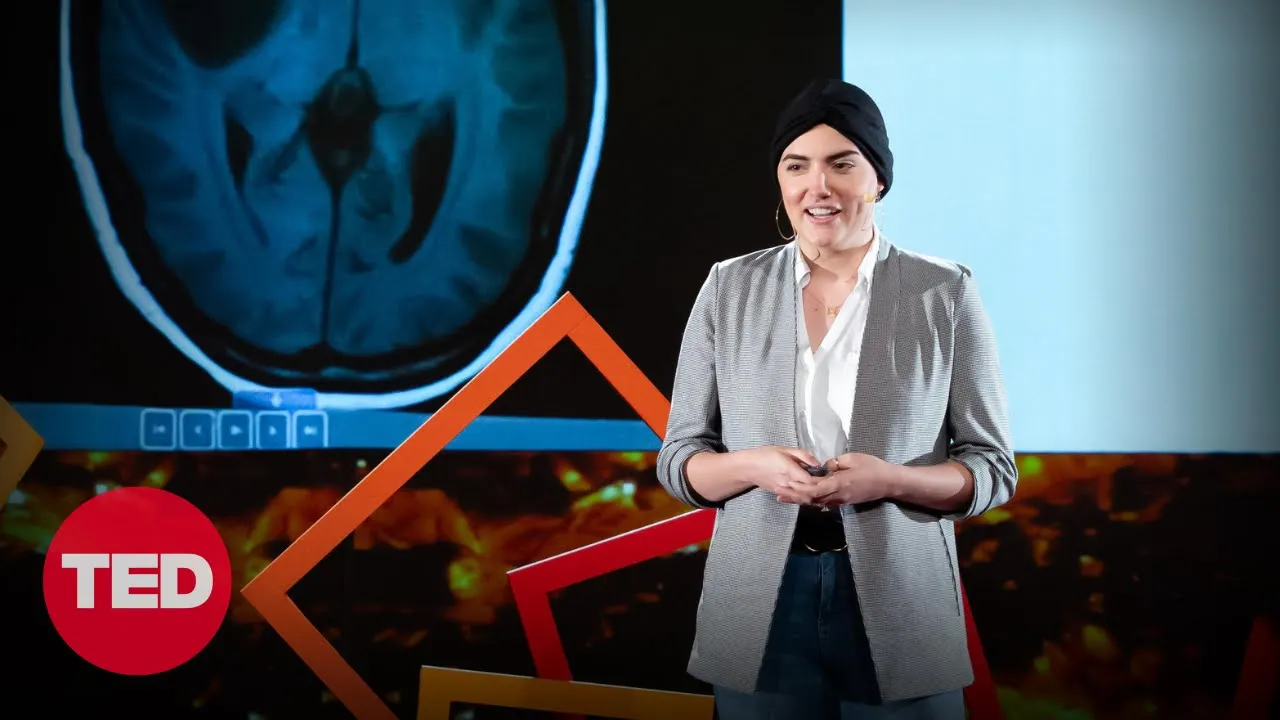
Christina Costa: How gratitude rewires your brain | TED
Introducing the Brain Kissing Ritual
The speaker, a former elementary school teacher, shares her experience of introducing a brain kissing ritual in her classroom. She explains how this practice became a fun and gratitude-filled activity for her students.
Brain Kissing Ritual in the Classroom
- The speaker got the idea of brain kissing from a friend's classroom where students would touch their mouths and then the top of their heads.
- She decided to implement this ritual in her own classroom as a way to express gratitude for her students' efforts.
- The brain kissing ritual became a fun and enjoyable activity for both the speaker and her students.
A Life-Changing Diagnosis
The speaker recounts her personal journey after experiencing severe migraines and dizziness. She describes the moment she received news of a mass in her brain and how it changed her perspective on life.
Discovering the Mass in Her Brain
- After suffering from migraines and dizziness, the speaker underwent medical examinations that revealed a large mass in the right hemisphere of her brain.
- Seeing an image of her own brain for the first time filled her with fear and led to an emotional moment at the hospital.
- Following this diagnosis, she made it a daily practice to kiss her brain as an act of self-love before and after surgery.
Coping with Diagnosis
The speaker reflects on how she dealt with being diagnosed with an astrocytoma. She shares excerpts from Instagram posts where she expressed her emotions and rejected narratives centered around fighting or battling against cancer.
Rejecting Narratives of Battle
- The speaker felt uncomfortable with being labeled as a warrior or fighter due to her diagnosis.
- She did not want to view her brain as an enemy or engage in a war with her own body.
- Instead, she focused on practices of well-being and shared insights from her studies in bio-psychiatry and neuroscience.
Studying Resilience and Well-being
The speaker discusses her academic background in resilience and well-being. She explains how she encouraged her students to kiss their brains and shares the topics she teaches, including psychology.
Teaching Resilience and Well-being
- As a teacher, the speaker introduced the concept of kissing one's brain to express gratitude for learning efforts.
- She studied resilience and well-being in her academic pursuits, which include pursuing a doctorate in psychology.
- The speaker often mentions being a bio-psychiatrist and neuroscientist when discussing her experiences with doctors.
Conclusion
The speaker concludes by emphasizing the importance of embracing practices that promote well-being rather than engaging in narratives centered around fighting or battling against illness.
Embracing Well-being Practices
- The speaker rejects the idea of viewing oneself as a warrior or engaging in battles with one's own body.
- Instead, she focuses on promoting practices of self-love, gratitude, and overall well-being.
- By sharing her journey, she aims to challenge dominant narratives surrounding illness and encourage others to embrace alternative perspectives.
This transcript is relatively short, so there are fewer sections. However, each section provides key insights from the speaker's story.
New Section "Ah, isso é irrelevante"
The speaker dismisses something as irrelevant.
Speaker Dismisses Irrelevance
- The speaker states that something is irrelevant.
This section provides a brief summary of the transcript and includes the timestamp associated with the statement "Ah, isso é irrelevante".
Transforme qualquer vídeo em um resumo como este
Vídeos do YouTube, reuniões, aulas. Com transcrição, busca e chat.