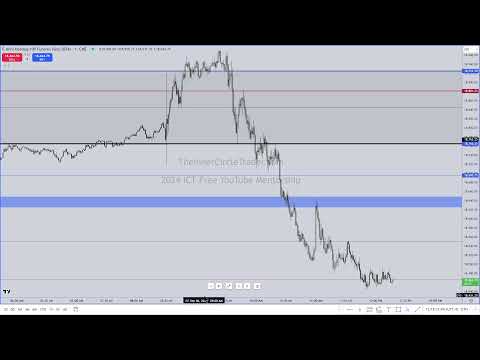
ICT 2024 Mentorship \ NonFarm Payroll September 06, 2024
Non-Farm Payroll Insights and Trading Strategies
Introduction to Non-Farm Payroll
- The host expresses excitement about engaging with viewers, highlighting the importance of diverse opinions for storytelling.
- The host mentions a brief interruption to ensure their laptop is charged, indicating a time constraint for the session.
Preparing for Non-Farm Payroll
- The host introduces the topic of non-farm payroll (NFP), emphasizing its significance in trading and market movements.
- They mention sharing insights on their son's YouTube channel, encouraging followers to check community posts for updates and encouragement.
Understanding Market Dynamics
- The host discusses analyzing market gaps using charts, specifically focusing on daily fair value gaps related to NFP.
- They clarify that NFP is not driven by algorithms but rather manual interventions, which can lead to unpredictable market movements.
Trading Recommendations
- The host advises against trading immediately before or after the NFP announcement due to high volatility; suggests waiting at least 15 minutes post-announcement.
- They stress that attempting to predict market direction ahead of NFP events often leads to poor outcomes; instead, traders should observe initial reactions.
Analyzing Market Reactions
- After an initial shock from the NFP release, traders should look for "smooth edges" in price action as potential areas of interest for trades.
Market Dynamics and Trading Strategies
Understanding Market Movements
- The speaker expresses dissatisfaction with the current market situation, noting that a lower low has been reached and the weekly objective of hitting the August 13th daily fair value gap has been met.
- A target price of $18,765.00 is mentioned as a desired entry point for buying, indicating a strategic approach to trading based on specific price levels.
- The speaker warns against the misconception that traders can easily enter and exit trades during volatile movements, emphasizing that brokers often restrict execution due to rapid market changes.
Broker Behavior and Market Liquidity
- Brokers are described as pulling opportunities from traders to prevent over-leveraging, which is common among those using funded accounts who gamble on significant moves.
- The illusion of illiquidity in markets is discussed; while many want to buy or sell, brokers collectively limit access to maintain control over their risk exposure.
Non-Farm Payroll Insights
- Non-farm payroll data is highlighted as a useful indicator for predicting market behavior at 9:30 AM, although caution is advised against positioning ahead of such reports.
- The importance of relative equal lows in determining market direction is emphasized; breaking below these levels suggests potential movement towards higher targets.
Time Frames and Trading Strategy
- The 15-minute time frame is identified as crucial for observing liquidity pools and making informed trading decisions based on high-impact news events like FOMC or CPI releases.
- Acknowledgment of technical difficulties occurs but does not detract from the focus on utilizing appropriate time frames for analysis in trading strategies.
Liquidity Analysis Techniques
- The speaker discusses how understanding liquidity can seem mysterious but emphasizes teaching methods to identify it effectively without needing complex tools or applications.
Understanding Market Dynamics and Trading Strategies
Analyzing Relative Highs and Lows
- The speaker discusses the significance of relative equal highs and lows in market analysis, particularly before high-impact news events like non-farm payrolls. They note that a low being taken slightly lower than another can indicate market sentiment.
Anticipating Market Movements
- Emphasis is placed on anticipating market movements during significant economic announcements. The speaker encourages traders to be cautious and not to interpret their insights as direct trading signals, highlighting the uncertainty involved.
Importance of Liquidity Pools
- Identifying pools of liquidity for buy-side (above relative equal highs) and sell-side (below relative equal lows) is crucial for framing trades on a 15-minute time frame. This practice should be part of daily trading routines.
Journal Keeping for Traders
- The speaker stresses the importance of maintaining a trading journal that annotates liquidity pools at specific times, such as 9:30 AM, to enhance understanding of market behavior over time. This practice aids in developing consistent trading strategies.
Economic Calendar Awareness
- Traders are advised to focus on medium or high-impact news events from reliable economic calendars like Forex Factory or Econo Day, while disregarding low-impact news that may not significantly affect market movements. Understanding these events helps in making informed trading decisions.
Challenges in Forex Trading
- The speaker expresses concerns about current conditions in Forex markets, citing issues with currency flows and potential risks associated with major shifts in monetary policy that could lead to significant losses for traders if they are unprepared. They suggest a shift towards commodities and futures trading instead due to these challenges.
Transitioning from Forex to Futures Trading
Why Trade Futures Over Forex?
Level Playing Field in Trading
- The market operates on a level playing field where all traders have the same opening and closing prices, making it more appealing for professionals compared to Forex.
- Brokers have discretion over trade execution, which can lead to discrepancies like missed take profits or unexpected stop losses, particularly prevalent in Forex.
Disparities Between Futures and Forex
- In Futures trading, if a trader is wrong about a position, it's clear-cut; however, in Forex, the disparity among brokers creates confusion and potential manipulation.
- The analogy of choosing between swimming with crocodiles (Forex) versus a single hippo (Futures) illustrates the risks associated with each market.
Geopolitical Climate Impacting Currency Trading
- Current geopolitical tensions suggest an impending financial meltdown that could severely impact currency markets.
- Rapid changes in currency values can occur unexpectedly, leading to significant losses for traders who are unprepared.
Personal Stance on Trading Markets
- The speaker emphasizes their complete withdrawal from Forex trading due to its unpredictability and lack of control over broker actions.
- In contrast, Futures provide a more stable environment with reputable brokers ensuring transparency and equal pricing across the board.
Psychological Preparedness in Trading
- Traders are better equipped mentally to handle adversities in Futures as opposed to the chaotic nature of Forex trading.
- The discussion transitions into market behavior around specific times (e.g., 9:30 AM), indicating how price movements can signal future trends.
Market Analysis Techniques
- Analyzing price action before market openings helps predict potential movements; understanding ranges can indicate whether the market will remain stable or break out.
- If certain price levels hold without being breached before key times (like 9:30 AM), it suggests possible future movement patterns that traders should watch closely.
Learning Process for New Traders
Understanding Charting and Mentorship
Importance of Previous Content
- The speaker emphasizes that older content on their YouTube channel remains relevant, as foundational concepts taught years ago still apply today.
- They highlight the importance of focusing on the 15-minute time frame for chart analysis, indicating it as a starting point for beginners.
Learning Through Mistakes
- The speaker encourages learners to make mistakes in their annotations, using these errors as teaching moments to identify correct practices.
- They stress the value of personal charting before viewing others' analyses to foster independent learning and understanding.
Mentorship Dynamics
- The speaker outlines their mentorship approach with Caleb, emphasizing that initial questions may be basic but are essential for building knowledge.
- They plan to guide Caleb through practical examples over the next few weeks, allowing him to replicate learned strategies independently.
Observations on Market Behavior
- The speaker discusses observing price action inefficiencies and how they influence trading decisions, particularly after market openings.
- They note specific price movements and liquidity pools that traders should monitor during sessions.
Engaging with Other Traders
- The speaker appreciates other YouTubers who share their opinions openly, recognizing them as valuable sources of sentiment analysis within trading communities.
- They liken popular YouTube channels to "watering holes," where traders gather information and insights from each other’s discussions.
Manipulating Sentiment in Chat Rooms
- The speaker expresses a lack of interest in following other traders but enjoys observing interactions in chat rooms for sentiment shifts.
Analysis of Market Sentiment and Liquidity Dynamics
Understanding Market Fluctuations
- The speaker discusses the need to create disturbances in market sentiment, likening their approach to that of a "Judas" figure, seeking opinions from others on potential market downturns.
- They highlight the significance of relative highs and lows in price movements, emphasizing that a lower high indicates a higher probability for downward movement based on previous teachings.
Liquidity and Price Action
- The concept of liquidity is explored through the analysis of wicks; if a wick is overtaken, it signifies a run on liquidity. The speaker plans to analyze this further using quadrants.
- A distinction is made between high-impact news events (like PPI or CPI announcements) and medium-impact events, with expectations set for gradual trading behavior leading up to these announcements.
Sentiment Analysis Through Social Media
- The speaker emphasizes the importance of gauging sentiment from social media interactions, noting that opinions shared in chat rooms can provide insights into market dynamics.
- They express interest in how sentiments gain traction among participants in chat rooms, indicating that collective opinion can influence market movements.
Smart Money vs. Dumb Money Dynamics
- The speaker aims to identify when smart money (informed traders) engages against dumb money (uninformed traders), suggesting that impulsive opinions often lead to losses for less informed participants.
- A clear distinction is drawn between smart money's strategic actions versus impulsive behaviors from uninformed traders; smart money operates with calculated strategies rather than seeking validation.
Trading Strategies and Personal Insights
- The speaker reflects on their own trading experiences, asserting clarity amidst perceived noise in the markets. They encourage viewers by sharing their journey from humble beginnings.
- Emphasis is placed on defining buy-side and sell-side liquidity pools within specific time frames as foundational context for trading decisions.
Utilizing YouTube Streams for Market Insights
- Recommendations are made to observe popular YouTubers' streams as valuable sentiment indicators while also understanding technical aspects behind price movements.
- The speaker reiterates their commitment to transparency about their trading strategies throughout mentorship sessions while preparing viewers for potential price levels they anticipate reaching.
Trading Insights and Strategies on Non-Farm Payroll Friday
Market Behavior and Personal Strategy
- The speaker expresses confidence in their trading success, indicating they have already made significant profits and are stepping back from the market while others struggle.
- They use a movie analogy to describe their trading mindset, emphasizing the importance of understanding liquidity pools when analyzing different time frames.
- The distinction between buy-side and sell-side liquidity is discussed, highlighting how price action can indicate stop hunts versus blockiness in market movements.
- The speaker reflects on the week’s downward trend, noting that they capitalized on afternoon trades after missing earlier opportunities.
- They emphasize patience in waiting for optimal setups rather than forcing trades every day.
Analyzing Price Action
- Importance of defining ranges using 15-minute time frames is highlighted; traders should assess whether price will stay within or break out of these ranges during morning sessions.
- The discussion includes strategies for anticipating market moves based on weekly trends and specific days like Fridays, which may influence trading decisions.
- A reference to daily chart analysis suggests that understanding broader market context can clarify current price actions and potential future movements.
Liquidity Pools and Chart Analysis
- Transitioning from a 15-minute to a 5-minute chart allows for more granular analysis of liquidity pools, aiding in identifying minor buy-side opportunities.
- The speaker discusses annotating charts effectively to teach students about identifying primary liquidity pools based on defined time frames.
- Techniques for copying annotations on charts are shared as part of teaching methods aimed at helping new traders understand market structures better.
Final Thoughts on Market Predictions
- Emphasis is placed on recognizing both buy-side and sell-side liquidity pools within defined ranges to inform trading strategies effectively.
- The necessity of having a starting point for analysis is reiterated; traders should begin with established high/low points before breaking down further into smaller liquidity pools.
Understanding Market Manipulation and Trading Strategies
The Illusion of Market Data
- The speaker discusses how market data is often manipulated, leading to aggressive price adjustments. They emphasize that traders are misled by the narrative that these changes were "priced in" without prior warning.
- The speaker expresses skepticism about job numbers and other economic indicators, labeling them as lies designed to benefit large investors rather than provide genuine insights into market conditions.
- They argue that fundamental analysis has become unreliable since the 1990s due to pervasive misinformation, suggesting a shift towards technical analysis for better trading decisions.
Technical Analysis Over Fundamentals
- The speaker advocates for relying on charts and technical indicators instead of fundamentals, asserting that they reveal more accurate market behavior.
- They illustrate a specific trading strategy using minute charts to identify buy-side opportunities before major announcements like non-farm payroll releases.
Challenges with Execution During High Volatility
- The discussion highlights the difficulties traders face during volatile periods, particularly regarding slippage—where orders are filled at unfavorable prices due to rapid market movements.
- Slippage is explained as a significant risk when trying to execute trades quickly; it can lead to larger-than-intended losses if not managed properly.
Misleading Social Media Influences
- The speaker critiques social media's role in trading culture, pointing out how individuals may post screenshots of profitable trades after the fact, creating an illusion of success.
- They suggest this behavior stems from a desire for validation rather than genuine trading success, which can distract from learning effective strategies.
Learning and Adapting Trading Approaches
- Emphasizing the importance of education over superficial engagement with trading trends, the speaker encourages listeners to focus on developing their skills rather than seeking social media approval.
- They stress that many people engage in trading without a true commitment to learning or understanding the markets, which ultimately hinders their potential for success.
- The speaker offers advice on avoiding common pitfalls in trading by focusing on price action and strategic entry points rather than chasing every small movement in the market.
How to Trade with a Sniper Mentality
The Emotional Journey of Trading
- The speaker reflects on the anxiety and stress experienced during early trading days, highlighting how it affected basic activities like eating and sleeping.
- Over time, traders learn to identify better setups, which are rare occurrences rather than everyday situations; typically only one to three viable trades per week.
Understanding the "One Shot One Kill" Philosophy
- The concept of "one shot one kill" is introduced, likening effective trading to a sniper's approach—taking precise shots rather than spraying bullets indiscriminately.
- New traders often act impulsively when under pressure (going on tilt), wasting their resources without achieving meaningful results.
The Importance of Precision in Trading
- A sniper mentality emphasizes patience and precision; traders should wait for specific market conditions before entering trades.
- Identifying key price action setups is crucial; these setups serve as targets for entry points based on fair value gaps.
Execution Strategy: Calmness Under Pressure
- When entering a trade, it's essential to remain calm and composed—exhaling deeply helps minimize movement that could affect trade execution.
- After placing a stop-loss order based on market conditions, traders should refrain from unnecessary actions or distractions.
Critique of Funded Account Models
- The speaker proposes an idea for a lottery system where select individuals could copy trades from a demo account he manages, questioning the sustainability of funded account firms under such circumstances.
Game Plan and Trading Strategies
Overview of the Game Plan
- The speaker discusses a game plan shared earlier in the week, emphasizing its importance and noting that they exceeded their time limit to compensate for a missed live stream.
- New glasses are mentioned, enhancing the speaker's ability to see clearly while discussing trading strategies.
Linking Multiple Accounts
- A hypothetical scenario is presented where 20 contracts with a funded account company could be linked together, potentially amounting to $2 million.
- The speaker contemplates having multiple accounts linked to one main account, allowing them to execute trades without additional workload.
Potential Earnings from Trading
- The discussion includes various trading sessions (London, New York), suggesting significant earnings potential per trade across different market hours.
- The speaker expresses excitement about the possibility of generating $8 to $10 million every 10 days through strategic trading.
Copy Trading Concept
- There’s an exploration of allowing others to copy trades from an account without revealing the trader's identity, raising questions about anonymity in trading.
- The speaker invites feedback on this concept and suggests it could lead someone else to become a multi-millionaire within ten days.
Implications for Prop Firms
Engaging with Prop Firms
- An invitation is extended for CEOs of prop firms to confirm the feasibility of these strategies discussed by the speaker.
- The speaker clarifies they will not personally engage with prop firms but can create proxies for others.
Market Disruption Concerns
- There’s concern about how prop firms might react if traders start exploiting these strategies; suggestions include banning certain accounts or disrupting connections.
Trading Preparation and Analysis
Pre-Market Strategy
- As the opening bell approaches, there’s anticipation for observing market movements and reviewing previous trades before closing out for the weekend.
Charting Techniques
- The speaker shares their preference against cluttered charts but acknowledges using them as teaching tools for students regarding key levels in trading.
Note-Taking Methodology
- A simple note-taking method is described involving writing down key levels based on previous day highs/lows and making observations during real-time analysis.
Understanding Price Action and Market Behavior
The Role of Price Action in Trading
- The speaker emphasizes the importance of observing price action, noting that it reveals patterns and behaviors at specific times and prices, which can inform trading decisions.
- Focus is placed on the relationship between price fluctuations and raw numbers, suggesting that understanding these dynamics is crucial for effective trading without relying heavily on external indicators.
Analyzing Market Inefficiencies
- The speaker discusses expectations for market behavior on Fridays, indicating a potential upward movement towards buy-side levels while acknowledging existing inefficiencies from previous trading days.
- A humorous remark about social media buzz surrounding his trading strategies highlights the interest in replicating successful trading methods, hinting at a broader trend of individuals seeking to profit from established traders' insights.
Technical Analysis Tools
- The discussion transitions to analyzing opening ranges in the market, with an emphasis on identifying gaps and previous closes as critical reference points for current price action.
- The speaker advocates using one-minute charts for detailed analysis, comparing different time frames to various painting tools—each serving a unique purpose in capturing market nuances.
Insights into Candlestick Patterns
- A metaphorical comparison is made between different chart time frames and painting techniques, illustrating how finer details emerge in shorter time frames like one minute compared to broader strokes seen in daily or 15-minute charts.
- Observations are made regarding candlestick behavior across different time frames; specifically how single candles may obscure significant movements unless closely monitored.
Learning Through Observation
- The speaker stresses that personal insight gained through observation cannot be fully taught but can be developed by watching price movements over time.
Trading Insights and Strategies
Broker Experiences and Market Conditions
- The speaker shares personal experiences with brokerage firms, specifically mentioning dissatisfaction with FXCM, labeling it as "trash" due to past trading issues.
- Discusses the challenges of getting fills during high volatility periods, such as non-farm payroll releases, emphasizing that traders should not expect to get filled in the first few minutes after major announcements.
Analyzing Price Action
- The speaker advises traders to step back and analyze price action rather than feeling pressured to participate immediately. They highlight the importance of understanding market signals.
- Emphasizes a cautious approach when considering short trades on a 15-minute timeframe if sell-side liquidity has not been engaged.
Setting Realistic Trading Goals
- The speaker stresses the importance of setting achievable goals in trading, suggesting that aspiring traders should be content with smaller gains initially (e.g., 5 handles in S&P).
- Encourages beginners to start with modest expectations and build confidence gradually instead of seeking immediate large profits.
Technical Analysis Techniques
- Introduces the concept of using a naked chart for analysis while cautioning against losing valuable annotations during this process.
- Mentions recording multiple screens for analysis purposes and reflects on successfully executing trades at optimal points within market fluctuations.
Fair Value Gaps Explained
- Defines fair value gaps as areas where there is an imbalance between buy-side and sell-side efficiency, crucial for understanding market dynamics.
Market Dynamics and Trading Strategies
Understanding Price Movements
- The speaker discusses the significance of candlestick patterns, particularly focusing on a specific candle's high and its implications for future price movements.
- Emphasizes the benefits of live streaming for trading discussions, highlighting the lack of need for post-editing and the spontaneity it brings to trading analysis.
- Introduces the concept of liquidity draws, indicating that price may move lower based on volume imbalances identified in previous candlesticks.
Volume Imbalance and Market Behavior
- Explains how volume imbalances can indicate potential market movements, suggesting that traders should annotate significant Wicks as they represent critical levels to monitor.
- Discusses balanced price ranges and their role in determining market direction; sell-side delivery indicates downward movement while buy-side delivery suggests upward trends.
Mechanisms Behind Price Changes
- Clarifies that price fluctuations are primarily driven by inefficiencies or liquidity events—either moving up to capture buy stops or down to trigger sell stops.
- Asserts that there are no other mechanisms influencing price changes beyond these fundamental principles of buying and selling pressure.
Analyzing Market Interventions
- Describes manual interventions in trading as attempts to reach defined price levels more quickly but notes that such moves often lack participation opportunities for traders.
- Reiterates that understanding how many contracts influence intraday price movements is crucial for traders aiming to decode market behavior effectively.
Targeting Inefficiencies in Trading Strategy
- Highlights the importance of identifying gaps created by rapid price movements; these gaps represent inefficiencies targeted by traders seeking profitable trades.
Understanding Limit Orders and Execution Strategies
The Importance of Adjusting Limit Orders
- The speaker discusses the necessity of adjusting limit orders to ensure optimal execution, emphasizing the importance of factoring in the spread when setting profit objectives.
- They highlight that simply touching a price level does not guarantee execution, especially when trading larger volumes like 100 contracts.
Challenges with Order Execution
- The speaker explains that insufficient buyers at a specific price can lead to partial fills or missed exits, which can be frustrating for traders.
- They stress the need for humility in exit strategies, advocating for flexibility rather than strict adherence to precise price levels.
Building a Mindset for Trading Success
- A mindset shift is encouraged where traders accept that they do not need extreme precision to achieve profitability; instead, they should focus on effective execution.
- The speaker uses an example of aiming for a slightly higher exit price (e.g., 18770 instead of 18765.25), illustrating how minor adjustments can impact fill rates.
Managing Expectations and Ego
- Traders are reminded to keep their expectations realistic regarding precision and perfection in order execution; this helps avoid disappointment from missed opportunities.
- The importance of maintaining a balance between ambition and practicality is emphasized, as overconfidence can lead to poor decision-making during trades.
Liquidity and Market Dynamics
- The discussion includes insights on liquidity within small price ranges, highlighting how fluctuations create opportunities for order matching between buyers and sellers.
Understanding Trading Psychology and Market Dynamics
The Concept of "Marrying the Vein"
- The metaphor of "marrying the vein" refers to traders who become overly attached to a specific trading strategy or position, believing it will yield continuous profits despite evidence to the contrary.
- This attachment can lead to wasted time and resources as traders dig deeper into unproductive trades instead of reassessing their strategies.
Timing in Trading
- Emphasis on maintaining an encouraging mindset while trading; it's important not to get discouraged by setbacks.
- Traders should focus on engaging in short positions when market conditions allow, rather than forcing trades that may not be optimal.
Lunch Macro and Market Behavior
- The lunch macro period (11:30 AM - 1:30 PM EST) is characterized by retracement movements based on morning session price action.
- Observing price behavior during this timeframe can reveal patterns that are consistent across different trading days.
Importance of Time Zones
- It’s crucial for traders to set their charts to New York local time, as failing to do so can lead to misinterpretation of market signals and trends.
- Recognizing the significance of specific times like 11:30 AM and 1:30 PM helps define critical trading windows for making informed decisions.
Fair Value Gaps and Trading Strategies
- Fair value gaps often form in the first 30 minutes after the market opens, providing opportunities for traders if they understand how these gaps function within broader market dynamics.
- A variety of Price Delivery Arrays (PDAs), including fair value gaps, breaker blocks, and vacuum blocks, exist within this framework, offering multiple avenues for analysis.
Personal Development in Trading
- Encouragement is given for traders to recognize their potential; many possess more knowledge than they realize but may underestimate their capabilities.
- A cautionary note against impulsive trading following lectures; success comes from understanding concepts deeply before applying them with real money.
Building Independence as a Trader
- The goal is for each trader to develop independence rather than relying solely on external guidance or teams; self-sufficiency leads to long-term success.
Mentorship and Trading: Understanding the Process
The Importance of Patience in Mentorship
- The speaker emphasizes that mentorship is a new process, having only started a month ago, and urges participants not to rush into trading.
- He criticizes the mindset of wanting immediate results from mentorship, labeling it as a "moronic perspective" and advises against using real money too soon.
- A common issue arises where individuals attempt to apply what they've learned without fully understanding it, leading to losses.
Personal Anecdote: Learning Through Experience
- The speaker shares a personal story about impulsively buying a high-speed motorcycle without the necessary skills, highlighting the dangers of recklessness.
- He reflects on his experience of riding at 155 mph just three weeks after purchasing the motorcycle, illustrating how lack of experience can lead to dangerous situations.
The Reality Check: Risk Awareness
- As he recounts his high-speed ride, he describes feeling panic when realizing the potential consequences of reckless behavior while riding.
- The concept of "tunnel vision" at high speeds is introduced; this metaphor relates to how traders may become overly focused on short-term gains without considering broader risks.
Drawing Parallels Between Riding and Trading
- The speaker connects his motorcycle experience with trading by stressing that both require skill and awareness; rushing into either can lead to failure or danger.
- He warns against chasing trends or influencers in trading as he did with racing another vehicle, emphasizing that such actions are often misguided.
Conclusion: Emphasizing Skill Development Before Action
- Ultimately, the message is clear: one must develop their skills thoroughly before engaging in high-risk activities like trading or motorcycling.
Reflections on Risk and Responsibility in Riding
Personal Experience with Motorcycles
- The speaker recounts a terrifying experience while riding, feeling overwhelmed by adrenaline and fear, reflecting on the potential dangers of high-speed riding.
- A poignant memory is shared about a motorcycle ride with his uncle, who passed away shortly after, highlighting the fragility of life and the impact of loss.
- After surviving a near-fatal accident in 2009 due to reckless riding, the speaker emphasizes the importance of learning from past mistakes.
Consequences of Recklessness
- The speaker describes a severe motorcycle accident where he sustained multiple injuries, reinforcing that impulsive decisions can lead to dire consequences.
- Despite surviving previous accidents, he acknowledges failing to learn from those experiences and being influenced by others' reckless behavior.
Influence of Social Media and Peer Pressure
- The speaker warns against letting social media or peer pressure dictate personal choices, particularly regarding risky behaviors like trading or riding motorcycles.
- He stresses that while it's important to be inspired by success stories, one must work hard and avoid taking unnecessary risks that could jeopardize their future.
Importance of Patience and Caution
- Emphasizing patience in trading or any high-risk activity, he advises against rushing into decisions without proper understanding or preparation.
- The speaker highlights that markets will still be available in the future; thus, there’s no need for haste which could lead to failure.
Learning from Mistakes
- He reflects on how many people fail because they attempt quick fixes rather than understanding the complexities involved in activities like trading or riding.
- The speaker expresses his love for motorcycles but recognizes his inability to ride responsibly due to past experiences and chronic pain resulting from injuries.
Final Thoughts on Control and Responsibility
- He shares insights about being influenced by peers when making poor choices as a rider; this parallels how individuals may approach trading without adequate knowledge.
The Risks of Biking and Trading
Personal Experience with Risky Decisions
- The speaker recounts a hasty decision to buy a motorcycle during a thunderstorm, emphasizing the impulsiveness of wanting immediate gratification.
- Describes the dangerous experience of riding home in poor weather conditions, highlighting the risks associated with both biking and trading.
- Reflects on the consequences of reckless financial decisions, warning that one can incur debts beyond comprehension if not careful in trading environments.
Importance of Learning Properly
- Stresses the necessity for proper education in trading, advocating for a slow and thorough understanding rather than rushing into real money trades without knowledge.
- The speaker aims to be a voice of reason amidst criticism, encouraging responsible behavior and awareness of risks involved in trading.
Misconceptions About Challenges
- Discusses how new traders often misidentify obstacles; they focus on minor issues while overlooking significant risks that could lead to substantial losses.
- Emphasizes that many perceived challenges are trivial compared to major pitfalls that can arise unexpectedly.
Gender Differences in Risk-Taking
- Notes that women tend to perform better in trading due to being less extreme risk-takers compared to men, sharing personal experiences from 2008 and 2009 as cautionary tales.
Technical Analysis Insights
- Introduces technical analysis concepts such as candlestick patterns and order blocks, explaining their relevance in making informed trading decisions.
- Clarifies misconceptions about bearish order blocks and emphasizes the importance of understanding market movements before executing trades.
- Mentions plans for documenting rules formally in written works to combat misinformation proliferated by others attempting to capitalize on his teachings.
Understanding Market Dynamics
- Highlights the need for traders to comprehend why certain trades succeed or fail instead of relying solely on luck or surface-level understanding.
- Warns against jumping into trades without fully grasping underlying market dynamics, using personal anecdotes from past experiences as lessons learned.
Understanding Fair Value Gaps in Trading
Introduction to Fair Value Gaps
- The speaker discusses the concept of fair value gaps, emphasizing the importance of analyzing candlestick patterns and their lows.
- A distinction is made between genuine fair value gaps and those misrepresented by others on platforms like YouTube.
Misconceptions in Trading Education
- The speaker critiques individuals who create courses or books without a deep understanding of trading concepts, suggesting that many are merely capitalizing on quick profits.
- There’s an ongoing struggle with publishers regarding book cover designs, highlighting the speaker's commitment to quality over profit.
Understanding Price Action and Delivery
- The speaker explains how to identify real fair value gaps by examining specific candlestick movements rather than relying solely on imbalances.
- It is noted that effective trading requires understanding multiple factors beyond just one aspect of price action.
Algorithmic Thinking in Trading
- The discussion emphasizes the need for algorithmic thinking when analyzing price movements and delivery states, warning against simplistic approaches to trading.
- A perfect scenario for price movement is described, illustrating ideal conditions for entering trades based on market behavior.
Practical Application and Learning Techniques
- The speaker advises against filling imbalances completely before making trade decisions, as this can lead to higher failure rates.
- Emphasis is placed on recognizing changes in delivery states as critical indicators for traders.
Analyzing Specific Price Actions
- A reference point is established at the opening price of a specific candlestick, which serves as a guide for future price actions.
- Transitioning between time frames during analysis is discussed; viewers are encouraged to replicate these techniques in their own charts.
Engaging with Content Effectively
- Viewers are reminded about utilizing video features such as pause and replay to better understand complex concepts presented during the lecture.
Understanding Trading Concepts and Mentorship in Chart Analysis
The Importance of Self-Reliance in Trading
- The speaker addresses criticism about their teaching pace, emphasizing the need for learners to find insights within their own charts rather than relying solely on provided materials.
- They highlight that practical experience is crucial; students must engage with their charts as they prepare for real trading scenarios, such as using a funded account.
- Confidence in trading comes from understanding one's own analysis rather than just following someone else's work, which can lead to uncertainty.
Analyzing Chart Patterns
- A shift back to a 60-minute chart reveals specific price movements and patterns that are critical for understanding market behavior.
- The speaker notes issues with technical tools (like Watermark), indicating the importance of reliable indicators when analyzing price action.
Critique of Current Mentorship Practices
- The speaker critiques mentors who charge for services without fully understanding the concepts they teach, warning that this could mislead students.
- They stress the responsibility of educators to provide accurate information and not rush into monetizing knowledge without proper mastery.
Building Trust Through Transparency
- Emphasizing long-term relationships over quick profits, the speaker advocates for building trust with clients through demonstrated competence and ethical practices.
- They argue against superficial teaching methods that lack depth and encourage aspiring mentors to focus on genuine education rather than profit-driven motives.
Evaluating Teaching Credibility
- The speaker suggests a litmus test for evaluating potential mentors: can they predict market movements accurately before they happen?
- They assert that true expertise should be demonstrable in real-time scenarios, contrasting it with those who only present past successes or theoretical knowledge.
Recognizing Market Inefficiencies
- Discussion on inefficiencies in trading strategies highlights common pitfalls among novice traders who may not understand market dynamics fully.
Understanding Price Action and Trading Concepts
The Importance of Context in Trading
- Acknowledging various factors influencing price action is crucial; one cannot rely solely on a single theory or candlestick pattern.
- The speaker emphasizes the necessity of integrating multiple facets of price behavior to derive meaningful insights, rather than oversimplifying complex trading concepts.
- There is a distinction made between quick learners seeking instant gratification and those who are willing to invest time in understanding deeper market dynamics.
Responsibility and Authenticity in Teaching
- The speaker expresses a desire for responsible students who appreciate the depth of knowledge being shared, contrasting them with those looking for quick fixes.
- Criticism is directed at superficial content prevalent online that focuses on materialism rather than genuine educational value.
Analyzing Market Inefficiencies
- The discussion highlights the importance of understanding market inefficiencies and their implications for trading strategies.
- The speaker asserts confidence in their ability to analyze these inefficiencies daily, indicating a robust grasp of market mechanics.
Utilizing Time Frames Effectively
- Transitioning from higher to lower time frames allows traders to identify significant price levels and potential order blocks effectively.
- Emphasis is placed on recognizing how price interacts with identified inefficiencies, which can inform trading decisions.
Validating Order Blocks
- Understanding the relationship between different time frames aids in validating bearish order blocks, enhancing decision-making processes.
- The speaker discusses how observing candle behaviors around key prices can confirm the validity of trading signals without needing additional indicators.
Practical Application of Trading Strategies
- Traders are encouraged to focus on practical applications derived from theoretical knowledge, ensuring they understand when and why certain strategies work.
Understanding Candlestick Patterns and Fair Value Gaps
Entry Points and Risk Management
- The lowest threshold for entry is determined by the high of a specific candlestick, which is set at 19,183.2 minus one tick to ensure a fill. This strategy relies on multiple confirming factors.
- The risk associated with this entry point is defined by the bearish order block represented by the candlestick that should not exceed its high, especially after previous price movements.
- A bearish order block is validated when a subsequent candlestick trades below the opening price of the identified candlestick, even if it does not close below it. This validation process is crucial for effective trading strategies.
- Observations show that price action can trade above prior highs before validating as a bearish order block, indicating potential reversal points in market behavior. This highlights the importance of monitoring these levels closely.
- For stop placement, traders should consider using the high of the relevant candlestick plus one tick as their defined risk level to manage potential losses effectively while entering trades based on fair value gaps.
Analyzing Fair Value Gaps
- The discussion emphasizes identifying fair value gaps between specific candlesticks' highs and lows to understand market inefficiencies better and anticipate future price movements. These gaps are critical for determining buy-side delivery opportunities.
- Price action within defined ranges indicates inefficiencies; thus, traders should focus on areas where no other candlesticks have crossed over during upward movements to identify potential sell-side delivery zones effectively.
- The analogy of painting illustrates how initial application creates smooth coverage but eventually leads to uneven distribution—similar to how price action behaves around fair value gaps—highlighting areas needing correction or attention in trading strategies.
Practical Application in Trading Strategies
- The concept of "Turtle Soup" patterns serves as both reversal and continuation signals; understanding how to utilize fair value gaps can enhance entry strategies significantly when executing these patterns in real-time trading scenarios.
- Emphasis is placed on practical execution rather than theoretical knowledge; traders are encouraged to actively apply learned concepts daily instead of relying solely on hindsight analysis or external commentary from others in the field.
Trading Insights and Strategies
Key Price Levels and Candlestick Analysis
- The speaker emphasizes the importance of marking key price levels on charts, specifically mentioning a level at 18552.5 as significant for trading decisions.
- A black line is introduced to label a target level that aligns with ICT's strategy, focusing on the range between candlestick highs and lows for potential trades.
- The speaker discusses waiting for a short-term high before entering trades, indicating a preference for short positions above this high while targeting lower price levels.
Shorting Strategy Framework
- The focus is on establishing an entry point above the identified candlestick high, with an understanding of fluctuations between entry points and stop-loss placements.
- Emphasis is placed on using hourly charts to identify shorting opportunities based on previous candlestick formations and their respective highs and lows.
Market Dynamics and Student Engagement
- The speaker acknowledges the influx of new students (60,000 monthly), highlighting the need for clear explanations in response to common questions about trading strategies.
- Encouragement is given to engage with past mentorship materials as they provide foundational knowledge relevant to current market conditions.
Analyzing Price Action
- Discussion revolves around identifying areas of opportunity within specific price ranges, emphasizing the significance of historical price action in predicting future movements.
- The speaker critiques slow communication styles while stressing the importance of recognizing old highs within current trading ranges.
Balancing Price Ranges and Gaps
- A detailed explanation is provided regarding balanced price ranges formed by overlapping candlesticks, which indicate both buy-side and sell-side activity.
- The concept of extending identified balance areas into future analysis is introduced, suggesting that these areas can influence upcoming market behavior.
Fair Value Gaps and Trading Decisions
- Focus shifts to identifying inefficiencies in sell-side delivery versus buy-side delivery within fair value gaps, which are crucial for making informed trading decisions.
- The discussion includes how gaps should be repriced towards fair value through upward movement in prices after certain candlesticks close.
Time Frame Analysis
- Transitioning down to a 15-minute time frame allows for more granular analysis; emphasis remains on identifying shorts as prices approach previously established inefficiencies.
- Reiteration of wanting to enter short positions as prices rise into identified gaps indicates strategic planning based on market structure observations.
Understanding Price Delivery Continuum Theory
The Importance of Time Frames in Trading
- The discussion begins with the significance of analyzing price movements on different time frames, particularly emphasizing the transition to a five-minute chart for more scientific analysis.
- The speaker outlines their preferred time frames, which include monthly, weekly, daily, four-hour, one-hour, fifteen-minute, five-minute, and one-minute charts. Anything below a one-minute chart is deemed excessive.
- A pink shaded area representing a fair value gap is defined based on higher time frame analysis. This area is crucial for understanding price behavior as it transposes to lower time frames.
- Emphasizing that timing is paramount in trading; if the timing isn't right, price movements won't yield favorable results. The bodies of candles must respect established levels.
- Observations are made about market traps and algorithm changes; the speaker reflects on their own experiences with being trapped versus trapping breakout artists.
Insights from Turtle Trading Concepts
- The speaker references Linda Raschke's influence through her book but clarifies that they do not teach directly from it. They acknowledge her impact while asserting their unique approach to stop hunts.
- A distinction is made between traditional turtle trading strategies and the speaker's methodology focused on reversals and stop hunts rather than strict adherence to historical rules.
- The concept of stop hunts is explored further; the speaker believes their application of this idea surpasses existing literature in effectiveness and clarity.
- They challenge others to present better methodologies or evidence regarding stop hunts but express skepticism about finding superior approaches elsewhere.
Application of Price Delivery Continuum Theory
- The core teaching revolves around using higher time frame PD arrays to inform lower time frame analyses. This method helps traders understand how price should behave relative to these arrays.
- Wicks may occasionally extend beyond PD arrays without invalidating them; however, candle bodies must remain within these boundaries for effective analysis.
- When assessing fair value gaps, it's important to determine how far prices can deviate outside defined ranges while still maintaining validity in trading decisions.
- An analogy involving mowing grass illustrates how minor deviations (like wicks coloring outside lines) are acceptable within standard deviations but should be monitored closely.
Understanding Fair Value Gaps and Market Dynamics
The Concept of Fair Value Gaps
- The discussion begins with the idea that fair value gaps are refined and will not expand significantly, indicating a stable trading environment.
- On September 6th, 2024, Michael J Huddleston emphasizes the importance of understanding fair value gaps, suggesting that this knowledge will soon be widespread among mentorship programs and courses.
- Despite the proliferation of information on fair value gaps, Huddleston warns that much of it is only surface-level knowledge; true understanding requires deeper engagement.
Analyzing Market Maker Models
- Huddleston expresses his passion for analyzing market dynamics, highlighting the necessity of being engaged to avoid boredom in trading.
- He introduces the market maker sell model, pointing out where consolidation occurs and why certain price actions are prioritized over others.
- The original consolidation is crucial for identifying market behavior; he notes that price can drop slightly below previous lows before rallying again.
Smart Money Reversals
- A key point raised is how smart money identifies selling opportunities at market highs. This insight stems from personal experiences in trading during the 90s.
- Huddleston reflects on his learning journey about market behaviors versus perceived notions, emphasizing a need for clarity in interpreting price charts.
Market Dynamics Explained
- He critiques common misconceptions about W.D. Gann's theories (Woff), asserting that fundamental market movements do not align with these ideas but rather follow natural trends of rising and falling prices.
- Using real estate as an analogy, he explains how pricing works based on demand and supply dynamics within markets.
Who Controls the Market?
- A thought-provoking question posed by Huddleston is "Who owns the market?" He suggests it's not a collective effort but rather a strategic setup to attract significant players who drive prices.
- He likens financial markets to predators at a watering hole—where major players come together to capitalize on opportunities when conditions are favorable.
Trading Strategies Within Fair Value Gaps
Understanding Market Maker Sell Models and Trading Strategies
The Concept of Baiting in Trading
- The "second mouse" analogy illustrates how traders often miss out on opportunities, represented by the baited cheese, which signifies high price levels that many aim for without understanding market dynamics.
- Initial stop hunts can lead to rallies, indicating a consolidation phase before higher accumulation occurs.
Analyzing Price Movements
- Observations from various time frames (hourly, 15-minute, and 5-minute charts) reveal that while one-minute charts may show bodies, higher time frames provide clearer insights into market behavior.
- It's essential to focus on significant highs and lows across different time frames rather than getting caught up in minute fluctuations.
Strategic Selling Points
- Traders should look for selling opportunities when prices reach premium levels—akin to selling a house at a much higher price than initially intended.
- Establishing clear targets is crucial; the speaker emphasizes aiming for specific price points while maintaining discipline with stop-loss strategies.
Smart Money Reversals and Order Blocks
- A smart money reversal does not require waiting for market structure breaks; instead, it focuses on recognizing key highs and lows within order blocks.
- The importance of premium pricing is highlighted as traders should ideally avoid entering above the mean threshold of an order block.
Institutional Buying Patterns
- Understanding mean thresholds helps identify valid retracement points; bearish trends are validated through specific candle formations.
- The speaker stresses the significance of staying below the halfway point of bearish order blocks to ensure effective trading strategies.
Confidence in Trading Decisions
- Confidence in trading decisions stems from thorough analysis; traders should be aware of their positions and potential liquidity pools they aim to target.
Understanding Market Dynamics and Trading Strategies
The Concept of Time Distortion in Trading
- Time distortion refers to a market holding pattern that allows unseen entities to operate. The speaker emphasizes the need for a unique language to explain these concepts effectively.
- The speaker encourages viewers to conceptualize trading dynamics rather than dismissing them outright, highlighting the importance of understanding price relationships in trading.
Personal Insights and Mentorship
- The speaker attributes their knowledge to divine guidance, asserting that no other teacher has influenced their understanding as much as this source.
- A candlestick's halfway point is identified as a potential entry area for short positions, with stop-loss strategies linked to order blocks or previous highs.
Execution and Market Behavior
- Live executions are discussed, contrasting them with market replay scenarios where certain buttons are missing. This highlights the difference between simulated and real trading environments.
- The speaker identifies premium pricing opportunities outside fair value gaps, emphasizing smart money strategies like low-risk sell order blocks.
Liquidity Pools and Market Manipulation
- Discussion on liquidity pools reveals how traders often place stop losses below old lows based on conventional wisdom, which can lead to predictable market behavior.
- Criticism is directed at traditional trading advice that perpetuates losing strategies among 90% of traders, suggesting that outdated methods should be avoided.
Stages of Distribution in Trading Models
- The first stage distribution model is introduced alongside a second stage distribution model, which is described as quick and powerful for identifying trade opportunities.
- Emphasis on recognizing relative equal lows within the framework of second stage distribution helps traders identify optimal selling or buying points.
Price Action Analysis
- A discussion about discount versus premium wicks illustrates how price action can indicate potential reversals or continuations in trends.
Market Dynamics and Algorithmic Trading Insights
Understanding Market Targets and Stop Losses
- The speaker emphasizes the importance of identifying target levels in trading, indicating that one cannot simply adjust stop losses to higher levels without a strategy.
- A reference is made to a video where the speaker outlines acceptable price ranges for absorbing market fluctuations, highlighting the significance of understanding these ranges.
Price Movement and Algorithmic Behavior
- The discussion shifts to how algorithmic trading influences market behavior, with an example of dragging down opening prices to illustrate expected movements.
- The speaker asserts their ability to identify daily highs and lows, emphasizing that this skill can be taught rather than being a unique trick.
Student Engagement and Feedback
- The speaker expresses appreciation for student feedback, noting that many find the precision in trading strategies remarkable.
- There’s a reflection on how students experience excitement in discovering effective trading methods, which reignites the speaker's own enthusiasm after years in the industry.
Market Mechanics: Buying and Selling Pressure
- A critical argument is presented against the notion that markets are solely driven by buying and selling pressure; instead, they follow predetermined algorithms.
- An analogy is drawn comparing market transactions to real estate sales, illustrating how price adjustments attract buyers over time.
Algorithmic Trading Explained
- The speaker explains that only minimal contract transactions are needed for significant price movements, challenging common perceptions about market dynamics.
- Emphasis is placed on understanding market mechanics as a "source code," suggesting that what is taught reflects true market behavior rather than random fluctuations.
Consolidation Patterns and Trading Strategies
- Discussion includes how consolidation patterns allow traders to position themselves strategically while preventing long positions from exiting prematurely.
- The concept of algorithms re-delivering prices at certain levels is introduced as part of a scripted process designed to manipulate trader behavior effectively.
Understanding Market Dynamics and Trading Logic
The Role of Price Action in Trading
- The speaker emphasizes that traditional indicators like profile and VWAP do not consistently explain market fluctuations or provide reliable entry points. They advocate for a focus on price action as the primary indicator.
- It is highlighted that traders do not need to rely on complex algorithms or theories; understanding basic concepts such as time of day, open, high, low, and close is sufficient for effective trading.
- The speaker reflects on their trading experience, noting they could have closed trades at certain points but chose to demonstrate the effectiveness of market orders over limit orders.
Proving Trading Strategies
- The speaker expresses confidence in their trading results, having made $100,000 in four days. They challenge critics by showcasing their successful strategies live rather than relying on past performance alone.
- A distinction is made between conventional teaching methods and the speaker's approach, which focuses on imparting transferable logic rather than just fitting concepts to specific scenarios.
Mentorship and Learning
- Effective mentorship involves demonstrating concepts clearly so students can see practical applications. The speaker stresses the importance of providing undeniable evidence of success through real-time examples.
- Students should experience moments of astonishment during learning; if they are not experiencing this "wow factor," they may be learning from ineffective sources.
Building Liquidity and Market Behavior
- The discussion shifts to how other traders worldwide utilize similar strategies successfully. This shared knowledge fosters excitement among learners who document their progress diligently.
- Observations are made about daily opening gaps in the market and how these influence trader behavior. Specific patterns are noted regarding price movements around these gaps.
Engineering Liquidity
- The concept of engineering liquidity is introduced; markets often create conditions that allow them to manipulate stop-loss orders effectively without reaching predicted levels initially.
- A detailed analysis follows regarding market behavior near daily fair value gaps, illustrating how consolidation patterns can mislead traders into false bullish expectations before rapid downward movements occur.
Conclusion: Evidence-Based Trading
Trading Insights and Engagement
The Role of Market Indicators
- The speaker humorously suggests that they could be an "alpha fading indicator," implying that their predictions often go against the market trend, which they find amusing rather than offensive.
Engaging with Critics
- The speaker expresses a desire for constructive criticism from viewers, particularly those who challenge their methods, as it adds excitement to their content creation process.
- They enjoy banter with critics in the comments section, viewing it as a source of inspiration for future lectures and discussions.
Challenges in Trading Analysis
- The speaker challenges skeptics to replicate their trading success using only one account on TradingView, emphasizing the importance of proper analysis and logic in trading decisions.
- They assert that no one will successfully frame trades with all necessary annotations and logic during live price action, highlighting the difficulty of real-time trading compared to simulations.
Motivation from Criticism
- The speaker finds motivation in negative comments or skepticism, suggesting that such engagement fuels their passion for teaching and improving their own skills.
- They express a desire for emotional engagement from viewers, indicating that when someone takes the time to comment critically, it shows they are invested in the discussion.
Personal Reflections on Teaching
- The speaker emphasizes their intention to help others become better traders without wishing ill on anyone. They aim to provide valuable insights while enjoying playful interactions with critics.
Trading Insights and Community Dynamics
Embracing Challenges in Trading
- The speaker discusses the importance of choosing which challenges to engage with, emphasizing that enjoyment is crucial for their trading journey.
- They express a light-hearted attitude towards criticism from others, viewing it as part of the fun rather than taking it personally.
- The speaker acknowledges the protective instincts of their community but reassures them that they are not insecure and can handle criticism.
Cult-like Community and Precision Trading
- The speaker describes their community as having a "cult-like" persona, referring to it as the "cult of winning," highlighting its unique focus on precision in trading.
- They assert that their trading style is distinct, claiming no one else trades like them, which sets them apart in the market.
Analyzing Market Behavior
- A discussion on market behavior reveals insights into price action above daily fair value gaps and how this impacts trading decisions.
- The speaker contrasts NASDAQ's volatility with E-mini S&P (ES), explaining why they prefer NASDAQ for identifying inefficiencies.
Understanding Price Action
- They elaborate on how price action in NASDAQ appears clearer compared to ES, making it easier to identify inefficiencies.
- The speaker emphasizes that while both markets may trend similarly, NASDAQ provides more precise signals for traders.
Personal Success and Teaching Philosophy
- Reflecting on personal success, the speaker shares a recent achievement of making $100,000 in four days through strategic trading.
- They stress their commitment to teaching others about trading without charge, believing strongly in sharing knowledge gained from personal experience.
Understanding the Realities of Trading Education and Market Strategies
The Illusion of Quick Wealth in Trading
- The speaker critiques the trading education industry, highlighting that many promote the idea of easy, fast money to attract learners.
- Emphasizes that true learning takes time and effort; there are no shortcuts to success in trading.
- Claims that what is currently taught is basic compared to advanced techniques he possesses, which will take years for others to master.
The Value of Knowledge Over Sales
- Discusses the importance of teaching foundational concepts before moving on to more complex strategies, indicating a lack of patience or energy for deeper instruction at this stage.
- Clarifies that his upcoming book will not contain all advanced techniques but will enhance understanding through new perspectives.
- States he is not motivated by profit from book sales; rather, he aims to document his work for future reference.
Addressing Misconceptions and Criticism
- Acknowledges that while some may misinterpret or misrepresent his teachings, he remains focused on providing genuine educational value.
- Points out that many critics seek attention by distorting information about him instead of engaging with the actual content being taught.
Empowering Traders Against Funded Account Companies
- Expresses concern over funded account companies' practices and how they can limit traders' potential by enforcing strict rules against adding to losing positions.
- Suggests that if traders learn effectively from his teachings, they could challenge these companies successfully.
The Potential Impact of Skilled Traders
- Compares skilled traders forming groups (like "Oceans 11") who could disrupt funded account companies due to their collective knowledge and skills.
- Warns these companies about their vulnerability if too many competent traders unite against them in a market where they operate primarily in demo settings.
Understanding Trading Strategies and Market Dynamics
The Influence of Observing Successful Traders
- The speaker discusses the likelihood of others, like Michael Patac, copying successful trading strategies. They express no shame in this behavior, emphasizing that imitation is a common practice among traders.
- There’s an acknowledgment that individuals behind trading companies may also replicate successful strategies if they are aware of them, highlighting the competitive nature of trading.
The Importance of Ethical Trading Practices
- The speaker warns against exploiting traders who have earned their profits, stressing the importance of fair treatment and adherence to rules without unnecessary penalties.
- A specific example is given about a company requiring traders to record their trades. This could be beneficial for students wanting to validate their learning but raises concerns about fairness in payouts.
Algorithmic Trading Insights
- The speaker contrasts traditional retail trading beliefs with algorithmic trading principles, asserting that higher time frames do not necessarily confirm lower time frames as commonly thought.
- They explain that algorithmic trading operates on high-frequency principles rather than slow-paced methods associated with longer time frames, indicating a need for understanding market dynamics at different speeds.
Personal Reflections on Trading Philosophy
- Reflecting on personal growth, the speaker wishes they had adopted a more mature mindset earlier in their career. They emphasize the importance of evolving beyond self-centered approaches in trading.
- The speaker acknowledges being polarizing within the industry and sees value in differing opinions as they can lead to fresh perspectives and ultimately better understanding among traders.
Engaging with Trading Concepts
- A key takeaway is recognizing opportunities such as shorting at daily highs for small gains versus holding positions longer for potentially larger returns.
Understanding Readiness in Trading
The Importance of Readiness
- If you feel forced to learn from someone, it indicates you're not ready for trading. It's essential to recognize when to step back and explore other learning avenues.
- Engaging with different YouTubers who are live streaming their trades can provide new perspectives and insights that may resonate better with your learning style.
Learning from Others
- The speaker highlights a specific student, Tanya, as an example of someone who is gaining traction but emphasizes the importance of not promoting others prematurely.
- Despite having profitable students, they do not trade in the same manner as the speaker, indicating that each trader has unique strategies and approaches.
Authenticity in Trading Claims
- The speaker challenges viewers claiming they executed the same trades by asking for proof, emphasizing the need for honesty in trading discussions.
- Many individuals showcase demo account results without real accountability; this behavior undermines genuine progress and learning.
The Role of Social Media in Trading
Seeking Validation
- Relying on social media for validation or tips signifies a lack of confidence in one's own trading abilities and understanding.
- Genuine progress should be enough motivation; seeking external approval often leads to stagnation rather than growth.
Personal Journey and Growth
- The speaker reflects on their journey, noting that personal validation came from within rather than external praise or recognition.
- Overcoming skepticism from family and friends was part of their growth process; success ultimately proved doubters wrong.
Belief and Process in Learning
Building Confidence Through Practice
- Believing in one’s potential is crucial; following a structured learning process helps build this belief over time.
- Engaging with educational content actively—like screenshotting examples—enhances understanding and application of concepts.
Execution vs. Theory
- The speaker emphasizes executing trades based on predictions made before events occur, contrasting this with hindsight analysis which lacks credibility.
- A challenge is posed to those claiming superior trading skills: prove it through consistent execution rather than empty claims or demonstrations using demo accounts.
Focus on Key Concepts
Concentrating Efforts
- Traders often struggle because they attempt to grasp too many concepts at once instead of focusing on where price movement is headed.
Trading Strategies and Market Psychology
The Importance of Holding Trades
- Traders often seek to capitalize on small fluctuations in the market, aiming for quick profits. However, this approach can lead to stagnation if trades are not held long enough to realize significant gains.
- A narrow focus on minor price movements (e.g., 5-15 handles) may reward insufficient trading activity, hindering growth as a trader. Expanding the range of opportunities by holding trades longer is essential.
Personal Trading Preferences
- The speaker prefers working within the weekly range and avoids holding positions over weekends due to personal comfort and risk management concerns related to global events.
- The current geopolitical climate poses substantial risks that could lead to extreme volatility in the markets. Holding trades over weekends could result in severe financial distress if unexpected events occur.
Community Engagement and Gender Dynamics
- The speaker acknowledges the supportive nature of their community, particularly highlighting the growing involvement of women traders, which contrasts with traditional male-dominated perspectives.
- There is a recognition that men often engage in competitive behaviors that can create toxicity within trading environments. In contrast, women tend to foster supportive relationships without engaging in harmful comparisons.
Observations on Female Traders
- Female traders exhibit different engagement styles compared to their male counterparts; they prioritize collaboration over competition and avoid unnecessary drama that can cloud judgment.
Discussion on Trading and Gambling
The Nature of Trading vs. Gambling
- The speaker contrasts the perception of trading success with gambling, suggesting that significant wins do not equate to skill but rather luck.
- Emphasizes that making money from one trade after a severe drawdown is more akin to gambling than demonstrating proficiency in trading.
- Mentions a buzz around a prop firm’s purported multi-million dollar payout, questioning the authenticity and implications of such claims in the trading community.
Testing the Waters in Trading
- The speaker expresses skepticism about easy payouts, indicating that if they were true, it would be simple to replicate success through demo accounts.
- Discusses creating proxies for record payouts, hinting at potential manipulation or unrealistic expectations within trading environments.
Encouragement for Learning and Practice
- Suggests viewers review previous recordings at a slower speed to enhance understanding and encourages them to document their observations while practicing.
Upcoming Sessions Announcement
- Announces an upcoming London session scheduled for Tuesday morning at 1:45 a.m. local time, inviting participants to join live discussions on YouTube.
Turn any video into a summary like this
YouTube links, meetings, lectures. With transcripts, search, and chat.