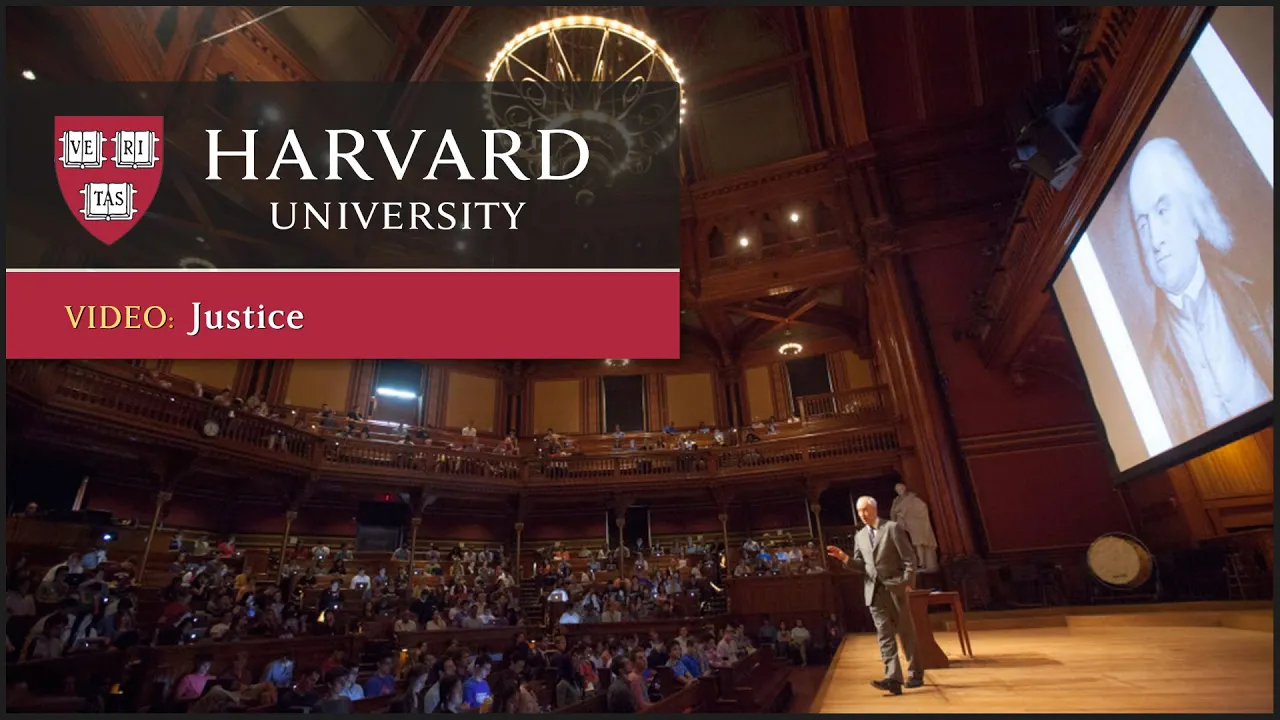
Justice: What's The Right Thing To Do? Episode 10: "THE GOOD CITIZEN"
Funding for the Program
This section discusses the funding provided for the program.
Funding Sources
- Additional funding is provided for the program.
Aristotle's Theory of Justice
This section explores Aristotle's theory of justice and its differences from Kant and Rawls.
Aristotle's View on Justice
- Aristotle disagrees with Kant and Rawls regarding justice and rights.
- According to Aristotle, justice involves giving people what they deserve.
- The central idea of Aristotle's theory of justice is reasoning about the purpose or end of social practices and institutions.
Reasoning about Justice and Rights
This section delves into how Aristotle reasons about justice and rights based on the purpose or end of social practices and institutions.
Purpose in Distributing Equal Things
- In debates about justice, it is important to determine in what respect things should be considered equal.
- According to Aristotle, we need to consider the characteristic end or essential nature of what we are distributing.
- An example discussed by Aristotle is who should get the best flutes, where he argues that the best flute player should receive them as a way of honoring their excellence.
Teleological Reasoning in Ethics
This section examines how teleological reasoning is essential when considering ethics, justice, and moral arguments according to Aristotle.
Difficulty in Dispensing with Teleology
- It is not easy to disregard teleological reasoning when thinking about social institutions and political practices.
- Two examples are presented to highlight this point:
- Politics: How political offices and honors should be distributed.
- Golf Debate: Whether a golfer with a disability should be allowed to ride in a golf cart.
Purpose and Telos in Debates
This section explores how debates about purpose and telos are often simultaneously debates about honor.
Disagreements about Purpose
- When considering the purpose of a social practice, disagreements can arise.
- These disagreements involve not only distributive questions but also honorific questions.
- The qualities and excellences of individuals that will be honored are at stake in these debates.
Aristotle's Account of Politics
This section focuses on Aristotle's account of politics and how it relates to distributive justice.
Distributive Justice in Politics
- Distributive justice, according to Aristotle, is mainly concerned with the distribution of political offices and honors rather than income and wealth.
- To determine how political authority should be distributed, one must inquire into the purpose or telos of politics.
- For Aristotle, politics is about forming good character, cultivating virtue, and realizing the good life.
Shaping Moral Character in Politics
This section discusses the disagreement between Aristotle and modern theorists regarding the role of politics in shaping moral character.
Different Views on Politics' Purpose
- Modern theorists like Kant and Rawls argue that politics should respect individual freedom without aiming to shape moral character.
- Aristotle disagrees, stating that a polis (political community) must devote itself to encouraging goodness and making its members good and just.
- According to Aristotle, a polis is not merely an association for residence or preventing mutual injustice but a way of life focused on the good life.
Purpose of Polis as Good Life
This section emphasizes that the purpose of a polis is the good life and how it influences distributive justice.
Purpose of Politics
- The purpose of politics, according to Aristotle, is to realize the good life and cultivate virtue.
- Institutions of social life are means to this end.
- From the purpose of politics, principles of distributive justice can be derived.
Principles of Distributive Justice
This section explores Aristotle's principles for determining who should have political authority and honors based on their contribution to the association aiming at the good life.
Contribution to Political Association
- Those who contribute the most to an association aiming at the good life should have a greater share in political rule and honors.
- Their position allows them to shape and influence political decisions.
Why is it necessary to participate in politics?
In this section, the speaker discusses why it is important for people to participate in politics and live in a political community.
Living in a Polis (Political Community)
- Aristotle argues that living in a polis and participating in politics allows individuals to fully realize their nature as human beings.
- Political life enables the exercise of distinctly human capacities such as language and deliberation about right and wrong.
- The polis exists by nature and is prior to the individual, as humans are not self-sufficient outside of a political community.
Acquiring Virtue through Political Deliberation
- Aristotle defines happiness as an activity of the soul in accordance with virtue.
- Virtue is acquired through practice and exercise, not solely through book learning or theoretical knowledge.
- Just like playing a musical instrument or cooking, virtues require practical experience and habituation.
- Politics involves engaging in deliberation with fellow citizens about the nature of the good, which helps cultivate civic virtue.
The Connection between Politics and Virtue
- The acquisition of virtues necessary for living a virtuous life can only be achieved through political participation.
- Engaging in politics allows individuals to develop habits of discerning particular features of situations, which is essential for cultivating virtue.
- Therefore, living in a good city and participating in politics are crucial for realizing our nature as human beings.
Why do we need to live in a good city to live virtuously?
This section explores why living in a good city is necessary for leading a virtuous life according to Aristotle's perspective.
Virtue Acquisition through Practice
- Aristotle argues that virtue cannot be acquired solely by grasping moral principles from books or lectures.
- Virtue requires practical experience gained through practice and exercise.
- Examples such as playing a musical instrument, cooking, and joke-telling demonstrate the need for practical engagement to acquire skills.
Discerning Particular Features of Situations
- Virtue involves discerning particular features of situations, which cannot be fully captured by rules or precepts.
- The practice of virtue requires developing the habit of discernment, which comes from engaging with real-life situations.
Politics and Virtue Acquisition
- Politics plays a crucial role in acquiring virtues because it involves deliberation among equals about the nature of the good.
- Political participation allows individuals to cultivate civic virtue and practical wisdom to the fullest extent.
- Living in a good city provides the necessary environment for practicing virtues and engaging in political deliberation.
The Teleological and Honorific Dimension of Politics
This section discusses the teleological (purpose-driven) and honorific aspects of politics according to Aristotle.
Purpose of Politics
- The purpose of politics is not only to achieve the best outcomes but also to honor individuals who possess relevant virtues.
- Politics aims at cultivating civic excellence, practical wisdom, and civic virtue among citizens.
Honoring Virtuous Individuals
- People like Pericles, who possess great civic virtue, should have a greater measure of offices, honors, political authority, and sway in the polis.
- Honoring virtuous individuals is an integral part of politics as it recognizes their contribution to society.
Conclusion
Aristotle's account emphasizes that living in a political community and participating in politics are essential for realizing our human nature. Through political deliberation and engagement with fellow citizens, we acquire virtues necessary for leading virtuous lives. Additionally, politics serves both a teleological purpose by aiming for the common good and an honorific dimension by recognizing those who possess civic excellence.
New Section
This section discusses the link between debates about the purpose of a social practice or game and the question of what qualities should be honored. It introduces the case of Casey Martin, a golfer with a rare circulatory problem in his leg, who sued the PGA for the right to use a golf cart in professional tournaments.
The Case of Casey Martin
- Casey Martin is a talented golfer who has difficulty walking due to a rare circulatory problem in his leg.
- He asked the PGA for permission to use a golf cart during professional tournaments but was denied.
- The case went all the way to the United States Supreme Court, which had to determine if Casey Martin had a right to use a golf cart on tour.
- A majority of people believe that Casey Martin should have the right to use a golf cart, while there is also a substantial minority who disagree.
Arguments Against Casey Martin's Right
- Some argue that walking is an intrinsic part of golf and not being able to walk hinders one's ability to perform all aspects of the sport.
- There are mixed opinions among real golfers, with some believing that walking is essential while others acknowledge that using carts is common.
Arguments For Casey Martin's Right
- Supporters argue that denying Casey Martin access to a golf cart does not remove his disadvantage as he still experiences fatigue and pain while playing.
- They point out that recreational golfers often use carts and there are professional tours where carts are allowed without compromising competitiveness.
Supreme Court Ruling
- The Supreme Court ruled in favor of Casey Martin, stating that walking is not an essential part of the game and that the PGA should accommodate his disability.
- Justice Scalia dissented, arguing that it is not for courts to determine the essential purpose of golf and that different versions of the game can coexist.
New Section
This section explores the purpose of competition and whether rules should be changed to accommodate disabled players. It discusses differing opinions on what constitutes an essential aspect of a game and how market preferences can influence decision-making.
The Purpose of Competition
- Some argue that competition aims to bring out the best from participants, and changing rules would undermine this objective.
- Others believe that competition is primarily for amusement, and if a group wants to have a specific version of a game, they should be able to do so as long as people are interested.
Conclusion
- Different perspectives exist regarding whether disabled players should be accommodated in competitive sports.
- The Supreme Court ruling in Casey Martin's case highlights the ongoing debate about what aspects are essential to a sport and how inclusivity can be balanced with maintaining the integrity of competition.
Is Golf an Athletic Competition?
The debate revolves around whether golf should be considered an athletic competition or a game of skill. The comparison is made between golf and sports like basketball, baseball, football, and billiards.
Golf as an Athletic Competition
- Some argue that golf is more like basketball, baseball, and football where physical athleticism is required.
- Others compare golf to billiards where the ball sits still and success depends on skill rather than physical athleticism.
Teleological Dimension and Honor in Golf
This section explores the teleological dimension of golf and the virtues it honors. It also raises questions about Aristotle's viewpoint on vocational roles.
Purpose and Virtues in Golf
- Aristotle's theory of justice emphasizes determining the purpose or end of a social practice before allocating rights.
- In the case of golf, there is a debate about whether it honors athletic virtues or skills similar to billiards.
- The question arises regarding what virtues does the game of golf truly honor and recognize.
Pirate Analogy and Casey Martin's Case
The discussion shifts to Aristotle's viewpoint on vocational roles using a pirate analogy. Casey Martin's case for riding in a golf cart during PGA tournaments is revisited.
Vocational Roles and Casey Martin's Case
- According to Aristotle, individuals should align with their inherent vocations rather than pursuing unrelated professions.
- The debate continues regarding whether Casey Martin should be allowed to ride in a golf cart during PGA tournaments.
- The nature of the game, tournament purposes, fairness, discrimination, and accommodation are key considerations in this case.
Understanding Political Philosophy through Casey Martin's Case
This section highlights the connection between Casey Martin's case and Aristotle's theory of justice, providing insights into political philosophy.
Aristotle's Theory of Justice and Teleological Approach
- Aristotle's theory of justice involves determining the purpose or end of a social practice before allocating rights.
- Justice, for Aristotle, is about fitting individuals with their virtues and excellences to appropriate roles.
- The discussion on Casey Martin's case will be concluded before exploring another consequential application in Aristotle's philosophy: the question of slavery.
Fairness Argument and PGA Tournaments
The fairness argument regarding Casey Martin's request for a golf cart during PGA tournaments is examined. The idea of making carts available to all golfers is proposed.
Fairness Argument and Making Carts Available
- Some argue that providing Casey Martin with a cart would be unfair to other golfers who exert themselves by walking the course.
- The suggestion arises to make the option of using a cart available to all golfers in PGA tournaments.
- This proposal aims to ensure fairness while allowing traditionalists who prefer walking the course to continue doing so.
Purpose and Spirit of Golf
The purpose and spirit of golf are discussed in relation to allowing carts in tournaments. A comparison is made with other sports like swimming.
Purpose, Spirit, and Wheelchair Basketball
- Allowing carts for all golfers may diminish the athletic nature and spirit of the game, similar to how flippers would affect Olympic swimming competitions.
- Jenny suggests that not everyone passionate about golf should compete if they are unable or unwilling to walk the course.
- Walking the course is not considered an inherent part of golf; swinging the club into a hole is seen as its main objective.
Passionate Competitors vs. Spirit of Golf
The debate continues regarding the spirit of golf and whether passionate competitors should be allowed to use carts.
Passionate Competitors and Ruining the Spirit
- Allowing everyone to use a cart may undermine the spirit of golf as an athletic game.
- Jenny argues that not letting passionate individuals compete due to their inability or unwillingness to walk aligns with the essence of golf.
- The PGA vs. Casey Martin decision highlights that walking the course is not an inherent part of golf, unlike swinging the club.
Essentiality of Walking and Purpose
The essentiality of walking in golf is questioned, emphasizing the importance of understanding its purpose.
Purpose and Essentiality
- Jenny reiterates that walking the course is not essential to golf's purpose.
- The discussion circles back to determining the purpose or end of a social practice, which influences decisions about rights allocation.
- Understanding the purpose helps clarify debates surrounding fairness, discrimination, and accommodation in various contexts.
Timestamps are approximate and may vary slightly depending on the source video.
New Section
This section discusses the debate surrounding Casey Martin's ability to play in the PGA Tour due to his disability and the question of whether walking is an essential part of golf.
Walking as Essential Part of Golf
- The PGA Tour is considered the pinnacle of golf, and certain requirements must be fulfilled to participate.
- Michael suggests that if Casey Martin cannot walk the course, he should not be allowed to play in the PGA Tour.
- The question arises whether walking is an essential part of golf and if Casey Martin has a right that the PGA must respect.
- Aristotle's theory of justice suggests that resolving this question depends on debating and determining if walking is essential to the game.
New Section
This section explores two morals from an Aristotelian perspective regarding Casey Martin's accommodation request: 1) determining if walking is essential to golf, and 2) considering honor as a stake in this debate.
Honor in Golf
- Casey Martin seeks accommodation to compete for winning prestigious tournaments and earning honor.
- Professional golfers like Jack Nicklaus and Tom Kyte oppose allowing accommodations, as it may undermine the sport's athletic nature.
- Professional golfers are sensitive about maintaining golf as a sport rather than just a game or amusement.
- Debates about what is essential to golf also involve debates about allocating honor within the sport.
New Section
This section highlights how debates about the purpose of golf are not only teleological but also relate to discussions on allocating honor within the sport.
Purpose and Allocation of Honor in Golf
- Golf serves not only as entertainment but also as a means of honoring athletic excellence.
- Maintaining views on what constitutes true athletic competition becomes crucial for those who have achieved high honors in golf.
- Scalia's view that golf is solely for amusement overlooks the appreciation and honor associated with real sports and athletic events.
- Debates about what features are essential to a sport like golf involve considerations of both purpose and allocation of honor.
New Section
This section discusses Justice Scalia's perspective on games, his criticism of golf, and how it contrasts with an Aristotelian view.
Scalia's View on Games
- Scalia argues that games have no object or point except amusement, distinguishing them from productive activities.
- He quotes Mark Twain's remark about golf being a good walk spoiled, suggesting walking as a central feature of the sport.
- However, Scalia fails to recognize the importance of appreciation and virtues in real sports and the arguments arising from them.
New Section
This section emphasizes the difference between a sport and a mere spectacle, highlighting the role of virtues and appreciation in true sports.
Sports vs. Spectacles
- A sport calls forth certain excellences and virtues while honoring and rewarding them.
- True fans appreciate these virtues in sports beyond mere amusement.
- Debates about essential features in a sport can be understood by considering its purpose, which includes recognizing athletic excellence.
New Section
This section addresses an objection to Aristotle's theory of justice regarding freedom within his teleological account.
Objection: Freedom within Justice
- One objection to Aristotle's teleological account is whether it allows room for freedom.
- The concern arises because justice aims to fit individuals with appropriate roles based on their virtues.
- The objection questions if this matching process leaves any space for personal freedom or choice.
New Section
This section examines Aristotle's defense of slavery and whether it contradicts his teleological view of justice.
Aristotle's Defense of Slavery
- Aristotle defends slavery by stating that it is necessary for society to have citizens who are freed from manual and menial tasks in order to engage in political deliberation.
- He argues that unless there is a technological fix to eliminate the need for hard labor, some individuals will have to perform these tasks.
- Slavery is seen as necessary for the life of the polis (city-state) to allow citizens to engage in deliberation and realize their nature.
- However, Aristotle acknowledges that there is a misfit when people who are not fit or born to be slaves are cast into that role.
- He claims that some individuals are naturally meant to be ruled and their nature is best realized as slaves.
New Section
This section explores the criticism towards Aristotle's viewpoint on slavery and its implications for individual freedom.
Criticism of Aristotle's Viewpoint
- Critics argue that Aristotle's approach ignores individual rights and focuses solely on matching individuals with specific roles based on their characteristics.
- It is suggested that even if someone fits a certain role, they may not want or prefer to pursue it, limiting their freedom of choice.
- The distinction between different vocations may not be as clear-cut as Aristotle suggests, leading to potential limitations on individual freedom.
New Section
In this section, participants share objections and questions regarding Aristotle's teleological reasoning and the concept of justice as fit.
Objections to Aristotle's Account
- One objection is that Aristotle's approach of matching a person to a role based on their characteristics overlooks individual rights and preferences.
- Another objection highlights the potential limitation on options for individuals who may be highly skilled in one area but desire to pursue other pursuits.
- The distinction between different vocations may not be as clear as Aristotle suggests, leading to ambiguity in determining what is fitting for an individual.
New Section
This section addresses objections raised against Aristotle's teleological mode of reasoning and its implications for individual freedom.
Challenges to Teleological Reasoning
- The objection is raised that the teleological mode of reasoning, as exemplified by Aristotle, fails to consider individual rights and preferences.
- It is argued that individuals should have the freedom to choose their pursuits, even if they possess certain characteristics that align with a specific role.
- The theological approach may limit personal autonomy by prescribing predetermined roles based on perceived characteristics rather than allowing individuals to explore their own interests and passions.
New Section
In this section, Patrick raises an objection to Aristotle's ideas about the essential nature of walking in golf. This objection leads to a broader discussion about disagreement over the fundamental purposes or ends of a political community and its implications for justice and rights.
Objection to Aristotle's Ideas
- Patrick objects to Aristotle's belief that walking is essential to golf.
- The debate highlights the difficulty in reaching agreement even in seemingly trivial cases.
- If we can't agree on the ends or goods of our shared public life, how can we base justice and rights on some notion of what these consist of?
New Section
This section explores the question of whether justice and rights should be based on a particular conception of the good or purpose of political life, given disagreements in pluralist societies.
Disagreement Over the Good
- Modern political theory acknowledges the concern about disagreement over the good as its starting point.
- Some argue that justice, rights, and constitutions should not be based on any specific conception of the good.
- Instead, they propose a framework that allows individuals to choose their own conceptions of the good and purposes in life.
New Section
The focus here is on Mary Kate's question regarding personal freedom and individual choice when it comes to roles suited to one's nature.
Freedom and Personal Roles
- Mary Kate raises a scenario where someone well-suited for a certain role desires something different.
- This raises questions about freedom and whether individuals should have autonomy in defining suitable roles for themselves.
New Section
The debate between Aristotle and contemporary thinkers like Rawls and Conte is examined, particularly regarding the relationship between justice, the good life, and freedom.
Teleology and Freedom
- Rawls and Conte reject teleology and argue against tying justice to a particular conception of the good.
- They believe that justice should leave room for individual freedom, which entails independence from specific roles or traditions imposed by society or upbringing.
New Section
The central question is whether Aristotle's perspective on justice as a matter of fit between a person and their roles aligns with the idea of personal freedom.
Justice vs. Freedom
- The debate between Aristotle and Rawls/Conte revolves around whether justice should be tied to a specific conception of the good.
- If justice is about fitting into roles, it may limit personal freedom.
- To determine who is right, further investigation is needed on whether the right is prior to the good and what it means to be a free moral agent.
New Section
The final part of the transcript raises two significant questions: Is the right prior to the good? What does it mean to be a free person?
Two Big Questions
- The first question explores whether rights take precedence over conceptions of the good.
- The second question delves into what it means to be a free moral agent.
- These questions will be addressed in future discussions.
New Section
A closing remark encouraging viewers to engage online with other participants for further learning opportunities.
Online Interaction
- Viewers are invited to visit justiceharvard.org for interactive activities such as joining conversations, taking quizzes, watching missed lectures, and gaining more knowledge.