Google Cloud regions and zones
Overview of Google Cloud Infrastructure
Investment and Network Design
- Google has invested billions to create one of the largest networks globally, aimed at maximizing throughput and minimizing latency for applications.
- The infrastructure is strategically located in seven major geographic areas: North America, South America, Europe, Africa, the Middle East, Asia, and Australia.
Importance of Service Locations
- The choice of application location significantly impacts availability, durability, and latency—defined as the time taken for data packets to travel from source to destination.
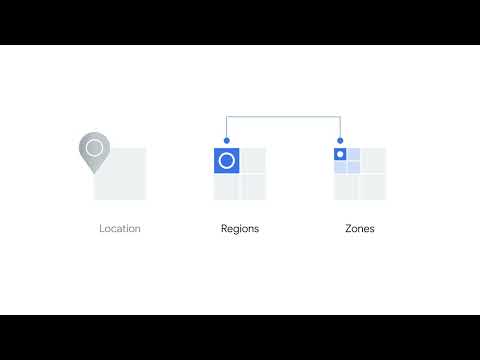
- Each geographic area is divided into regions and zones; regions are independent areas made up of multiple zones.
Understanding Regions and Zones
- For instance, "Europe West 2" (London) is a region with three distinct zones where Google Cloud resources can be deployed.
- When launching a virtual machine via Compute Engine, it operates within a specified zone to ensure resource redundancy.
Benefits of Multi-region Deployment
- Deploying resources across different regions enhances user proximity globally and provides protection against regional issues like natural disasters.
- Some services support multi-region placements; for example, cloud storage allows data placement within a Europe multi-region setup.
Redundant Data Storage in Europe
- In the Europe multi-region configuration, data is stored redundantly across at least two locations separated by a minimum distance of 160 km (e.g., London and Belgium).
- Up-to-date information on Google Cloud's regions and zones can be found at cloud.google.com/about/locations.