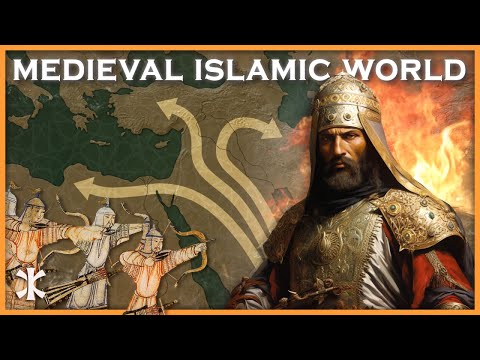
The Islamic World: 1000 Years in 18 Minutes
A Thousand Years of Islamic History
The Emergence of Islam in the Arabian Peninsula
- In late antiquity, the Arabian Peninsula was largely unrecognized as a cradle for civilization, overshadowed by the Persian Sasanian and Byzantine Empires.
- The Arab inhabitants were primarily nomadic tribes practicing polytheism, setting the stage for significant religious transformation.
Muhammad: The Last Prophet
- Muhammad was born around 570 CE in Mecca and is regarded as the final prophet in a line that includes Abraham, Moses, and Jesus. His mission was to spread monotheism among Arabs.
- Over many years, revelations received by Muhammad were compiled into the Qur'an; his initial persecution led to migration to Medina, marking the start of the Islamic calendar.
Establishment of Leadership After Muhammad's Death
- Following Muhammad's death in 632 CE, questions arose regarding leadership succession—this issue remains central in Islamic history. The title "Caliph" means "Successor."
- The first four caliphs (Rashidun) were selected based on their connection to Muhammad and personal attributes; they governed for 30 years during which institutions began forming within the Muslim state.
Expansion and Internal Conflict During Rashidun Caliphate
- Military campaigns expanded the Caliphate from Iran to North Africa; this period is viewed as a time of glory but also marked by internal strife leading to three assassinations among caliphs.
- Tensions emerged between supporters of Ali ibn Abi Talib (Shias) who believed he was appointed successor by Muhammad and those who later became known as Sunnis. This division would evolve into a major religious rift within Islam.
Umayyad Dynasty: A New Political Era
- In 661 CE, after significant turmoil, the Umayyads took power for 90 years with Damascus as their capital; they established a hereditary dynasty that expanded further into Central Asia and Iberia.
- Key events included military defeats such as at Tours which halted westward expansion into Europe; Abd al-Malik centralized authority while promoting Arab identity through administrative reforms and monumental constructions like the Dome of the Rock.
Decline of Umayyad Power
- Social divisions led to rebellions against Umayyad rule; notably, Ali's son was killed at Karbala—a pivotal moment for Shia identity formation—and ultimately resulted in violent opposition against them around mid-8th century.
Rise of Abbasid Dynasty
- In 750 CE, amidst chaos following Umayyad decline, Abbasids rose to power claiming lineage from Abbas (Muhammad’s uncle); their reign lasted over five centuries with Baghdad becoming a cultural hub post-battle victory against China at Talas.
Golden Age Under Abbasids
- The Abbasid era is recognized as a Golden Age characterized by advancements in science and culture with translations from Greek contributing significantly to scholarship; Harun al-Rashid became notable for patronage towards scholars and diplomatic relations with Charlemagne.
Fragmentation of Power
The Rise and Fall of Islamic Dynasties
The Buyid Dynasty and the Abbasid Caliphate
- The Persian language experienced a revival during the Arab conquest, adopting Arabic script. In 945, the Shia Buyid family took control of Baghdad, limiting the power of the Sunni Abbasid Caliph while managing a confederation across Iraq and western Iran.
- The Buyids' influence lasted over a century, coinciding with the rise of the Fatimid dynasty, an ambitious Arab Shia lineage claiming descent from Fatima, Muhammad’s daughter. They expanded into North Africa and established Cairo as their capital.
The Fatimids' Shadow-Caliphate
- The Fatimids aimed to overthrow the Abbasid Caliphate and managed networks of Shia missionaries, causing alarm among Sunni leaders. Their rule lasted 200 years but they could not conquer Baghdad.
- During this period, Shia Islam evolved from political factions into organized religious movements amidst political turmoil in Central Asia that prompted migrations of Turkic tribes.
The Seljuk Turks Ascend
- In 1055, the Sunni Seljuks seized Baghdad from the Shia Buyids. They adopted the title Sultan and maintained control over the Abbasid caliph without deposing him.
- The Seljuks defended against threats from Shia-Fatimid forces while reinforcing Sunni legitimacy through their alliance with the Abbasid Caliph.
Transformation of Anatolia
- Following their victory at Manzikert in 1071 against Byzantium, Turkic tribes began settling in Anatolia, transforming it into a predominantly Turkic-Muslim region.
- By 1095, as internal divisions persisted within Islamic territories, Crusades were initiated by European powers aiming to reclaim holy sites from Muslims.
Saladin's Leadership Against Crusaders
- Saladin emerged in the 12th century as a prominent leader who dismantled Fatimid rule and founded the Ayyubid dynasty. He achieved significant victories against Crusaders including retaking Jerusalem in 1187.
- Despite his successes against Crusaders, they continued to exist for another century after his victories.
Mongol Conquest and Its Aftermath
- Genghis Khan unified Mongol tribes around this time; his empire rapidly expanded following violent confrontations with Muslim states like Khwarazmian Empire due to executed merchants.
- In 1258, Hulagu Khan besieged Baghdad leading to its destruction and marking an end to both Abbasid leadership and what is known as the Islamic Golden Age.
Mamluk Sultanate's Emergence
- Following Baghdad's fall, Egypt saw a shift in power towards Mamluks—Turkic slave-soldiers who became influential military leaders under Ayyubids before establishing their own sultanate.
- At Ain Jalut in 1260, Mamluks halted Mongol advances decisively while also defeating Crusader forces under Baibars’ leadership. This solidified their reputation as defenders of Islam.
Legacy of Mongol Rule
The Rise and Impact of the Ilkhanids and Ottomans
The Ilkhanate: A Cultural and Economic Power
- The descendants of Hulagu ruled from Anatolia to Iran, demonstrating that the Mongols were not solely brutal conquerors but also facilitators of economic, cultural, and intellectual prosperity.
- The Ilkhanate collapsed in the 14th century, paving the way for Timur's empire, which showcased that brutality could coexist with cultural flourishing.
- The Timurid Empire persisted until the end of the 15th century while a new power emerged in the West.
Emergence of the Ottoman Empire
- Around 1300, Osman became the leader of a small Turkic-Muslim principality in Anatolia, initiating conflicts against the Byzantine Empire.
- Osman’s descendants expanded their territories into Anatolia and the Balkans, ultimately founding what is known as the Ottoman Empire.
- In 1453, Constantinople was conquered by the Ottomans, marking an end to a millennium of Byzantine rule and often considered a pivotal moment signaling the end of the Middle Ages.
Expansion Under Selim I
- Sultan Selim I significantly enlarged the Ottoman Empire by tripling its size through innovative gunpowder technologies.
- In 1517, he captured Cairo and executed its last Mamluk sultan, effectively terminating the Abbasid Caliphate based in Cairo.
Turn any video into a summary like this
YouTube links, meetings, lectures. With transcripts, search, and chat.