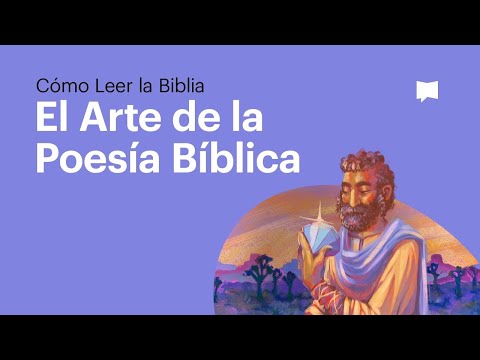
El Arte de la Poesía Bíblica
Understanding Biblical Poetry
The Role of Poetry in the Bible
- Approximately 30% of the Bible consists of ancient poetry, which is a significant portion compared to typical narratives.
- Many biblical books are entirely poetic, and God's discourse often appears in poetic form, highlighting its importance in conveying messages.
- Poetic elements frequently interrupt narrative sections, as seen in the Exodus story where Moses leads the Israelites through the sea followed by a poem reflecting on that event.
Structure and Function of Biblical Poetry
- Biblical poetry serves a different purpose than narrative; it evokes experiences rather than merely describing events.
- Unlike traditional poems with strict meter and rhyme, biblical poems often utilize free verse without conventional structures but maintain their own unique order.
- The basic unit of biblical poetry is the couplet—two lines that express an idea together. The first line presents a thought while the second elaborates or contrasts it.
Examples and Techniques in Biblical Poetry
- In Psalm 51, for instance, the poet requests grace from God in one line and seeks forgiveness for failures in another, showcasing how ideas are developed through paired lines.
- Imagery plays a crucial role; metaphors like washing symbolize purification processes necessary for being in God's presence.
- Repetition within these pairs encourages readers to reflect deeply on each idea from multiple perspectives.
Themes Explored Through Repetition
- Groups of couplets can revolve around central themes, akin to facets of a diamond offering varied views on core concepts such as forgiveness and redemption.
- This exploration allows readers to savor profound experiences like receiving a second chance—a transformative moment worth meditating upon.
Advanced Poetic Techniques
- Key lines may be repeated throughout poems (known as refrains), enhancing thematic resonance and emotional impact.
- Inclusion techniques involve starting and ending with similar couplets to create cohesion within the poem's structure.
Turn any video into a summary like this
YouTube links, meetings, lectures. With transcripts, search, and chat.