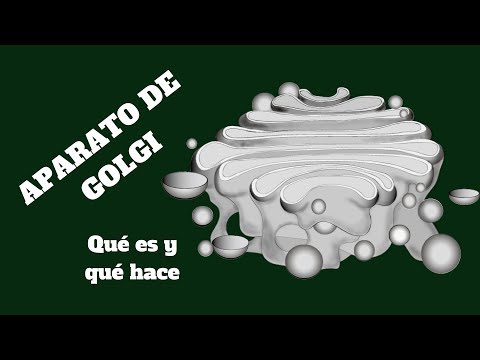
APARATO DE GOLGI: Qué es y qué hace
A Comprehensive Overview of the Golgi Apparatus
Discovery and Structure
- In 1898, Camillo Golgi discovered the Golgi apparatus, an organelle found in eukaryotic cells.
- The number of Golgi apparatuses varies; animal cells typically have fewer but larger ones compared to plant cells.
- The structure consists of stacked flat membrane circles called cisternae, usually numbering between 5 to 8, but can be as many as 60.
Functional Regions
- Each stack of cisternae has three main functional regions:
- Cis: Closest to the endoplasmic reticulum (ER).
- Medial: Corresponding to intermediate cisternae.
- Trans: Farthest from the ER and closest to the plasma membrane.
Modification Processes
- Enzymes in the Golgi apparatus modify proteins and lipids from the ER by adding or removing sugar groups, sulfate groups, and phosphate groups.
- This process includes glycosylation where carbohydrates are added to form glycoproteins, proteoglycans, glycolipids, and polysaccharides.
Transport Mechanism
- Vesicles from the ER fuse with the cis face of the Golgi apparatus, releasing their molecular content into it.
- Molecules then transit through medial regions for further modification before reaching trans cisternae for final packaging.
Destinations of Processed Molecules
- The primary destinations for processed molecules include:
- Lysosomes: Where they fuse with enzymes leading to lysosome formation.
- Plasma Membrane: Inserted as membrane proteins and lipids.
- Extracellular Matrix: Synthesis of polysaccharides occurs here.
- Extracellular Space: Processed molecules are released via exocytosis.
Additional Functions
- Other functions include signaling molecules for determining final destinations; for instance, a mannose-6-phosphate tag is added for lysosomal targeting.
- The Golgi also plays a role in apoptosis by containing members of the Bcl-2 family similar to mitochondria.