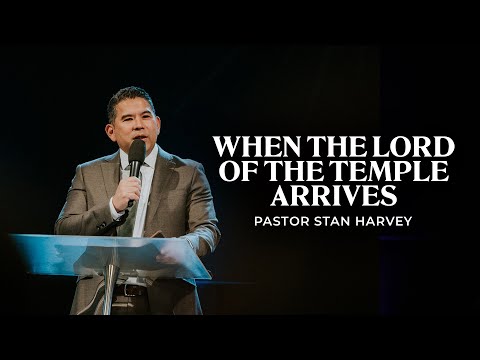
When the Lord of the Temple Arrives - Pastor Stan Harvey
When the Lord of the Temple Arrives
Introduction to Solomon and the Temple
- The speaker introduces a discussion on Solomon, noting that while he built the temple, little is mentioned about him in the Bible.
- Emphasizes the significance of God's presence filling Solomon's temple during its dedication, highlighting a moment when priests could not minister due to overwhelming glory.
Jesus Cleanses the Temple
- The narrative shifts to Matthew 21:12-16, where Jesus enters Herod's temple and drives out merchants and money changers.
- Jesus declares that His house should be a house of prayer but has been turned into a den of thieves, indicating corruption within sacred spaces.
Righteous Indignation of Jesus
- The speaker reflects on Jesus' actions as seemingly out of character for Him, showcasing righteous anger against commercialism in worship.
- References John’s Gospel where Jesus uses cords to drive out sellers, demonstrating zeal for God’s house (Psalm 69:9).
Purpose vs. Corruption in Worship
- Discusses how money changers were necessary for worshippers needing currency exchange for sacrifices but highlights their exploitation.
- Explains that while there was a legitimate need for animal sacrifices, the atmosphere had shifted from worship to profit-making.
The Nature of Divine Jealousy
- Addresses misconceptions about God's jealousy; it is portrayed as passionate care rather than petty human jealousy.
- Compares divine jealousy to a husband’s protective love over his wife, emphasizing God’s desire for fidelity from His people.
Implications of Sin and Integrity
- Highlights how sin can corrupt worship environments and personal lives alike; emphasizes honesty before God and others.
- Stresses that lies are an abomination to God; integrity is crucial in maintaining one's relationship with Him.
Analogy Between Temple and Human Life
- Draw parallels between the physical temple's purpose and individual lives as temples housing God's Spirit (1 Corinthians 3:16).
- Encourages self-examination regarding what occupies our "temples"—spiritually cleansing ourselves from sin.
Call to Action: Cleansing Our Temples
- Urges listeners to allow God to cleanse their lives by removing sinful habits akin to Jesus cleansing the temple.
- Reminds believers that through repentance and baptism in Jesus’ name, sins can be washed away permanently.
Addressing Human Maladies Rooted in Sin
- Asserts that many societal issues stem from sin residing within individuals; calls for spiritual renewal through Christ.
Baptism as Essential Obedience
- Discusses Acts 2:38 emphasizing baptism as essential for salvation—a command rather than an option.
Conclusion: Radical Commitment Required
- Concludes with an exhortation towards radical commitment in removing sin from one’s life so that God may dwell fully within us.
Understanding the Role of Spirit, Soul, and Body in Faith
The Nature of Sin and Forgiveness
- The speaker emphasizes that all sins can be forgiven through repentance and God's grace, except for the sin of blasphemy against the Holy Spirit.
- It is highlighted that our flesh often leads us into temptation, as sin enters through our physical desires.
Conceptualizing Spirit, Soul, and Body
- An analogy is made comparing a light bulb's components (electricity as spirit, wire as soul, filament as body) to illustrate the relationship between spirit, soul, and body.
- The functions of the spirit are defined: communion with God, conscience awareness of right and wrong, and intuition guiding decisions.
Worshiping in Spirit and Truth
- True worship must come from within; it involves both external expressions (like clapping or shouting) and internal sincerity.
- The speaker discusses how spiritual discernment allows individuals to sense God's presence even though it cannot be physically perceived.
Cleansing the Temple: A Metaphor for Personal Healing
- Jesus' act of cleansing the temple symbolizes removing distractions (money changers) to restore its purpose for healing.
- People often feel emptiness when their lives are dominated by material pursuits rather than fulfilling their designed purpose to worship God.
Radical Change for Spiritual Fulfillment
- The speaker calls for individuals to prioritize their relationship with God over material wealth or personal gain.
- Emphasizing radical passion akin to Jesus’ actions in the temple encourages listeners to remove obstacles hindering their spiritual growth.
Historical Context of the Temple
- A brief history is provided about King David’s inability to build the temple due to being a man of war; Solomon ultimately constructs it.
- Jesus reflects on humanity's degradation from glory into sinfulness while observing a corrupted temple environment focused on commerce rather than worship.
Healing Through Repentance
- There is a connection drawn between unconfessed sin and physical ailments; healing may require addressing spiritual issues first.
- An invitation is extended for individuals seeking healing or spiritual fulfillment through prayer at an altar.
This structured overview captures key insights from the transcript while providing timestamps for easy reference.