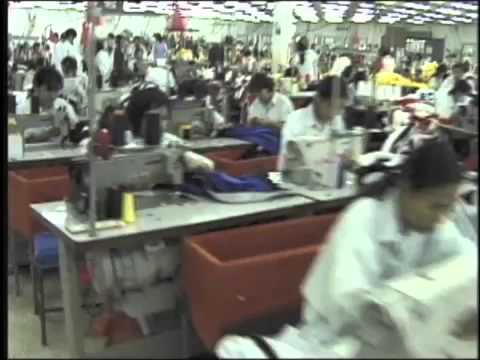
Nike Sweatshops: Behind the Swoosh
Pursuing a Dream
The speaker initially had plans to attend college, get a degree, and work on Wall Street. They aspired to become wealthy and retire early. However, their life took a different turn when they started coaching soccer at St. John's University.
Coaching at St. John's University
- The speaker was offered a coaching job at St. John's University, which they accepted.
- They enjoyed coaching and playing soccer while studying theology.
- During this time, the speaker began researching Nike's labor practices and discovered that it contradicted Catholic social teaching.
- St. John's University was negotiating an endorsement deal with Nike worth $3.5 million.
Moral Dilemma
The speaker faced a moral dilemma when asked to wear and promote Nike products as part of the endorsement deal with St. John's University.
Conflict between Values
- As a devout Catholic, the speaker found it contradictory for a Catholic institution like St. John's University to associate itself with Nike, given their labor practices.
- The speaker questioned how they could advocate for fighting poverty and injustice while aligning themselves with a company that violated these principles.
Taking a Stand
The speaker reached a point where they felt compelled to take action against Nike's labor practices despite facing opposition from others.
Standing Up Against Nike
- The speaker received an ultimatum from their coach at St. John's University - either wear Nike products and drop the issue or resign.
- In June 1998, the speaker chose to resign from their position due to their disagreement with Nike's practices.
- Many people criticized the speaker for their decision, believing that high-paying jobs were more important than addressing labor issues.
Seeking the Truth
The speaker's decision to resign led them on a journey to seek the truth about Nike's labor practices firsthand.
Investigating Sweatshops
- The speaker wanted to know the truth about sweatshops and whether workers were truly happy with their jobs.
- They decided to live as Nike factory workers in Tangerang, Indonesia, for a month, experiencing their living conditions and wages.
- Living in a small cement box with extreme heat and humidity, they witnessed unsanitary conditions and encountered rats and cockroaches.
Building Trust
The speaker emphasizes the importance of building trust with the Nike factory workers in order to understand their experiences.
Connecting with Workers
- Initially, it was challenging for the speaker to gain trust from the workers. However, through shared experiences and interactions, bonds of trust were formed.
- The speaker visited workers' homes, witnessing overcrowded living spaces and shared facilities.
- Workers had limited access to basic necessities such as water due to low wages.
Living on Low Wages
The speaker highlights the struggles faced by Nike factory workers who earn meager wages.
Daily Struggles
- After covering essential expenses like rent, water, electricity, and transportation costs, Nike factory workers are left with an average of $1.25 per day.
- Workers endure difficult living conditions with minimal furniture and shared facilities among multiple families.
- Lack of proper sanitation leads to unhygienic environments where open sores can contaminate streets and homes.
This summary provides an overview of key points discussed in the transcript. It is important to refer back to the original transcript for complete context.
Living on $1.25 a Day
The speaker discusses the impossibility of living on $1.25 a day while maintaining human dignity.
Challenges of Living on Low Wages
- Living on Nike's wages in Indonesia resulted in extreme hunger, exhaustion, and sickness.
- Lack of energy and nutrition led to weight loss and deteriorating health.
- Inadequate income prevents access to basic necessities like food and medicine.
Struggles of Workers
- Workers express frustration with their low wages and lack of improvement in their conditions.
- Physical labor is the only asset they have, but it is not enough to sustain them.
- Working long hours leaves little time for family or education.
Environmental Impact
- Piles of scrap shoe rubber from Nike factories are burned in villages, causing toxic fumes.
- Children suffer from chest infections and are at risk of developing cancer due to exposure.
Factory Conditions and Intimidation
The speaker discusses the intimidation faced by workers who try to advocate for better conditions in Nike factories.
Denied Access to Factories
- Attempts to visit Nike factories were met with resistance from security personnel.
- Factory managers displayed aggressive behavior towards the speaker's presence.
Culture of Fear
- Workers face severe consequences if found talking to outsiders about their working conditions.
- Local mafia collaborates with factory bosses to maintain control over workers.
- Union organizers are threatened, harassed, and even physically harmed for advocating for workers' rights.
Courageous Workers
- Despite fear, workers show tremendous courage in fighting for their rights.
- Organizers like Dita Sari have been jailed, tortured, and threatened but continue their efforts.
Basic Needs and Exploitation
The speaker emphasizes the importance of meeting basic needs and fair treatment for workers.
Workers' Demands
- Workers want to work and be proud of their jobs but not be exploited.
- Basic needs include food, clothing, housing, healthcare, education, and modest savings.
Advocating for Change
- The speaker expresses concern about the wages paid to factory workers in Malaysia.
- Attempts have been made to communicate with Nike representatives but with limited success.
The transcript provided does not cover the entire video.
Concerns about Nike's treatment of workers
The speaker expresses frustration with the lack of attention given to their concerns about Nike's treatment of workers. They emphasize the importance of addressing these issues and highlight the disparity between the wealth accumulated by individuals like Tiger Woods and the struggles faced by thousands of workers.
Frustration with lack of attention
- The speaker appreciates concern but feels stonewalled when trying to address their concerns.
- Efforts to meet workers in their homes have been unsuccessful.
Importance of caring for workers
- The speaker believes that influential figures like Phil Knight, Michael Jordan, Tiger Woods, and Mia Hamm should care about the well-being of Nike's workers.
- They argue that valuing human beings is essential, even if someone like Tiger Woods earns millions for wearing Nike clothes.
Disparity in wealth
- The speaker questions a society where one individual can earn more than 700 thousand people combined.
- They highlight how wage charts can be demoralizing when comparing personal earnings to those of highly paid athletes.
- This disparity raises questions about fairness and capitalism.
Criticism towards Nike's profit-driven ideology
The speaker criticizes Nike's focus on maximizing profits at all costs, highlighting its negative impact on humanity and nature. They challenge the notion that this approach is inherent to American capitalism and advocate for a system that respects democracy, human rights, and the protection of life.
Cheap labor as primary motive
- Nike is in Indonesia primarily for cheap labor.
- The company prioritizes maximizing profit over considerations for humanity and nature.
Challenging capitalist ideology
- The speaker rejects the idea that this profit-driven approach is an inherent part of American capitalism.
- They argue that democracy, respect for human rights, and the protection of human life should be fundamental values.
Empowering students to make a difference
The speaker discusses their efforts to engage with students across the country, empowering them to recognize their power as consumers and athletes. They aim to inspire a sense of responsibility and create awareness about the issues faced by workers in countries like Indonesia.
Engaging with students
- The speaker has visited over a hundred schools and universities, reaching out to 15,000 students.
- They aim to introduce students to the realities faced by workers in countries like Indonesia.
Recognizing consumer power
- Students are encouraged to understand their significant influence as consumers.
- By raising awareness and sparking interest, even among a few individuals, change can be multiplied over time.
Working towards truth and justice
- The ultimate goal is to achieve truth, justice, and fairness for all people.
- The speaker believes that through collective action, a critical mass can be reached leading to positive outcomes.