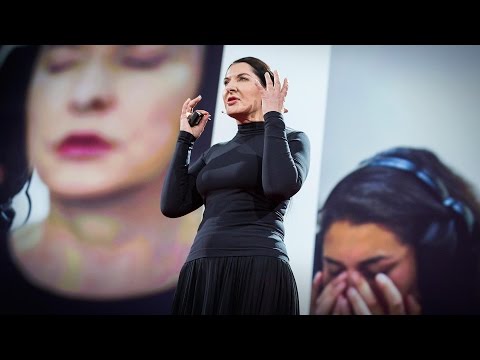
An Art Made of Trust, Vulnerability and Connection | Marina Abramović | TED Talks
Performance Art: A Journey Through Pain and Trust
The Beginning of a Provocative Performance
- In 1974, a young girl stands in a gallery with a table containing 76 objects representing pleasure and pain, including everyday items and dangerous tools.
- The performance instructions allow the audience to use any object on her, taking full responsibility for their actions over six hours.
- Initially, participants engage gently; however, the tone shifts as some begin to inflict harm using scissors and razor blades.
Exploring Human Nature Through Performance
- The performance escalates as men dominate the scene, leading to acts of violence while others observe passively.
- After six hours, she emerges bloodied and traumatized; the audience flees rather than confront her humanity.
- Reflecting on her experience in front of a mirror reveals physical changes that symbolize deeper emotional scars.
Defining Performance Art
- She defines performance art as a mental and physical construction involving real-time interaction between performer and audience.
- Unlike theater where props are not real (e.g., ketchup for blood), performance art uses genuine materials to evoke authentic experiences.
- By confronting fears such as suffering and mortality through staged performances, she aims to liberate both herself and the audience from these anxieties.
Love, Trust, and Artistic Collaboration
- Her relationship with Ulay lasted 12 years, transforming themes of violence into love and trust within their performances.
- Their breakup was marked by an artistic farewell walk along the Great Wall of China—a symbolic journey reflecting their shared history.
Reflections on War Through Art
- Post-breakup led her to create "Balkan Baroque," addressing the lasting impact of war through washing bloody cow bones for six days.
- This piece symbolizes how shame from wars cannot be washed away despite efforts—highlighting ongoing global conflicts.
A Transformative Experience at MoMA
- In a recent MoMA performance, she sat silently in front of an empty chair inviting public participation without moving for three months.
- Contrary to expectations that no one would engage due to busy lives, people waited hours for personal connection during this intimate experience.
The Experience of Immaterial Performing Arts
The Impact of Observation and Connection
- Observers, including the speaker, witness individuals in a vulnerable state, leading to profound feelings of pain and loneliness. This connection is emphasized through eye contact with strangers.
- After three months of this experience, the speaker feels transformed and compelled to share their insights with others.
Conceptualizing Immateriality in Art
- The idea for an institute dedicated to immaterial performing arts emerges from the understanding that performance is time-based art; it cannot be revisited like a painting.
- Music is regarded as the highest form of immaterial art due to its ephemeral nature, followed by performance art.
Structure and Experience at the Institute
- Participants must commit six hours to the experience by signing a contract, emphasizing personal accountability.
- Upon arrival, participants don lab coats to signify their transition from viewer to experimenter and are required to leave all digital devices behind.
Activities Promoting Simplicity and Mindfulness
- The program begins with slow walking and progresses through various activities designed to reconnect individuals with simplicity—such as learning how to drink water mindfully.
- Participants engage in different chambers (magnet chamber, crystal chamber, eye-gazing chamber), focusing on basic human positions: sitting, standing, lying down.
Long-Duration Experiences and Personal Growth
- After preparation activities, participants are seated in long-duration chairs for immersive experiences such as music or theater.
- If participants fall asleep during these experiences due to fatigue from earlier activities, they are gently moved outside but still receive artistic exposure.
Expanding Reach and Emphasizing Change
- Currently virtual, plans exist for expanding the institute globally (Brazil, Australia, Canada), promoting methods for returning to simplicity in life.
- Engaging in simple tasks like counting rice can lead individuals through emotional states—from frustration to peace—highlighting personal growth through discomfort.
Embracing Fear and Failure for Transformation
- The speaker advocates facing fears rather than sticking with familiar routines; true change requires venturing into unknown territories.
- Acknowledging failure as part of experimentation is crucial; without risk-taking there can be no real progress or transformation on a personal level.
Personal Responsibility in Global Issues
The Power of Eye Contact
Engaging with a Stranger
- The speaker invites participants to engage in an exercise involving eye contact, emphasizing the importance of looking into a stranger's eyes for two full minutes.
- Participants are encouraged to breathe slowly and remain relaxed during this interaction, highlighting the need to avoid self-consciousness.
- The act of maintaining eye contact is presented as a simple yet profound way to connect with another person on a deeper level.
- This exercise aims to foster vulnerability and openness, challenging individuals to step outside their comfort zones.
Turn any video into a summary like this
YouTube links, meetings, lectures. With transcripts, search, and chat.