Dr. Rodolfo Dirzo, el Antropoceno y la Defaunación en México
Introduction and Antropocene Definition
In this section, the speaker introduces the concept of the Antropocene and its significance in relation to human impact on the planet.
Defining Antropocene
- The speaker expresses gratitude for sharing insights with UNAM colleagues and delves into the importance of discussing topics relevant to society, highlighting his tangential connection to CONABIO.
- Explains that he aims to define the Antropocene for students and the general public before focusing on illustrating deformation phenomena suggested by Dr. Sarukhán.
Antropocene Impact and Manifestations
This part explores the impact of human activities in shaping the Antropocene era and highlights various manifestations of this influence.
Human Impact on Antropocene
- Discusses how human actions have led to significant environmental changes, referencing Mario Molina's work on ozone depletion as a precursor to understanding the Antropocene.
- Describes how paleontologists initially resisted accepting the concept of Antropocene due to visible human impacts like plastic pollution replacing traditional sedimentary markers.
Manifestations of Antropocene
- Highlights diverse human activities contributing to the manifestation of Antropocene, emphasizing socio-economic trends alongside ecological and biodiversity indicators.
- Illustrates a variety of factors reflecting and evidencing the presence of Antropocene through societal trajectories, scientific aspects, and ecological changes.
Biodiversity Loss in Antropocene
This section focuses on three key aspects related to biodiversity loss within the context of the Antropocene era.
Biodiversity Decline
- Emphasizes three critical indicators showcasing biodiversity loss: tropical forest ecosystem degradation, transformation of natural landscapes for domestic purposes, and terrestrial system degradation exemplified by declining species populations.
Deformation Phenomena
Emotional Introduction and Importance of Animals in Ecosystems
The speaker discusses the significance of vegetation from satellite images and highlights our historical oversight regarding the well-being of animals living in forests.
Significance of Animals in Ecosystems
- Animals, especially tropical insects, hold charisma and appeal for various fields, leading to widespread fascination.
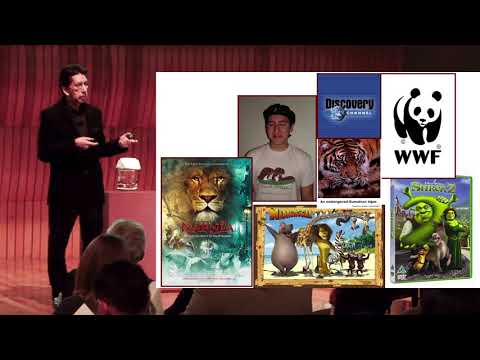
- Society's admiration for animals is evident through media representation, conservation efforts, and cultural references like movies.
- Our profound interest in fauna, depicted through various mediums, reflects a strong zoophilia but lacks scientific attention.
Neglect of Animal Populations and Biodiversity
The speaker emphasizes the lack of rigorous scientific focus on animal populations globally and locally compared to vegetation monitoring via satellites.
Lack of Scientific Attention to Animal Populations
- Inadequate emphasis on studying animal populations contrasts with detailed vegetation assessments using satellites.
- Neglecting animal welfare despite societal affection is unjustified given the current environmental challenges.
- The invisibility of threats to wildlife necessitates a distinct term akin to deforestation for raising awareness about this critical issue.
Quantifying Wildlife Decline: Evidence from Biomass Analysis
The speaker presents evidence showcasing a significant decline in wildlife biomass over millennia due to human activities.
Decline in Wildlife Biomass
- Analysis spanning 10,000 years reveals a drastic reduction in wild animal biomass alongside an exponential rise in human population and domesticated animal biomass.
- Historical data illustrates a shift from predominantly wild animal biomass prehistoric era towards dominance by human-related biomass today.
Deformation of Species and Conservation Challenges
The speaker discusses the critical factors contributing to the destruction of fauna, emphasizing habitat destruction as a key issue. They delve into various aspects such as exploitation, overhunting, land use changes, invasive species, and climate change impacting conservation efforts.
Factors Affecting Fauna Conservation
- Habitat destruction through land use changes is a significant factor affecting fauna conservation.
- Ecologists face challenges in understanding the interactions between different factors like exploitation, land use, and deformation in conservation processes.
- Understanding synergies between various factors is crucial for addressing conservation issues effectively.
Deformation of Species Discussion
- Introduction to two main discussion points: magnitude and scale of deformation across species and its consequences.
- Exploring the concept of deformation with three fundamental facets: local population decline, contraction of geographic distribution leading to extinction risk.
- Illustrating how population declines can lead to local extinctions and ultimately global extinction of species.
Impact of Deformation on Fauna Abundance
The speaker presents data on the decline in animal abundance over four decades globally, highlighting severe reductions in tropical regions. They discuss the implications of these declines on specific populations and emphasize the gravity of extinction risks.
Global Decline in Animal Abundance
- Global animal abundance has decreased by 40% from 1970 to 2000, with tropical regions experiencing a more significant decline at 50%.
- Some populations are nearing collapse due to substantial local abundance declines, posing severe threats to biodiversity.
Extinction Risk Analysis
- Severe local abundance declines can lead to geographic range contractions and eventual population extinctions.
- Illustration using examples like jaguars showcases how population extinctions contribute significantly to overall species endangerment.
Conservation Challenges Beyond Local Extinctions
The speaker transitions from discussing local extinctions to broader conservation challenges faced by herbivores in Africa. They highlight the importance of understanding population dynamics for effective conservation strategies.
Herbivore Distribution Dynamics
- Examining herbivore distribution patterns in Africa reveals shifts in geographic ranges that signal potential threats to species survival.
New Section
In this section, the speaker discusses the current status of various species and highlights the decline in populations, leading to concerns about biological annihilation.
Current Status of Species
- The speaker mentions that while some species are still present in catalogs with available photos, a significant number of populations have disappeared.
- A study conducted by the speaker and colleagues revealed that approximately 35% of vertebrate species analyzed showed signs of population decline.
- Data from the International Union for Conservation of Nature indicates that a considerable percentage of vertebrate species are experiencing population declines and extinctions.
Biological Annihilation Concerns
- The concept of "biological annihilation" is introduced as an indicator of a potential sixth mass extinction based on observed declines and extinctions in populations.
- Despite some species being classified as not threatened, a significant portion (33-35%) still exhibit population declines, emphasizing the widespread nature of the issue.
New Section
In this section, the speaker discusses the rapid increase in extinction rates over a short period and highlights the severity of the current global extinction crisis.
Extinction Rates and Timeframes
- The speaker estimates that the current extinction rates observed over a few years would typically take between 1,000 and 10,000 years to occur naturally.
- Ecologists analyze qualitative aspects such as body size to understand which species are most affected by extinctions.
- Body size plays a crucial role in ecological vulnerability, with larger species facing higher risks of extinction.
- Comparison of body sizes between extinct Pleistocene fauna and present-day threatened species reveals a significant difference in median body weights.
- Larger species have been extinct since the Pleistocene era, while currently threatened species exhibit smaller median body weights.
New Section
This section delves into how human impact affects mammal populations in the Amazon rainforest based on studies conducted by Carlos Perez.
Human Impact on Mammals
- Studies show that as human impact increases in the Amazon rainforest, mammal population density decreases along with biomass.
- Analysis reveals that smaller mammal species (<1kg) thrive as human activity intensifies, leading to an increase in their population density and biomass.
- Human activities selectively favor smaller mammals over larger ones, causing a shift in community structure towards smaller-sized species.
New Section
The speaker outlines three central messages regarding biodiversity loss: its magnitude, global occurrence, and differential impacts on different animal sizes.
Messages on Biodiversity Loss
- Biodiversity loss is extensive and affects millions of animals annually.
- Global biodiversity loss is widespread but particularly severe in tropical regions.
Detailed Analysis of Fauna Xiol Phenomenon
The speaker delves into the phenomenon of fauna xiol, discussing its details, consequences, and ecological processes through various studies.
Understanding Ecological Processes
- The speaker illustrates ecological processes by examining sites in Mexico, tropical forests worldwide, and Africa to showcase the impact of fauna presence or absence on these ecosystems.
- Mexico serves as an example of widespread consequences due to deforestation and fragmentation, highlighting the drastic changes in fauna abundance over time.
- The Tuxtlas site in Mexico exemplifies severe issues with fauna populations, showcasing a decline in animal sightings and footprints due to deforestation.
Impact of Herbivory Extinction on Ecosystems
The discussion focuses on the extinction of herbivory by vertebrates at the Tuxtlas site in Mexico and its broader implications for conservation biology.
Significance of Herbivory Extinction
- Despite the lush appearance of the Tuxtlas site, there is a concerning extinction not only of species but also of herbivory processes crucial for ecosystem balance.
- Herbivores play a vital role beyond consumption; their absence affects seed dispersal, nutrient cycling, and overall ecosystem structure.
Ecological Changes Due to Fauna Impact
The impact of fauna on vegetation structure and composition is explored through research conducted at the Tuxtlas site.
Vegetation Dynamics
- Absence of animals leads to significant consequences such as altered vegetation structure and composition within ecosystems like those observed at Tuxtlas.
New Section
In this section, the speaker discusses the impact of deforestation on plant diversity and ecosystem health in different regions.
Impact of Deforestation on Plant Diversity
- Deforestation leads to a significant decrease in the number of stems of other plant species in the area.
- The understory plant community in Tuxtlas is experiencing drastic changes in structure, composition, and biodiversity due to deforestation within the reserve.
- Deforestation results in the extinction of ecological processes and a reduction in plant diversity, affecting both terrestrial and marine ecosystems.
New Section
This section explores the impact of deforestation on animal populations using examples from Pacific islands.
Impact on Animal Populations
- The speaker shifts focus to Pacific islands like Palmyra Atoll, where native forests are invaded by coconut palms, leading to negative consequences for bird populations.
- Anthropogenic impacts such as coconut palm invasion disrupt bird habitats by attracting rats that prey on bird eggs, causing a decline in bird populations.
New Section
Here, the speaker delves into how invasive species like coconut palms affect ecosystem dynamics and nutrient cycling.
Effects of Invasive Species
- Coconut palm invasion alters island ecosystems, reducing bird abundance due to rat predation on eggs.
- Islands invaded by coconut palms experience a decline in native trees, birds, nitrogen levels in soil and foliage, impacting nutrient cycling and ecosystem health.
New Section
This part highlights the cascading effects of invasive species on island ecosystems' ecological processes.
Cascading Effects of Invasive Species
- Invasion by coconut palms disrupts ecological processes like nutrient cycling and affects biodiversity negatively.
- Declines in tree cover, bird populations, nitrogen levels lead to reduced nutrient flow within ecosystems impacted by invasive species.
New Section
The speaker concludes with insights into how deforestation can trigger a chain reaction affecting various aspects of ecosystem functioning.
Consequences of Deforestation
- Deforestation resulting from invasive species leads to co-extinction events between plants and birds with cascading effects on ecosystem interactions.
New Section
This segment focuses on exploring the relationship between biodiversity loss and human health implications using African savannah ecosystems as an example.
Biodiversity Loss and Human Health
- Investigating whether biodiversity loss impacts human health through disease transmission pathways reveals potential links between fauna reduction and disease prevalence.
Detailed Research Methods and Findings
In this section, the speaker discusses various research methods used to analyze the impact of vectors on pathogens and their effects on humans. Different scenarios are tested to understand these relationships.
Testing Hypotheses and Research Methods
- The hypothesis is tested by setting up electrified fences in certain areas to create controlled environments for studying fauna.
- Pair-matched sites are analyzed, including protected and unprotected areas, to observe the presence or absence of animals and its effects.
- Vegetation analysis is conducted using quadrants to study plant diversity and ecosystem dynamics.
Data Collection Techniques
- Camera traps are utilized along with other methods like vegetation surveys to assess fauna status.
- Rodent trapping is actively conducted, with over 2500 captures for parasite analysis.
Pathogen Analysis and Disease Transmission
This part delves into the molecular analysis of pathogens carried by vectors such as fleas and blood-sucking insects. The speaker highlights diseases transmitted by these vectors.
Pathogen Molecular Analysis
- Parasites collected from rodents are examined for infections, blood samples are taken, and morphometric characteristics are measured for identification purposes.
- Collaboration with disease control centers aids in molecular pathogen analysis from fleas and blood samples.
Disease Transmission Risks
- Various diseases carried by vectors pose risks, including potentially fatal ones like bubonic plague.
- Increased rodent abundance due to lack of large fauna leads to higher flea populations, escalating disease transmission risks.
Impact of Fauna on Disease Prevalence
The discussion focuses on how the presence or absence of large animals affects disease prevalence among rodents, particularly examining Bartonellosis as a case study.
Disease Prevalence Study
- Removal of large animals results in a significant increase in rodent population density and flea infestation rates.
- Sites without large animals show higher rates of rat infection with Bartonellosis compared to sites with diverse fauna.
Real-world Implications
Transitioning from controlled experiments to real-world scenarios reveals varying impacts based on agricultural activities and human interventions.
Real-world Observations
New Section
In this section, the speaker discusses the impact of exclusions and controlled experiments on megafauna and rats, highlighting a selective deformation that doubles the megafauna population while also doubling the risk for humans. The combination of deformation and land use complicates predictions, with a compensatory effect observed in pastoralism.
Exclusions and Controlled Experiments
- The exclusion experiment reveals a selective deformation where megafauna decreases while rat populations increase approximately two-fold.
- This shift also leads to an approximate doubling of risks for humans.
- Combining deformation with land use makes predicting effects more challenging.
- Notably, there seems to be a compensatory effect associated with pastoralism.
New Section
The speaker delves into ongoing investigations involving not only deformation and land use but also climate changes and other variables to explore potential synergies. Emphasizing the regulatory role fauna plays in ecosystems, particularly in Kenya where ecotourism holds significance.
Ongoing Investigations and Faunal Role
- Current investigations extend beyond deformation and land use to encompass climate changes and various factors to uncover synergistic effects.
- Fauna is highlighted as more than mere ecosystem decoration; it plays a crucial regulatory role.
- In regions like Kenya, where ecotourism is vital, understanding these roles becomes imperative.
New Section
Future research directions are outlined, focusing on medical perspectives yet unexplored. The speaker expresses intentions to collaborate on similar studies in Latin America alongside Michael's group, emphasizing the need for multidisciplinary approaches.
Future Research Directions
- Next steps involve delving into medical aspects that have not been explored yet.
- Collaboration plans include working with Michael's group on similar studies in Latin America.