Estrutura Celular | Biologia | Khan Academy
New Section
In this section, the speaker introduces the topic of cellular structures, focusing on the cell membrane as a fundamental component that defines and separates cells from their external environment.
Introduction to Cellular Structures
- The cell membrane is highlighted as a crucial structure that delineates cells from the external world and plays a defining role in characterizing cells as individual compartments.
Exploring Cell Anatomy
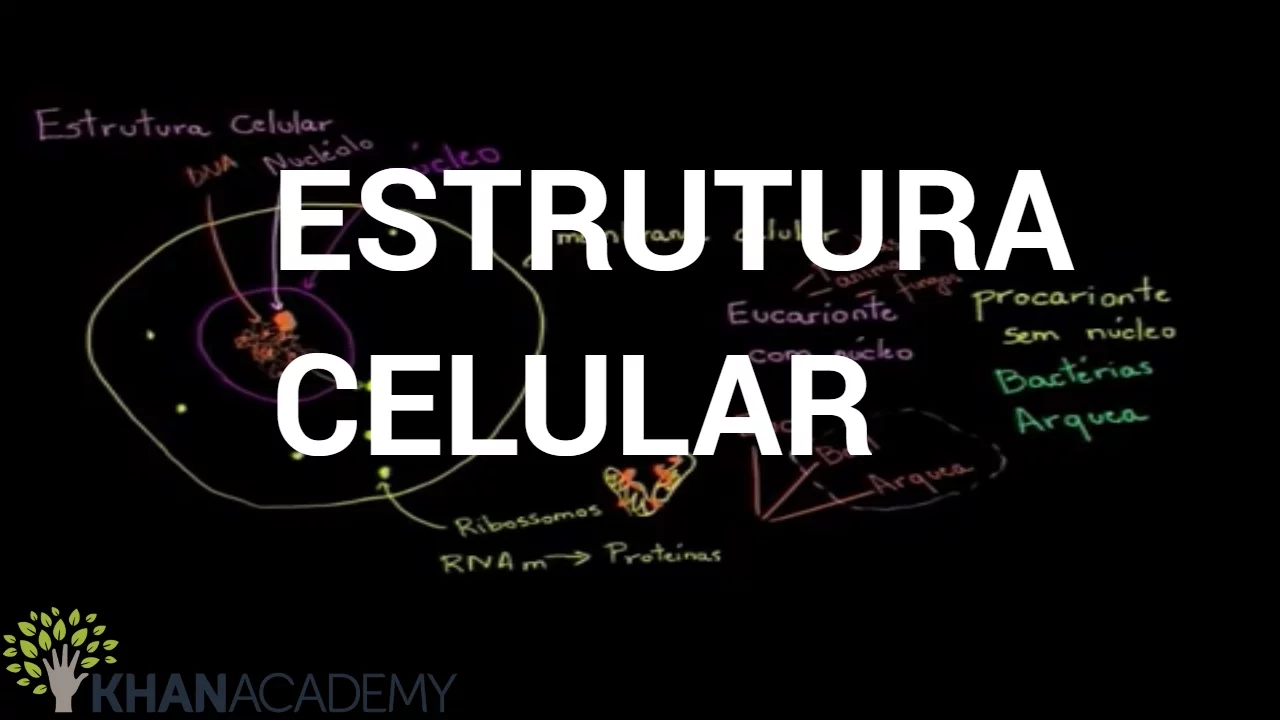
This segment delves into the significance of DNA in determining cellular identity and introduces the concept of eukaryotic and prokaryotic cells based on the presence or absence of a nucleus.
Significance of DNA in Cells
- DNA is emphasized as a pivotal element that defines living organisms, with all cells containing DNA within them.
Distinction Between Eukaryotic and Prokaryotic Cells
- Eukaryotic cells are characterized by having a nucleus, while prokaryotic cells lack this organelle.
Eukaryotes vs. Prokaryotes
This part discusses eukaryotes and prokaryotes further, highlighting examples such as bacteria and archaea while emphasizing the evolutionary implications of these distinctions.
Evolutionary Classification
- Eukaryotes possess a nucleus, distinguishing them from prokaryotes like bacteria and archaea.
Complexity in Eukaryotic Cells
- Eukaryotic cells tend to be more complex than prokaryotic ones, encompassing organisms like plants, animals, fungi, among others.
Ribosomes: Protein Synthesis Machinery
This section focuses on ribosomes as essential organelles responsible for translating RNA into proteins within the cell.
Ribosomal Function
- Ribosomes serve as sites where RNA molecules are translated into proteins crucial for various cellular functions.
Ribosome Production Process
- Ribosomes are produced in nucleoli within the nucleus through RNA ribosomal synthesis.
Nucleolus: Ribosome Production Site
The discussion centers on the nucleolus as a dense region within the nucleus where ribosomal components are synthesized.
Nucleolus Composition
- The nucleolus comprises densely packed proteins and RNA ribosomal material critical for ribosome production.
Understanding Protein Production in Cells
In this section, the focus is on the process of protein production within cells, specifically exploring the role of ribosomes and organelles like the endoplasmic reticulum and Golgi complex.
Ribosomes and Protein Production
- The ribosomes can be free-floating or attached to organelles like the endoplasmic reticulum. Proteins produced by ribosomes can float in the cell's fluid (cytosol) or be targeted for specific locations.
- The endoplasmic reticulum is depicted as a network of tunnels leading to the Golgi complex. Ribosomes attached to this structure form rough endoplasmic reticulum, while those without attachment create smooth endoplasmic reticulum.
- Rough endoplasmic reticulum refers to portions with attached ribosomes, while smooth endoplasmic reticulum lacks these attachments. This distinction plays a crucial role in protein synthesis and processing.
Protein Translation and Localization
- Proteins destined for areas outside the cell or cell membranes are processed through interactions between ribosomes, endoplasmic reticulum, and Golgi complex. This ensures proper localization and function of proteins.
- Proteins synthesized within the rough endoplasmic reticulum are pushed into its interior for further processing. This internal space serves as a hub for preparing proteins intended for extracellular use or membrane incorporation.
Golgi Complex Processing
- After passing through the rough and smooth endoplasmic reticulum, proteins traverse to the Golgi complex where additional modifications occur before their eventual release from the cell or integration into cellular membranes.
- Proteins undergo folding processes as they move through organelles like the endoplasmic reticular system towards secretion points such as the Golgi complex. These steps ensure proper protein structure and functionality.
Protein Transport Mechanisms Within Cells
This segment delves into how proteins are enveloped in vesicles within cells, detailing their migration pathways facilitated by organelles like the Golgi complex.
Vesicle Formation and Protein Transport
- Proteins exiting from organelles like the Golgi complex are encapsulated in vesicles before being transported within cells. This mechanism involves membrane wrapping around proteins to facilitate their movement throughout cellular compartments.
Understanding Cell Structures and Functions
In this section, the speaker discusses the importance of small membranes in cells, their role in protein movement, and how proteins can interact with cell membranes.
Small Membranes in Cells
- Small membranes play a crucial role as they allow proteins to float outside the cell membrane and move to other parts of the cell.
- Proteins can use their own small membrane to facilitate exiting the cell or binding with the cell membrane.
- Visual representation of a vesicle containing a protein approaching and merging with the cell membrane due to similar composition.
Cell Organelles: Lysosomes and Vacuoles
The speaker delves into organelles like lysosomes found in animal cells containing enzymes for particle degradation and vacuoles in plant cells serving similar functions.
Lysosomes
- Lysosomes contain enzymes that aid in degrading particles by adhering to them and releasing enzymes.
- Function of lysosomes involves killing and digesting particles within animal cells.
Vacuoles
- Vacuoles are large vesicles in plant cells akin to lysosomes but larger, storing various enzymes for degradation.
- Vacuoles store materials within plant cells, capable of degrading substances by expelling enzymes when attached.
Energy Production: Mitochondria and Chloroplasts
Discussion on mitochondria's role in energy production through ATP synthesis and chloroplast's function in photosynthesis within plant cells.
Mitochondria
- Mitochondria produce energy by converting sugars into ATP through internal and external membranes.
- Mitochondria possess their DNA, replicate independently, suggesting evolutionary origins from prokaryotic organisms.
Chloroplasts
- Chloroplasts are vital for photosynthesis in plants, housing thylakoids where photosynthesis occurs.