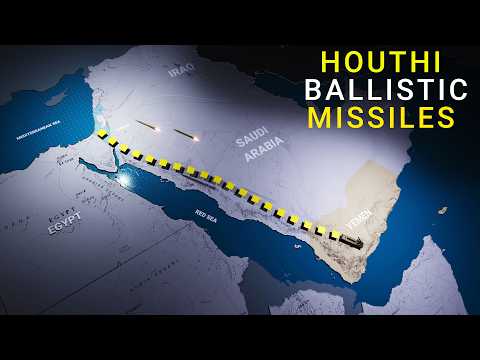
Why Israel’s Billion-Dollar Defense System Missed Houthi Missiles
How Did the Houthi Missile Strike Israel?
Overview of the Houthi Missile Capabilities
- The Houthi forces managed to strike Israel from over a thousand miles away using Iranian-engineered ballistic and semi-hypersonic missiles with a skip trajectory flight path.
- These newer weapons can zigzag mid-flight, confusing interceptor radars due to their unpredictable trajectories at extreme speeds.
The Palestine 2 Missile
- The Houthi launched the Palestine 2 missile, capable of reaching speeds up to Mach 16, allowing it to travel from Yemen to Israel in mere minutes.
- This missile features a sophisticated skip gliding mechanism that complicates interception by traditional defense systems.
Characteristics and Threat Level
- Experts suggest the missile has semi-hypersonic characteristics, enabling sharp maneuvers during flight that older models cannot achieve.
- The Palestine 2 has a range of approximately 1,500 km and utilizes hypersonic glide technology for enhanced maneuverability.
Vulnerabilities in Defense Systems
- The combination of speed, course changes, and potential stealth capabilities exposes vulnerabilities even in heavily defended airspaces like Israel's.
- Non-state actors like the Houthi now have access to advanced weaponry previously thought exclusive to major powers.
Understanding Iran's Missile Technology
Overview of Iranian Ballistic Missiles
- To comprehend the Houthi missile's operation, one must examine Iran's missile technology and its strategy involving multiple ballistic missiles targeting Israel.
- Iran utilized variants of the Shahab 3 ballistic missile in recent attacks on Israel; this model serves as the foundation for many medium-range missiles.
Mechanism of Operation
- The operational steps include positioning at a 90° angle before launch, ascending near Earth's atmosphere edge, warhead separation upon re-entry, and potential for single or multiple warheads depending on variant.
Israeli Defense Systems Explained
Structure of Israeli Defense Layers
- The Israeli defense system comprises three tiers:
- Long-range Aeromissile Defense System designed against Iranian threats.
- David Sling system aimed at intercepting missiles and drones.
- Iron Dome which primarily defends against short-range rocket attacks.
Limitations of Current Systems
- Despite these layers, there are limitations; for instance, Iron Dome has an effective range around 40 miles while David’s Sling can intercept up to 180 miles.
Missile Defense Systems and Their Challenges
Overview of Missile Threats
- The top-tier aero anti-ballistic missile systems can target threats up to 1,500 meters away. Reports indicate that 180 ballistic missiles, potentially hypersonic as claimed by the Iranian Revolutionary Guard, were launched.
- Despite the Aerrow missile defense system intercepting many missiles before reaching Israel, a significant number still penetrated defenses.
Challenges in Interception
- A key issue in interception failure occurred after the glide vehicle detached from its launcher; it could change trajectory multiple times, complicating interception efforts.
- This maneuver bypassed both David's Sling and Iron Dome systems, which are not designed to counter hypersonic missiles like the FAT 2 model.
Cost Analysis of Missile Attacks
- Iran reportedly spent over $200 million launching ballistic missiles and drones in a single day, while the IDF incurred costs of approximately $1 billion for defense.
- The cost breakdown includes:
- Ara missile: ~$2.5 million each
- David Sling: ~$1 million each
- Iron Dome: $20,000 to $100,000 per missile depending on inflation.
Components of the Aerrow Missile Defense System
- The Aerrow system consists of three main components:
- Missile Launcher Unit: Contains six ready-to-fire missiles housed in erector launcher tubes on a two-axle trailer weighing 35 tons when fully loaded.
- Green Pine Radar: Functions as warning and fire control radar for target detection and guidance within the A3 anti-ballistic air defense system.
Engineering Insights into Missile Technology
- The Arrow operates as a two-stage missile with solid propellant booster and sustainer rocket motors.
- Key features include an ignition chamber that triggers combustion of a specially crafted blend of fuel and oxidizer encased in a protective shell.
Kill Vehicle Mechanics
- The kill vehicle comprises three parts:
- Propulsion System: Features thrust vectoring nozzle for maneuverability.
- Warhead: A directed high explosive fragmentation weighing around 150 kg (330 lbs).
- Seeker: Capable of pivoting to track targets effectively.
Comparison with Other Systems
- Notably, THAAD (Terminal High Altitude Area Defense) uses divert attitude control thrusters compared to A3's thrust vectoring nozzle which offers advantages such as compensating for radar inaccuracies during targeting.