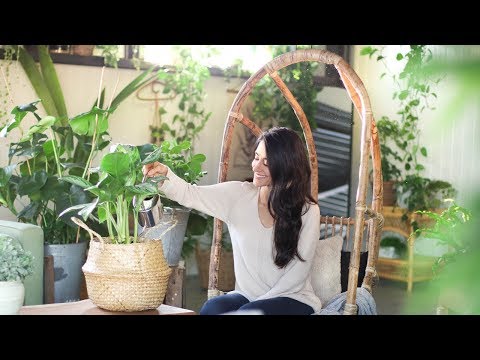
HOUSEPLANT CARE TIPS FOR BEGINNERS » + printable guide
Introduction to Houseplant Care
In this video, the speaker discusses their passion for plants and the joy they bring to indoor spaces. They introduce the topic of houseplant care and provide a beginner's guide for those who struggle with keeping plants alive.
Importance of Plants in Indoor Spaces
- Plants bring nature into our homes and workspaces, adding color and liveliness.
- Taking care of plants can be rewarding and fulfilling.
Creating a Plant-Filled Space
- The speaker shares their experience of turning their studio space into a jungle by filling it with numerous plants.
Beginner's Guide to Houseplant Care
- This video serves as a beginner's guide for those who struggle with caring for houseplants or are looking for new tips.
- The speaker encourages viewers to share their own recommendations in the comments section.
Considerations Before Buying Plants
Before purchasing plants, it is important to consider factors such as sunlight availability, temperature, and location within your home or workspace. Additionally, there are other things to keep in mind while at the plant store.
Assessing Sunlight, Shade, and Temperature
- Determine the amount of sunlight available in the desired location for your plant.
- Consider whether there is shade or any specific temperature requirements.
- Check plant tags at the store to ensure compatibility with your environment.
Checking Root Situation at the Nursery
- When selecting a plant, gently remove it from its pot to examine its root situation.
- If roots are overcrowded or extending beyond the pot, consider repotting it into a larger container.
- Look for suitable inner and outer pots while still at the nursery.
Importance of Drainage Holes in Pots
- Ensure that pots have drainage holes at the bottom to allow water to drain properly.
- Avoid pots with valleys or areas where water can collect, as it may lead to root rot.
Repotting Techniques for Plants
While repotting plants is important for those that have outgrown their current pots, some plants may not handle environmental changes well. The speaker shares a technique taught by their mother to help plants settle into their new homes.
Preparing Soil for Repotting
- Wet the soil before adding it to the new pot, ensuring it is moist enough to stick together but not dripping wet.
- Moist soil encourages roots to explore and settle into the new environment.
Transferring Plant to New Pot
- Transfer soil along the bottom and sides of the new pot.
- Gently remove the plant from its nursery container and place it in its new home.
- Add extra soil around the sides and top, gently pressing down while leaving room for root expansion.
- Water lightly at the end to provide moisture to both old and new soil.
Watering Tips for Houseplants
Proper watering is crucial for houseplant care. Over-watering or under-watering are common reasons why plants die. The speaker provides some general guidelines for watering houseplants effectively.
Checking Soil Moisture
- Use your finger to check if the soil is dry a couple of centimeters deep.
- If still moist, skip watering; if dry, proceed with watering.
Watering Technique
- Water until you see a bit of water coming out onto the base plate.
- Drain off any excess water that collects in order to avoid over-saturation of roots.
Seasonal Watering Preferences
- Plants generally require more frequent watering during spring and summer months and less frequent watering in winter months.
- Consider that plants may have preferences for water temperature.
Conclusion and Acknowledgment
The speaker concludes the video by thanking Wix for partnering with them on this topic. They mention that Wix is the platform used to create and host their website, Pickuplines.
New Section
This section discusses the importance of fertilizer for houseplants and how often they should be fed.
Fertilizing Houseplants
- Houseplants need soil, good light, water, and fertilizer to thrive. Fertilizer is the plant's food.
- In the spring and summer, plants usually need to be fed every two to four weeks. During winter, when plants are in their rest period, they generally don't require any feeding.
- Using a universal liquid variety of fertilizer that works on all houseplants is recommended.
New Section
This section emphasizes the importance of providing natural light for houseplants and offers tips on managing light exposure.
Light Requirements for Houseplants
- Different plants have varying light requirements; some thrive in sunlight while others prefer shade. However, all plants need a source of natural light. In darker winter months, it may be necessary to move plants closer to a light source.
- Plants do not like to be moved frequently as they become accustomed to their environment. It is best to avoid unnecessary movement unless required.
New Section
This section highlights the significance of maintaining an appropriate temperature range for houseplants.
Temperature Considerations
- It is important to keep the temperature within a comfortable range for houseplants.
- Plants near windows may experience varying temperatures depending on weather conditions outside.
- Plants located near air-conditioning units or radiators may also be exposed to fluctuating temperatures.
New Section
This section introduces a free PDF resource that provides additional tips and tools for plant care.
Free Plant Care Guide PDF
- A free PDF guide is available to assist with plant care. It includes tips, a page to document the needs of each plant, and a plant watering tracker.
- The link to access the PDF can be found in the description box below.
New Section
This section discusses the importance of removing dead or decaying foliage from houseplants.
Removing Dead Leaves
- Insects and bugs are attracted to dead and decaying foliage. It is essential to remove any rotting or dying leaves sitting on top of the soil.
- Pruning plants by cutting off visibly dying leaves prevents them from stealing essential nutrients from healthy leaves.
New Section
This section provides guidance on identifying and dealing with insects or bugs that may affect houseplants.
Dealing with Insects
- While watering plants, inspect the leaves for signs of insects or bugs.
- If insects are present, it is important to address them promptly.
- Taking a picture and seeking help from a local nursery or searching online can aid in identifying pests.
- For many types of pests, spraying the leaves with a soap and water solution and wiping them clean with a damp cloth can be effective. Repeat as necessary.
New Section
This section encourages perseverance when caring for plants and suggests matching plant choices with comfort levels.
Persistence in Plant Care
- Don't be discouraged if some plants do not thrive despite trying new methods; it's part of the circle of life.
- With experience, one becomes better at caring for plants over time.
- Consider choosing plants that match your comfort level and skill set; succulents and pathos are generally easier to care for compared to other plants.
New Section
This section concludes the video by inviting viewers to engage with the content and thanking the sponsor.
Conclusion and Call to Action
- If viewers found the video helpful, they are encouraged to give it a thumbs up.
- The free Plant Care Guide PDF can be accessed through the link in the description box below.
- The video's sponsor, Wix, is acknowledged for their partnership and support.
- Viewers who have created websites or blogs using Wix's platform are appreciated, as it brings joy to see others achieve their goals.
- Those interested in creating their own website or blog can check out Wix's offerings through the link provided in the description box. It is emphasized that Wix makes website creation easy with drag-and-drop features and professional-looking templates.
- The mobile-friendly nature of Wix's platform is highlighted.
- Viewers are invited to share pictures of their thriving plants on Instagram.