Célula Procariota
What Are Prokaryotic Cells?
Introduction to Prokaryotic Cells
- The cell is the fundamental organized structure of living beings, essential for performing life functions.
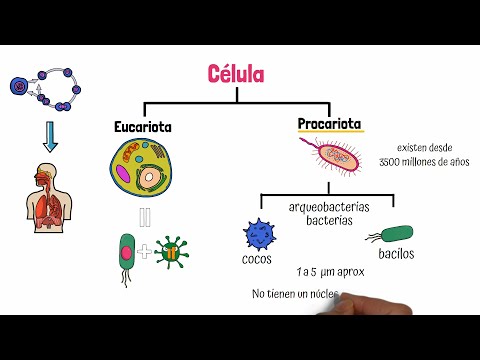
- Prokaryotic cells are the oldest known type of cell, existing on Earth for approximately 3.5 billion years.
- Despite their age, prokaryotic cells have not evolved significantly; some theories suggest that various prokaryotic bacteria may have formed symbiotic relationships leading to more complex eukaryotic cells.
Characteristics of Prokaryotic Cells
- Prokaryotic cells come in various shapes: spherical (cocci) and rod-shaped (bacilli). They are much smaller than eukaryotic cells.
- A defining feature of prokaryotic cells is the absence of membrane-bound organelles; they lack a well-defined nucleus where DNA is stored, resulting in DNA being dispersed in cytoplasmic clusters.
Structure of Prokaryotic Cells
- Key structures include:
- Plasma Membrane: Protects the cell and regulates internal processes.
- Cell Wall: Provides rigidity and additional protection.
- Capsule: Allows adherence to surfaces and retains moisture within the cell.
Additional Structures
- Other important components:
- Pili: Hair-like projections that facilitate attachment to substances and transfer DNA.
- Ribosomes: Essential for protein synthesis with assistance from RNA.
- Cytoplasm: Gel-like substance enabling movement and housing cellular structures.