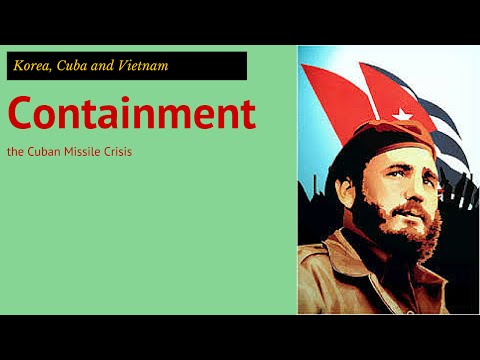
3: GCSE History - the Cuban Missile Crisis
Cuban Missile Crisis: A Critical Examination
Overview of the Cuban Missile Crisis
- The Cuban Missile Crisis occurred over 14 days in October 1962, marking a pivotal moment in Cold War history and raising questions about the effectiveness of U.S. containment policies.
- Many historians believe this period brought the world closest to nuclear war, illustrated by a contemporary cartoon depicting leaders Kennedy and Khrushchev poised over nuclear launch buttons.
Political Context Leading to the Crisis
- The cartoon analyzed reflects American sentiment, portraying Kennedy as resolute compared to a sweating Khrushchev, indicating perceived power dynamics during the crisis.
- Cuba, just 90 miles from the U.S., was under dictator Fulgencio Batista until his overthrow by Fidel Castro in 1959, who then aligned with the Soviet Union.
Tensions Between Cuba and the United States
- Post-revolution relations were strained; Castro's regime was viewed as a threat due to its communist leanings after U.S. support for Batista.
- Cuban exiles formed pressure groups in the U.S., advocating for action against Castro’s government following nationalization of American businesses.
Economic Sanctions and Diplomatic Breakdown
- In October 1960, the U.S. banned sugar imports from Cuba, aiming to weaken Castro's regime economically; however, Khrushchev stepped in to purchase Cuban sugar at inflated prices.
- By January 1961, diplomatic relations between Cuba and the U.S. were severed due to increasing Soviet influence near American borders.
The Bay of Pigs Invasion
- The Bay of Pigs invasion in April 1961 was an attempt by CIA-trained Cuban exiles to overthrow Castro but ended disastrously without direct military involvement from U.S. forces.
- This failure highlighted miscalculations regarding popular support for Castro and resulted in significant embarrassment for President Kennedy.
Escalation into Nuclear Threat
- In response to U.S. missile placements in Italy and Turkey capable of striking Moscow, Khrushchev decided to place missiles in Cuba as a countermeasure.
- On October 14th, a U2 spy plane identified these missile sites in Cuba; two days later on October 16th, Kennedy received definitive proof of Soviet missiles being present.
Options Available to President Kennedy
- Faced with this intelligence, Kennedy considered several options: issuing a letter of protest through international channels or taking military action against missile sites which could escalate tensions significantly.
Cuban Missile Crisis: A Tense Standoff
The Risk of Military Action
- Discussion on the moral implications of a potential U.S. military invasion of Cuba, especially in light of American sentiments following the Pearl Harbor attack.
- Highlighting the risk of provoking Soviet responses, such as an invasion of Berlin or West Germany, if military action were taken.
Naval Blockade Decision
- Kennedy opts for a naval blockade (termed "quarantine") to prevent further missile shipments to Cuba without declaring war.
- The blockade involves American naval ships surrounding Cuba and searching incoming vessels while allowing non-military supplies like food.
Escalation and Diplomatic Communication
- On October 26, Kennedy receives a letter from Khrushchev proposing missile withdrawal in exchange for a U.S. promise not to invade Cuba.
- A second letter arrives on October 27, demanding U.S. missile withdrawal from Turkey as part of the deal, raising concerns about possible changes in Soviet leadership.
Strategic Dilemmas for Kennedy
- Intelligence fears that Khrushchev may have been overthrown by hardliners who could escalate tensions further.
- The dilemma intensifies as withdrawing missiles from Turkey could be perceived as capitulation to Soviet demands.
Backchannel Negotiations and Resolution
- Despite military recommendations for airstrikes against Cuba, Kennedy decides to respond only to the first letter regarding non-invasion assurances.
- Robert Kennedy engages with Soviet Ambassador Dobrynin through backchannel negotiations, promising not to invade if missiles are removed from Cuba by the next day.
Outcomes and Implications
- On October 28, it is confirmed that Russia will withdraw its missiles from Cuba; this outcome is seen variably as a victory for different parties involved.
- While Kennedy appears victorious domestically, Khrushchev faces backlash within the USSR for appearing weak; this incident contributes to his eventual loss of power in 1964.
Global Reactions
- China's perception shifts towards independence from Soviet influence due to dissatisfaction with their handling during the crisis.
- European allies express shock at being excluded from negotiations; France's withdrawal from NATO exemplifies growing independence among U.S. allies post-crisis.
The Cold War: A Narrow Escape from Nuclear Conflict
The Aftermath of Close Calls
- Both the USA and USSR recognized the peril of direct conflict, realizing how close they had come to nuclear war.
- Although the Cold War persisted, both superpowers managed to avoid direct hostility following this realization.
- A significant development was the installation of a telephone hotline between Washington and Moscow.
- This hotline facilitated quick and direct communication, aiming to prevent misunderstandings that could lead to escalation.