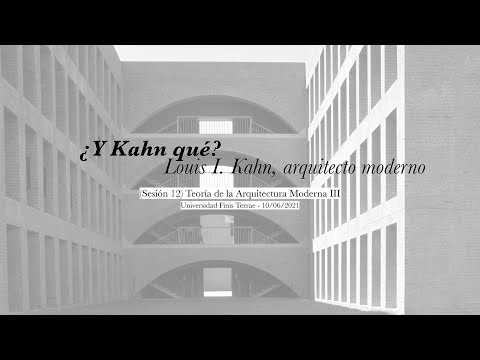
(11/12) Louis I. Kahn, del silencio a la luz | Historia de la arquitectura de posguerra
Introduction to the Architect Louis Kahn
Overview of Kahn's Significance
- The lecture focuses on architect Louis Kahn, who, despite not being American by birth, significantly influenced architecture in the United States.
- Kahn was born in 1901 and began studying architecture in 1920, predating many notable architects discussed earlier in the course.
- His work primarily took place during the 1950s and 1960s, raising questions about why he is covered later in the course.
Reasons for Late Inclusion
- Kahn's architectural style is distinct from his contemporaries; understanding it requires knowledge of other works discussed previously.
- His contributions are crucial for contextualizing discussions around modern versus postmodern architecture, particularly concerning Aldo Rossi and Robert Venturi.
Kahn's Architectural Context
Modern vs. Postmodern Architecture
- The lecture aims to clarify the debate between modernism and postmodernism through an analysis of Kahn’s work.
- Historians like Renato De Fusco view Kahn as a significant figure bridging modern and postmodern architecture.
Academic Influences
- Kahn studied at the University of Pennsylvania under Paul Cret, who taught there from 1903 to 1937.
- Cret’s influence stemmed from French academic traditions that were more entrenched in North America than Europe during that period.
Kahn's Inspirations and Travels
Artistic Influences
- Understanding Kahn’s work also involves recognizing his admiration for French fine arts and academic traditions.
Key Travels Impacting His Work
- Significant travels to Greece and Italy shaped his architectural vision; he visited these places after completing his studies in 1928.
- In 1950–51, he traveled to Rome as part of a prestigious fellowship where he studied Roman architecture extensively.
Impact of Roman Architecture on Kahn
Architectural Developments Post-Rome Trip
Architectural Maturity and Influences
Early Works and Influences
- The architect discussed is noted for creating a significant work at the age of 50, contrasting with younger contemporaries like Le Corbusier who produced early works much earlier in their careers.
- This work reflects influences from Mies van der Rohe's language, particularly in its use of brick and open floor plans typical of modernist architecture.
Unique Architectural Elements
- Distinct features include tetrahedral ceilings and a cylindrical concrete staircase with semicircular skylights, showcasing an innovative approach to design.
- The architect integrates structural, energetic, and formal needs into a single element—concrete slabs that cover spaces with coffered ceilings.
Historical Inspirations
- Roman influences are evident in the architect's work alongside inspirations from Piranesi’s engravings and French Beaux-Arts traditions.
- Despite historical inspirations, the architect maintains a modern identity by reinterpreting elements rather than succumbing to eclecticism or formalism seen in other architects like Rossi or Venturi.
The Impact of Rome on Architectural Philosophy
Transformation Through Experience
- A pivotal trip to Rome marked a turning point in the architect's career, leading him to seek alternatives to contemporary architecture while valuing historical lessons learned during his time there.
- He utilized lectures and writings as tools to articulate his architectural philosophy against prevailing trends.
Core Philosophical Concepts
- The architect emphasizes understanding "what" to build before determining "how" to construct it; this prioritization shapes his design process.
- He argues that when faced with an architectural problem, architects select forms from their mental repository that best respond to specific challenges.
Coherence as a Central Theme
Importance of Form Selection
- If the chosen form aligns correctly with project requirements, it retains coherence throughout; otherwise, it may necessitate starting over with new forms.
Defining Coherence in Modern Architecture
- Coherence is highlighted as essential for modern architecture—ensuring harmony between form and function along with materials and structure.
Order as Fundamental Principle
- The concept of order is crucial; defining order gives life to spaces reflecting their inherent nature.
Understanding the Architectural Philosophy of Louis Kahn
The Role of Geometry in Architecture
- Kahn emphasizes the intrinsic force of geometry in architecture, highlighting how polygons and polyhedra define spaces within his architectural world.
- He presents a Platonic view of form, suggesting that architects envision pure, ideal shapes that aspire to beauty and essence.
- Kahn argues that these ideal forms are stored in the architect's memory, shaped by past experiences and cultural heritage.
The Essence of Buildings
- Kahn believes buildings possess an inherent essence that guides their design solutions; he prioritizes form over function in some cases.
- He posits that human history influences aesthetic processes, as architecture is deeply rooted in cultural context and historical legacy.
- Architects modify existing forms based on external realities while drawing from a rich repository of cultural shapes.
The Process of Realization
- Kahn describes a moment of realization or epiphany where the appropriate form for a project becomes clear, marking a significant artistic process.
- This realization transcends mere visual considerations; it involves understanding relationships between uses and spaces.
Balancing Thought and Emotion
- The realization process consists of two components: thought (philosophical inquiry into precedents) and feeling (the emotional drive to manifest mental images).
- Both elements are seen as transcendent forces that cannot be quantified but significantly influence architectural choices.
From Idea to Design
- Once a form is chosen through this realization process, it must be made tangible through design considerations such as budget, site conditions, client needs, and materials.
- Kahn introduces an intermediary step called "order," which bridges initial ideas with practical design requirements.
Stages of Architectural Project Development
- Kahn outlines three fundamental stages in architectural projects:
- Initial stage: defining the idea where the building's essence emerges.
- Order stage: introducing composition principles to shape this idea.
Architectural Concepts and the Role of Light
The Foundation of Geometric Order
- Discussion begins with a diverse repertoire of geometric forms, such as squares, circles, and pyramids, which are foundational in architectural design.
- Emphasis on the use of repetition, juxtaposition, and intersection to create a structured geometric order in compositions.
- The importance of maintaining the initial idea throughout the design process is highlighted; it should resonate with the final construction.
The Significance of Beginnings
- The speaker notes that for architect Louis Kahn, the moment of choosing a form is crucial; he expresses fascination with project beginnings.
- Kahn's well-known text "I Love Beginnings" emphasizes the architect's role in transitioning from silence (conceptualization) to light (realization).
Silence and Light: A Creative Journey
- The distinction between silence and light is explored as a metaphor for the creative process in architecture—moving from conceptual quietness to illuminated realization.
- Kahn suggests that architects respond to individual expressive impulses while adhering to natural laws that integrate their work into reality.
Light as Architectural Essence
- For Kahn, light reveals architecture; it is essential for defining structure and materiality within his designs.
- Architectural spaces come alive when illuminated; light plays a fundamental role in how spaces are experienced.
Material Interaction and Sensuality
- Kahn’s careful manipulation of materials like concrete, travertine, wood, steel, glass, and brick enhances architectural sensuality often overlooked.
- This interaction with materials fosters direct experiences that become significant attractions within his work.
Experience Over Geometry
- As buildings transition from concept to reality under light exposure, geometric order becomes less prominent compared to spatial experience created by materials and light.
- Understanding Kahn's architecture requires direct engagement with his buildings rather than solely analyzing drawings or plans.
Exploring Kahn's Architectural Philosophy
Framework for Understanding His Work
- A theoretical framework is established for approaching an analysis of Kahn’s works through key concepts discussed earlier.
Comparative Analysis with Other Architects
- Future discussions will compare Kahn’s philosophy with those of Aldo Rossi and Robert Venturi regarding modernism versus postmodernism.
Yale Art Gallery: A Break from Modernism
Architectural Significance
- The Yale Art Gallery, completed in 1953, represents a decisive break from the orthodox modern movement, particularly during the 1950s when architects largely adhered to the International Style characterized by white buildings and longitudinal windows.
- Designed by Louis Kahn, the gallery features a tall prism-like volume that closes off one end of a rectangular block. Its layout includes three large exhibition halls and a central service core.
- The building's striking appearance is defined by its blind brick facade with horizontal limestone bands and large concrete ceiling coffers, showcasing influences from both Buckminster Fuller and ancient Egyptian pyramids.
Flexibility in Design
- The floor plan exhibits an indeterminate use of space, allowing for flexibility as no specific functions are assigned to certain areas. This balance between monumental form, structural justification, and order is crucial in Kahn's later works.
Trenton Jewish Community Center: Separation of Spaces
Innovative Spatial Organization
- Following the Yale project, Kahn designed a bathhouse for the Jewish community center in Trenton (completed in 1959), which was part of a larger unbuilt project. This design marked his first clear resolution of separating servant spaces from served spaces.
- The layout illustrates this separation through structural squares where all service areas like restrooms are located while maintaining distinct served spaces beneath the roofs.
Impact on Architectural Approach
- This project allowed Kahn to establish his architectural identity without needing to draw inspiration from other architects' works. It became pivotal in defining his approach to architecture.
Richards Medical Research Laboratories: Functionality vs. Symbolism
Structural Clarity
- In designing the Richards Medical Laboratories, Kahn further developed his concept of separating servant and served spaces. The laboratory consists of six square rooms with vertical towers housing services like restrooms and air ducts.
- These towers not only serve functional purposes but also symbolize Kahn’s philosophy regarding spatial organization within architecture; however, they faced practical issues related to light control during usage.
Salk Institute: Reflection Spaces
Design Philosophy
- One of Kahn's most renowned projects is the Salk Institute for Biological Studies (completed in 1965), featuring two distinct building clusters inspired by Roman architecture aimed at fostering individual and collective reflection akin to medieval monasteries.
- The design incorporates elements such as meeting rooms and laboratories arranged around communal spaces influenced by suggestions from architect Luis Barragán regarding vegetation removal for enhanced monumental quality.
Rochester Unitarian Church: Conceptual Foundations
Initial Vision
- Between 1959 and 1969, Kahn worked on the Unitarian Church in Rochester. Upon receiving this commission, he immediately envisioned forms that would best suit its purpose based on prior conceptualizations stored in his mind.
Architectural Design and Client Needs
Initial Concept Development
- The architect's initial design aimed to create a centralized form reminiscent of a Renaissance temple, with a central space marked by a question mark indicating the location of the temple.
- The first sketch proposed surrounding educational spaces around this central area, integrating both the temple and school functions into one cohesive design.
Client Feedback and Adjustments
- Clients expressed dissatisfaction with the initial concept, preferring a clear separation between the temple and school buildings.
- The architect resisted this separation, instead incorporating smaller educational spaces around the temple in subsequent sketches to maintain his original vision.
Final Design Resolution
- Ultimately, the architect achieved a layout that satisfied both his vision of interconnected spaces and the clients' needs for functional separation among classrooms.
- This process highlighted the importance of adapting an ideal architectural form to meet specific client requirements without losing sight of initial concepts.
Importance of Light in Architecture
- The project also emphasized how light was directed into interior spaces, showcasing its significance in enhancing architectural experience.
Indian Architectural Projects
Indian Institute of Management
- A significant project completed between 1962 and 1974; it involved designing an entire campus that included classrooms, libraries, dining facilities, and residences for students and faculty.
- The design drew inspiration from medieval monastery layouts, aiming to create a harmonious blend of private and public spaces while being mindful of local climate conditions.
Material Use and Structural Solutions
- Local materials like brick were utilized creatively to develop structural solutions that defined the building's aesthetic.
- Features such as horizontal arches integrated with concrete reflected influences from ancient Roman architecture while adapting them for modern use in India.
Cultural Institutions: Exploring Natural Light
Library Project Insights
- In his final works related to cultural institutions, there was an exploration of natural light's role within architectural designs.
- One notable library project featured a large skylight at its center along with reading areas designed for optimal natural lighting—considered one of the most beautiful study environments created in the 20th century.
Spatial Organization within Libraries
Kahn's Architectural Philosophy and Key Works
Central Space and Cultural Significance
- The central space of the building, illuminated by a double pyramid skylight, symbolizes its public and cultural function.
Kahn's Notable Projects
- Discussion of the Kimble Museum, featuring beautiful barrel vaults that are self-supporting beams rather than relying on walls.
- Introduction to the British Art Center at Yale, which Kahn worked on until his death in 1974. The project showcases extensive use of skylights.
Influence on Contemporary Architecture
- Kahn’s work has inspired many contemporary projects, including modern art museums in Sweden and Spain by architects like Moneo and Mansilla & Tuñón.
Design Process and Methodology
- Kahn’s design process involves starting with an initial idea or sketch, followed by a search for order and geometry, culminating in a focus on light and materials.
Modern Architect Debate
- The speaker aims to address whether Kahn is considered a modern architect. The conclusion is affirmative; he embodies modern architectural principles.
Reinvention in Architecture
- According to Vincent Scully, Kahn embraced the modernist principle of reinventing every project from scratch to ensure originality.
Importance of Origins
- Kahn believed that each structural element should be reimagined anew while also seeking historical inspiration without direct copying.
Cultural Construction of Order
- Kahn recognized that human order is culturally constructed; thus, understanding historical contexts was crucial for developing new architectural orders.
Reinterpretation Over Imitation
- Despite being influenced by historical structures, Kahn aimed to reinterpret them rather than simply replicate their forms.
Addressing Functional Challenges
- His approach involved tackling functional issues as if they had never been addressed before, emphasizing innovative strategies like separating functions within buildings.
Role of Light in Architecture
- Light plays a critical role in shaping architectural forms; it helps define how spaces are perceived based on specific programmatic needs.
Architectural Philosophy and Modernism
The Relationship Between Form and Function
- The modern architect acknowledges that form should not merely reflect function; there are formal values that transcend functionality.
- There is a constant adjustment between form and function in architectural design, where the initial choice of form is influenced by the building's program or purpose.
- The chosen form is suggested by the project's characteristics, such as when tasked with creating a unitary temple, which inherently guides the design process.
- While form relates to function, it also connects to historical context and symbolic value, indicating that architecture encompasses more than just utility.
- This interplay of history and essence in forms leads to buildings that must not only serve their purpose but also embody their intended identity.
Architectural Interpretation and Symbolism
- An example discussed involves Louis Kahn's approach to his designs, emphasizing how buildings must symbolize their intended functions while addressing practical issues.
- Kahn faced functional failures in his projects (e.g., Richards Laboratories), which he viewed as significant setbacks rather than mere aesthetic concerns.
- Following these challenges, Kahn developed a project method focusing on separating form from design details to better analyze functionality and structure.
- His method recognized cultural inspirations stored in his mind could inform new projects while maintaining relevance across time periods.
- Kahn’s works often evoke Roman monumental qualities, making them timeless; they can be difficult to date due to their abstract nature.
Reinvention of Architectural Motifs
- Despite drawing inspiration from historical elements like Roman architecture, Kahn remains committed to abstraction and reinvention without direct copying of past styles.
- Decorative elements in Kahn's buildings are justified through construction methods rather than superficial embellishments; this reflects a deeper understanding of materiality.
- Kahn’s modernity lies in his innovative approach—he does not replicate history but instead reinterprets it creatively within contemporary contexts.
- His meticulous attention to detail ensures each aspect of his designs contributes meaningfully to the overall coherence of the building's concept.
A Comparative Analysis of Rossi and Khan's Architectural Philosophies
The Concept of Typology in Architecture
- The discussion begins with the comparison between Aldo Rossi's architectural ideas and those of Louis Kahn, emphasizing their shared focus on typological elements within urban design.
- Both architects draw inspiration from static orders in architecture, with references to Italian painter De Chirico highlighting visual similarities in their works.
- A key distinction is made: Rossi seeks typology as a fundamental concept, while Kahn aims for originality through the study of typology.
Urban Context and Historical Influence
- Rossi’s work is deeply rooted in traditional city concepts where each building serves a specific role, applying historical architectural types directly to his designs.
- In contrast, Kahn reinterprets classical elements rather than copying them, positioning himself as a modern architect who innovates upon historical forms.
Symbolism and Abstraction
- While both architects incorporate symbolism into their work, Kahn’s approach veils this symbolism under abstraction, focusing on materiality and structure rather than overt symbols.
- This contrasts sharply with other architects like Ventura, who use more explicit symbolic representations in their designs.
Monumentality and Humanism in Design
- Kahn’s architecture expresses monumental qualities through substantial forms without adhering strictly to modernist language; he embraces heavier materials like brick.
- Unlike contemporaries such as Hudson or Kenzo Tange who favor lighter materials, Kahn’s work reflects a humanistic belief that dignified architecture can transform society.
The Role of Industry in Architectural Creation