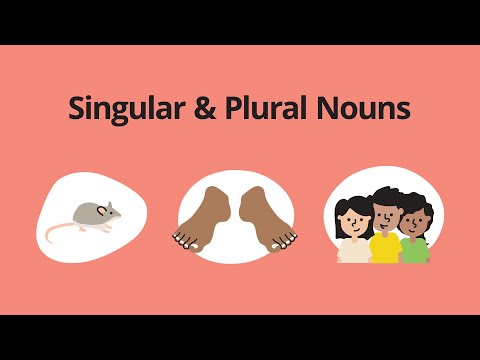
Singular & Plural Nouns – English Grammar Lessons
Singular & Plural Nouns Understanding Nouns in English
What are Nouns?
- Nouns can represent people, places, or things. Examples include:
- People: a teacher, children
- Places: a beach, cities
- Things: a guitar, flowers
Singular vs. Plural Nouns
- A noun can be singular (one) or plural (two or more).
- Singular nouns do not have an "s" at the end (e.g., a bird).
- To form the plural of regular nouns, add an "s" to the end.
- Examples: birds, guitars, computers.
Irregular Nouns
- Some nouns are irregular and do not follow the standard pluralization rule.
- Vowel changes occur in some cases:
- foot → feet
- tooth → teeth
- man → men
- woman → women
- Other nouns may change consonants before adding "s":
- leaf → leaves
- knife → knives
- Certain nouns have unique plural forms:
- child → children
- ox → oxen
- Some nouns transform into entirely different words when pluralized:
- person → people
- mouse → mice
- Additionally, some nouns remain unchanged from singular to plural:
- deer remains deer
- fish remains fish.
Practice with Plurals
- The lesson encourages practice by asking learners to identify and write the plural forms of given nouns. For example: