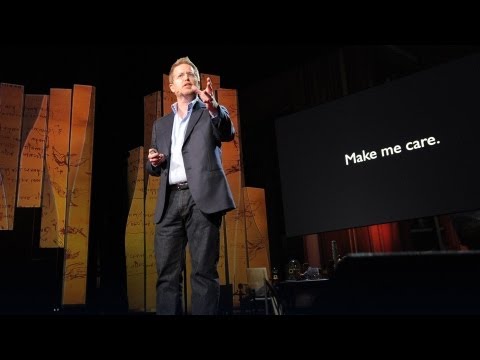
The clues to a great story | Andrew Stanton | TED
A Story about Building a Bar, Stone Wall, and Pier
In this section, a tourist visits a pub in Scotland and engages in a conversation with an old man. The old man shares stories about building a bar, stone wall, and pier with his bare hands.
Stories of Construction
- The old man built the bar with his bare hands using the finest wood in the county. However, he is not known as MacGregor the bar builder.
- He also built a stone wall by carefully placing each stone through rain and cold. Despite this accomplishment, he is not called MacGregor the stone wall builder.
- Additionally, he constructed a pier on the lake by driving pilings against the tide of sand plank by plank. Yet again, he is not recognized as MacGregor the pier builder.
- The old man humorously concludes that despite all these achievements, people only remember him for one mistake involving a goat.
The Power of Storytelling
This section explores storytelling as joke telling and highlights its ability to lead to a singular goal while deepening our understanding of ourselves as human beings.
Joke Telling and Storytelling
- Storytelling is similar to joke telling as it involves knowing your punchline or ending from the start.
- Every sentence in storytelling should lead to a singular goal that confirms some truth about who we are as human beings.
- Stories have an innate ability to captivate us because they affirm our identities and provide meaning to our lives.
The Affirmation of Stories
This section emphasizes how stories affirm who we are and connect us across time and individuals.
Affirming Our Lives Through Stories
- We are born for stories; they affirm our identities and provide meaning to our lives.
- Stories have the power to transcend time, allowing us to experience similarities between ourselves and others, both real and imagined.
- Mr. Rogers carried a quote stating that we could learn to love anyone once we hear their story, highlighting the transformative power of storytelling.
The Commandment of Storytelling: Make Me Care
This section discusses the importance of making the audience care through storytelling.
Making the Audience Care
- The greatest story commandment is "Make me care." Emotionally, intellectually, and aesthetically, stories should evoke a strong emotional response from the audience.
- When a story successfully captures our attention and makes us care, it is not by chance but by design.
The Journey from Ending to Beginning
This section introduces the idea of starting a story from its ending and shares an example related to completing a film project.
Starting with the Ending
- The speaker proposes starting a story from its ending as an interesting approach.
- An example is given about completing a film project called "John Carter" based on the book "The Princess of Mars" by Edgar Rice Burroughs.
The Promise at the Beginning
This section explores how good stories make promises at their beginnings.
Making Promises in Stories
- Good stories should make promises at their beginnings that indicate they will lead somewhere worth the audience's time.
- These promises can be made in various ways, such as using phrases like "Once upon a time" or employing narrative devices like having a character serve as a narrator.
Storytelling as Making the Audience Work for Their Meal
This section discusses how storytelling engages the audience and makes them work for their emotional and intellectual satisfaction.
Engaging the Audience
- Storytelling without dialogue is considered the purest form of cinematic storytelling.
- The audience wants to work for their emotional and intellectual satisfaction, but it should be hidden by the storyteller.
- The absence of information in a well-organized manner draws the audience in, as they are compelled to deduce and fill in the missing pieces.
Completing Sentences: Our Desire to Fill in Gaps
This section explores our natural inclination to complete sentences and fill in gaps when faced with incomplete information.
Filling in Gaps
- We are attracted to infants or puppies because they cannot fully express their thoughts or intentions, leaving gaps that we feel compelled to complete.
- Our desire to fill in these gaps creates a magnetic effect that keeps us engaged with stories.
The Importance of Engaging the Audience
This section discusses how engaging the audience is crucial for success in storytelling. It emphasizes that stories are not an exact science but rather a unique form of art.
- Engaging the audience is essential for holding their attention to a story.
- Stories are not predictable, but if they are good, they become inevitable.
- Well-drawn characters have a dominant goal or "spine" that drives their choices and actions.
- Examples of characters with spines include Michael Corleone in "The Godfather," Wall-E, Marlin in "Finding Nemo," and Woody from "Toy Story."
- These spines may lead to both positive and negative choices.
Understanding Personal Temperament and Growth
This section explores the concept of personal temperament and growth. It highlights the importance of recognizing one's own driving forces and taking control of them.
- Personal temperament is innate and cannot be changed.
- Recognizing one's temperament allows individuals to understand themselves better.
- Parents continuously learn about their children's personalities while also discovering more about themselves.
- Change is fundamental in storytelling because life is never static.
The Role of Change in Storytelling
This section emphasizes the significance of change in storytelling. It explains how static stories fail to capture the essence of life.
- Change is essential in storytelling as life itself is constantly evolving.
- Static stories lack realism and fail to engage audiences effectively.
- The quote by William Archer defines drama as anticipation mingled with uncertainty, highlighting the importance of constructing honest conflicts and creating anticipation for both short-term and long-term outcomes.
Pixar's Approach to Storytelling
This section delves into Pixar's approach to storytelling, focusing on their early experiences and the rules they set for themselves.
- In the early days of Pixar, storytelling was driven by gut instincts rather than a deep understanding of its mechanics.
- Pixar aimed to tell stories differently in animation, breaking away from traditional expectations.
- They had a secret list of rules that included no songs, no "I want" moment, no happy village, and no love story.
- Despite initial struggles with their story for "Toy Story," they remained determined to prove that better stories could be built without following conventional guidelines.
Guidelines vs. Hard Rules in Storytelling
This section highlights the importance of guidelines rather than strict rules in storytelling. It showcases how Pixar challenged traditional storytelling norms.
- Storytelling has guidelines but not hard, fast rules.
- Liking the main character is crucial; Pixar initially made Woody selfish to show his growth towards selflessness.
- The transcript includes a dialogue exchange between Woody and other characters from "Toy Story" to illustrate this point.
Conclusion
In conclusion, this comprehensive summary covers various aspects of storytelling discussed in the given transcript. It explores the importance of engaging the audience, understanding personal temperament and growth, embracing change in storytelling, Pixar's approach to storytelling, and the significance of guidelines over hard rules.
The Power of Storytelling
In this section, the speaker reflects on how certain events in their youth shaped their understanding of storytelling and the importance of themes in stories.
Understanding the Notion of Story Theme
- In 1986, the speaker watched "Lawrence of Arabia" multiple times and realized that there was a grand design and theme underlying every aspect of the film.
- Initially, it seemed like a historical depiction, but upon closer examination, the speaker discovered a deeper message.
- The realization came during a scene where Lawrence reaches the Suez Canal after crossing the Sinai Desert.
Invoking Wonder in Stories
The speaker discusses the importance of wonder in storytelling and how it can deeply impact an audience.
The Magic Ingredient: Wonder
- At five years old, the speaker watched "Bambi" with their mother and experienced a sense of wonder.
- Wonder is honest, innocent, and cannot be artificially evoked.
- Invoking wonder is a powerful ability that reaches people on a cellular level.
- When an artist invokes wonder in another artist, it creates a desire to pass it on.
Personal Connection to Stories
The speaker shares personal experiences that have influenced their approach to storytelling.
A Second Chance at Life
- As a premature baby who was very sick at birth, the speaker spent months in the hospital and received multiple blood transfusions.
- This experience made them feel special and instilled a drive to prove themselves worthy of their second chance at life.
Drawing from Personal Experience
The speaker emphasizes the importance of drawing from personal experiences when telling stories.
Use What You Know
- The first story lesson learned by the speaker was to use what they know.
- Drawing from personal experiences means capturing truths and expressing deeply held values.
- It goes beyond plot or facts and taps into the core of one's being.
Conclusion
The speaker concludes by reflecting on their journey as a storyteller and the importance of sharing stories.
Sharing Stories
- The speaker's journey as a storyteller has been shaped by their understanding of themes, invoking wonder, personal experiences, and drawing from what they know.
- They believe in the power of storytelling to connect people and evoke emotions.
- By sharing stories, artists can inspire others and create a ripple effect of wonder and connection.
Turn any video into a summary like this
YouTube links, meetings, lectures. With transcripts, search, and chat.