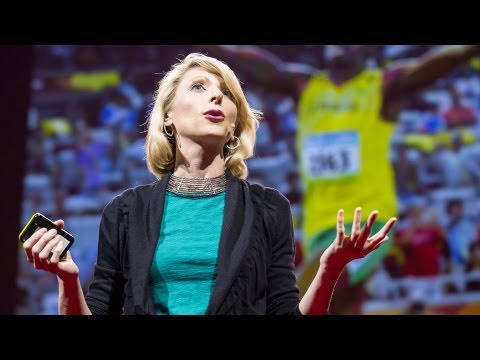
Your Body Language May Shape Who You Are | Amy Cuddy | TED
Understanding Body Language and Its Impact
The Importance of Posture
- The speaker introduces a simple life hack: changing posture for two minutes to potentially improve life outcomes.
- An invitation is made for the audience to assess their current body posture, noting common behaviors like hunching or crossing legs.
Nonverbal Communication Insights
- The fascination with body language is highlighted, emphasizing its role in social interactions and judgments.
- Examples are given of how nonverbal cues, such as handshakes, can dominate discussions in media outlets like BBC and New York Times.
Judgments Based on Body Language
- Social scientists have studied how body language influences perceptions and decisions about others.
- Research by Nallini Ombadiya shows that judgments from brief observations of physician-patient interactions can predict legal outcomes against physicians.
Power Dynamics in Nonverbal Behavior
- Alex Todorovic's research indicates that quick assessments of political candidates' faces can forecast election results with high accuracy.
- Emoticons used effectively in online negotiations can enhance negotiation outcomes; poor use leads to negative results.
Self-Awareness Through Nonverbal Cues
- The speaker discusses the dual influence of nonverbals: they affect both how we are perceived by others and our own self-perception.
- Expressions of power involve expanding one's physical presence, which is observed across species, indicating a universal behavior pattern.
Behavioral Observations in Educational Settings
- Prideful expressions are noted to be instinctual; individuals display similar victorious postures regardless of prior exposure to such behaviors.
- In contrast, feelings of powerlessness lead individuals to adopt closed-off postures, reflecting a lack of confidence.
Gender Differences in Power Dynamics
- Observations reveal that MBA students exhibit varying degrees of power-related body language based on gender; women often appear less powerful than men.
Can You Fake It Till You Make It?
Exploring Non-Verbal Influence on Self-Perception
- The discussion begins with the question of whether people can "fake it" to enhance their participation and feelings of power. Collaborator Dana Karney and the speaker aim to investigate this concept.
- Evidence suggests that non-verbal cues not only influence how others perceive us but also affect our self-perception. For instance, smiling—even when forced—can induce feelings of happiness.
- The relationship between power and non-verbal behavior is reciprocal; feeling powerful can lead to confident body language, while adopting powerful poses may foster genuine feelings of power.
Physiological Differences Between Powerful and Powerless Individuals
- The speaker defines "minds" in terms of thoughts, feelings, and physiological responses, particularly focusing on hormones like testosterone (associated with dominance) and cortisol (the stress hormone).
- Powerful individuals typically exhibit traits such as assertiveness, confidence, optimism, risk-taking behavior, and a tendency to think abstractly compared to those who feel powerless.
- High-power individuals often have elevated testosterone levels coupled with low cortisol levels. This combination is crucial for effective leadership as it indicates resilience under stress.
Role Changes and Their Impact on Hormones
- A high-power leader should ideally be dominant yet not overly reactive to stress; thus, a balance between testosterone and cortisol is essential for effective leadership.
- Evidence shows that when an individual assumes a higher role within a short time frame, their testosterone levels increase significantly while cortisol decreases.
Experimenting with Power Poses
- An experiment was conducted where participants adopted either high or low power poses for two minutes without prior exposure to images or concepts related to power.
- Participants were instructed to maintain specific poses—high power (e.g., Wonder Woman pose) versus low power (e.g., making themselves small)—to assess changes in self-perception post-experiment.
Results: Risk Tolerance and Hormonal Changes
- Findings revealed that 86% of participants in high-power poses chose to gamble compared to only 60% in low-power poses—a significant difference indicating increased risk tolerance linked to perceived power.
- Hormonal analysis showed that those in high-power poses experienced about a 20% increase in testosterone while those in low-power positions saw a 10% decrease from baseline levels.
- Cortisol levels also shifted dramatically: high-power pose participants had approximately a 25% decrease while low-power pose participants experienced about a 15% increase after just two minutes of posing.
Implications for Real-Life Situations
- The discussion raises the question of whether brief moments of power posing can lead to meaningful life changes outside the lab setting.
Job Interview Insights: The Power of Body Language
Misinterpretation of Research Findings
- The media misinterpreted the research findings, suggesting specific behaviors for job interviews that the researchers did not endorse.
- Emphasis is placed on self-talk and preparation rather than external actions; individuals often focus on their devices instead of preparing mentally.
Experiment Setup and Observations
- Participants were subjected to a stressful five-minute job interview while adopting either high or low power poses.
- Judges provided no nonverbal feedback during the interview, creating an environment described as "standing in social quicksand," which heightened participants' cortisol levels.
- Analysis revealed that candidates who adopted high power poses were more likely to be favored for hiring based on their presence rather than speech content.
Impact of Presence Over Content
- Evaluators rated candidates positively based on confidence-related variables, with no significant effect from speech structure or qualifications.
- The concept that body language influences mindset and behavior was introduced, leading to skepticism about its authenticity among individuals.
Personal Story of Imposter Syndrome
- The speaker shares a personal experience with imposter syndrome following a traumatic car accident that affected her academic identity.
- After struggling with her diminished IQ and being told she wouldn't finish college, she eventually graduated but felt like an imposter at Princeton.
Overcoming Imposter Feelings
- Despite feeling unworthy at prestigious institutions, encouragement from her advisor led her to confront her fears by participating in public speaking opportunities.
- A pivotal moment occurred when a student expressed feelings of not belonging; this prompted reflection on the speaker's own journey and realization of growth beyond those feelings.
Transforming Your Mindset: From Faking to Becoming
The Power of Authenticity
- Emphasizes the importance of authenticity in personal development, stating "don't fake it until you make it," but rather "fake it until you become it."
- Suggests that true change comes from internalizing behaviors rather than merely performing them repeatedly.
- Highlights that small adjustments can lead to significant transformations, encouraging listeners to implement tiny tweaks for better outcomes.
Preparing for Stressful Situations
- Advises on mental preparation before entering high-pressure environments, such as interviews or evaluations.
- Recommends techniques to optimize physiological responses by increasing testosterone and decreasing cortisol levels.
- Encourages individuals to leave stressful situations feeling empowered and authentic, rather than defeated or misrepresented.
Sharing Knowledge for Empowerment
- Calls for sharing the science behind these techniques with others who may benefit, particularly those lacking resources or support.
- Stresses the accessibility of these methods; they require only privacy and two minutes of time.
Transforme qualquer vídeo em um resumo como este
Vídeos do YouTube, reuniões, aulas. Com transcrição, busca e chat.