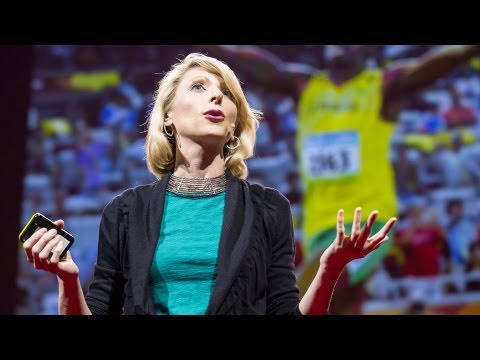
Your Body Language May Shape Who You Are | Amy Cuddy | TED
No-Tech Life Hack: Change Your Posture, Change Your Life
The speaker introduces a simple life hack involving changing one's posture for two minutes and emphasizes the impact of body language on life outcomes.
Importance of Body Language
- The speaker prompts the audience to assess their current posture, highlighting how body language can influence perceptions and interactions.
- Discussion on the significance of body language in communication, emphasizing its role in conveying messages and impacting judgments.
- Social scientists study the effects of body language on judgments, showcasing how nonverbal cues can predict meaningful life outcomes such as hiring decisions or legal actions.
Power Dynamics and Non-Verbal Expressions
- Introduction to power dynamics and non-verbal expressions of power, focusing on how individuals display dominance through body language.
- Explanation of expansive gestures as expressions of power across species, illustrating how individuals signal power by taking up space and opening up physically.
- Research findings by Jessica Tracey on pride displays in both sighted and congenitally blind individuals after winning competitions, indicating universal behaviors associated with power.
Impact of Body Language in Different Contexts
The discussion delves into contrasting behaviors associated with feelings of power versus powerlessness and their implications in various situations.
Power vs. Powerlessness Behaviors
- Description of expansive postures linked to feelings of power contrasted with closed-off postures reflecting feelings of powerlessness.
- Observation of diverse power-related non-verbal behaviors among MBA students, highlighting gender differences in posture and participation levels based on perceived power dynamics.
Gender Disparities in Behavior
- Notable gender disparities observed in body language related to feelings of power, influencing participation levels crucial for academic success.
Non-Verbal Communication and Power Poses
In this section, the speaker discusses the impact of non-verbal communication on behavior and power poses' influence on feelings of power.
Can You Fake It Till You Make It?
- Non-verbal cues can influence how individuals feel about themselves.
- Exploring whether pretending to be powerful can lead to actually feeling powerful.
The Influence of Power on Thoughts and Physiology
- Powerful individuals exhibit traits like assertiveness, confidence, optimism, risk-taking behavior, and abstract thinking.
- Physiological differences in hormones (testosterone and cortisol) between powerful and powerless individuals.
Understanding Power Dynamics
- Importance of both testosterone dominance and stress reactivity in power dynamics.
- Stress reactivity's role in leadership effectiveness compared to dominance alone.
Experimental Evidence on Body-Mind Connection
- Role changes leading to significant hormonal shifts in primates.
- Conducting an experiment with high-power vs. low-power poses to observe behavioral changes.
Impact of Power Poses on Behavior
- High-power pose condition linked to increased risk tolerance compared to low-power pose condition.
- Hormonal changes observed after adopting high-power vs. low-power poses for two minutes.
Implications for Self-perception and Behavior
- Brief body postures can shape brain configuration towards assertiveness or stress-reactivity.
Body Language and Power: Your Body Language Shapes Who You Are
In this section, the speaker discusses the impact of body language on job interviews and personal empowerment.
The Power of Body Language
- Before a job interview, focus on empowering body language by standing tall and taking up space.
- High-power poses in private before stressful situations can positively influence performance.
- High-power poses lead to more positive evaluations in job interviews, emphasizing presence over speech content.
Authenticity and Confidence
- High-power poses enhance perceived confidence without affecting speech content or qualifications.
- Embracing the concept that "our bodies change our minds" can empower individuals to overcome self-doubt.
Overcoming Imposter Syndrome Through Empowerment
This segment delves into personal experiences with imposter syndrome and strategies for overcoming it through empowerment.
Battling Imposter Syndrome
- Personal anecdote about facing imposter syndrome after a traumatic event affecting intelligence perception.
- Struggles with identity loss due to perceived intellectual decline highlight feelings of powerlessness.
- Transitioning from feeling like an imposter to embracing opportunities through perseverance and support.
Faking It Till Making It
- Encouraging others to push past imposter feelings by persistently engaging in challenging situations.
How to Use Body Language to Boost Confidence
In this section, the speaker emphasizes the importance of embodying confidence through body language and shares practical tips on how to leverage power posing for personal empowerment.
Embodying Confidence
- "Fake it until you become it" - Encourages individuals not to fake confidence but rather embody it until it becomes natural and internalized.
- Power Posing Benefits - Power posing helps in configuring the brain to cope better in stressful situations by increasing testosterone levels and reducing cortisol levels.
Turn any video into a summary like this
YouTube links, meetings, lectures. With transcripts, search, and chat.