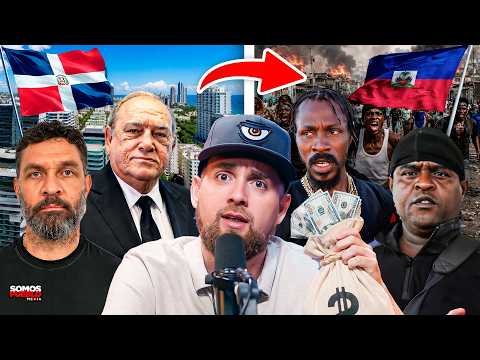
LAS FAMILIAS HAITIANAS QUE OPERANDO EN RD CREAN EL CAOS DE HAITÍ
Prohibition of Haitian Entry into the Dominican Republic
Overview of the Prohibition List
- The president Abinader published a list of Haitians banned from entering the Dominican Republic, notably excluding Gilbert Villo and his family, who are significant business figures in the country.
Economic Ties and Armed Groups
- There is a connection between major Dominican economic groups and armed gangs in Haiti; these groups have allegedly financed gangs instead of supporting national police forces, contributing to ongoing chaos.
- The financing model used by Haitian entrepreneurs involves paying gangs for protection, which has perpetuated instability in Haiti. Many influential businessmen have sought refuge in the U.S. while maintaining control over Haiti's economy.
Deportation of Dimitri Borb
Recent Developments
- Concerns arose regarding the deportation of Haitian businessman Dimitri Borb after a Florida judge signed an order for his return to the Dominican Republic. This situation has gained traction on social media platforms.
- Following this announcement, it was revealed that Borb is on a list barring him from entry into the Dominican Republic due to previous prohibitions established by President Abinader.
U.S.-Dominican Agreement on Deportations
Non-Binding Memorandum
- A non-binding memorandum was signed between the U.S. and several countries, including the Dominican Republic, outlining responsibilities for receiving deported individuals from third countries temporarily. This agreement raises questions about its implications for Dominican sovereignty and immigration policy.
Potential Impact on Immigration Policy
- As signatories to this agreement, authorities indicate they could receive up to 30 deportees monthly; however, compliance is not mandatory according to Dominican officials who express skepticism about U.S. intentions and priorities regarding their country’s needs.
Relationship with U.S.
Political Dynamics
- The relationship dynamics between Republican and Democratic administrations in the U.S. are discussed; it is suggested that Republicans may be more favorable towards Dominican interests than Democrats based on political agendas affecting bilateral relations.
Concerns Over Sovereignty
- There are concerns about how agreements with foreign powers can infringe upon national sovereignty; while cooperation with the U.S. is necessary, limits should be set against accepting third-country deportees as part of international agreements without proper consideration for local needs first.
Influence of Business Leaders
Economic Control by Elite Groups
- Discussion highlights how powerful business leaders maintain influence over both Haiti and the Dominican Republic through economic ties; investigations reveal connections between these elites following political turmoil in Haiti post-Jovenel Moïse's assassination.
Shared Interests Across Borders
- The transcript emphasizes shared interests among Haitian and Dominican businesses concerning trade routes like ports that facilitate significant economic activity across borders despite underlying tensions related to immigration policies and security issues within both nations' contexts.
Economic Impact of Free Trade Zones in the Dominican Republic
Quality vs. Economic Contribution
- The discussion begins with a distinction between product quality and economic impact, emphasizing that many products made in free trade zones are sold in the U.S. and are of good quality.
- The speaker argues that these free trade zones generate significant revenue for the Dominican economy, which is why governments have been reluctant to take action against them.
Connections to Haitian Armed Groups
- There is a claim that the same groups financing armed bands in Haiti are also involved in managing free trade zones, raising questions about their influence on regional stability.
- Dimitri Volvi's family is mentioned as being linked to both free trade operations and alleged financial support for gangs in Haiti, highlighting a complex web of economic and criminal activities.
Political Context and Corruption
- The narrative includes references to former Haitian President Jovenel Moïse, who accused Volvi's family of embezzling over $120 million from the Haitian state while failing to provide contracted energy services.
- Following Moïse's assassination, it is suggested that Volvi was under investigation due to his connections with corrupt practices within Haiti’s electrical sector.
Industrial Complexes and Their Influence
- The speaker describes an advanced industrial complex involving multiple families from Haiti operating within the Dominican Republic, indicating their significant role in local economies through factories like Velas y Paniola.
- These factories not only produce goods for international markets but also contribute substantially to the Dominican economy despite their controversial ties.
Financing Gangs for Protection
- A critical point raised is how businesses resorted to financing gangs as a means of protection against violence and competition, leading to an escalation of gang power independent from political control.
- This practice has created a cycle where businesses depend on gangs for security while inadvertently contributing to increased chaos within society as these gangs seek more power and territory.
Consequences of Political Instability
- The discussion highlights how political instability has led many wealthy Haitians to live outside Haiti while still controlling its economy through remote management strategies involving local violence as leverage against competitors or threats.
- It concludes by noting that this reliance on violent protection mechanisms has resulted in sanctions from countries like Canada and the U.S., reflecting broader implications for governance and law enforcement in Haiti.
The Financing of Gangs in Haiti
Origins and Consequences
- Discussion on how external forces decided to finance gangs in Haiti, leading to a situation where they have become uncontrollable.
- The speaker emphasizes that the initial intentions were not malicious, but the support given to these gangs has created a "monster" that is now difficult to manage.
Lack of Foresight
- Critique of decision-makers for lacking the foresight to predict the future consequences of empowering gang leaders like Barbecue and Maguoso 400.
- Mention of a new leader emerging from within the gangs, sharing a name with Dimitri Gerard, who is seen as both a gang leader and political representative.
Military Training and Gang Unity
Escalation of Violence
- Description of the violent nature of gang activities in Haiti, highlighting their access to military-grade weapons such as AK-47s and grenades.
- Notable mention that various gangs are uniting under common leadership against political figures and business interests.
Political Chaos
- Reference to deported individuals like Guy Philippe who have aspirations tied to gang leadership, indicating a blend between politics and criminality.
- Acknowledgment that this chaos is perpetuated by business interests that prefer maintaining control through violence rather than establishing effective law enforcement.
Arms Trafficking Concerns
U.S. Investigations
- Discussion about investigations into arms shipments from Florida to Haiti, raising questions about who is involved in this trafficking.
- Historical context provided regarding past dictatorships in Haiti and their connections with current issues.
Economic Implications
- Insight into how influential figures manipulate economic conditions while remaining detached from the realities faced by ordinary Haitians.
Misconceptions About Haitian Leadership
External Perceptions vs. Reality
- Clarification that those controlling economic resources do not live amidst the poverty depicted in media portrayals of Haiti.
Economic Dynamics
- Emphasis on understanding who benefits economically from ongoing chaos; these individuals often evade accountability despite their roles in perpetuating instability.
Family Structures and Accountability
Familial Ties in Business
- Argument made for holding entire families accountable if one member finances gangs or contributes to instability.
Call for Government Action
- Urging Dominican authorities to recognize familial structures behind financial support for gangs, suggesting sanctions should target whole families rather than individuals alone.
Long-term Consequences for Dominicans
Regional Impact
- Warning about how continued financial support for Haitian gangs ultimately harms Dominican society due to shared geographical proximity.
Need for Proactive Measures
- Stressing urgency for Dominican policymakers to take action before escalating violence spills over into their territory.