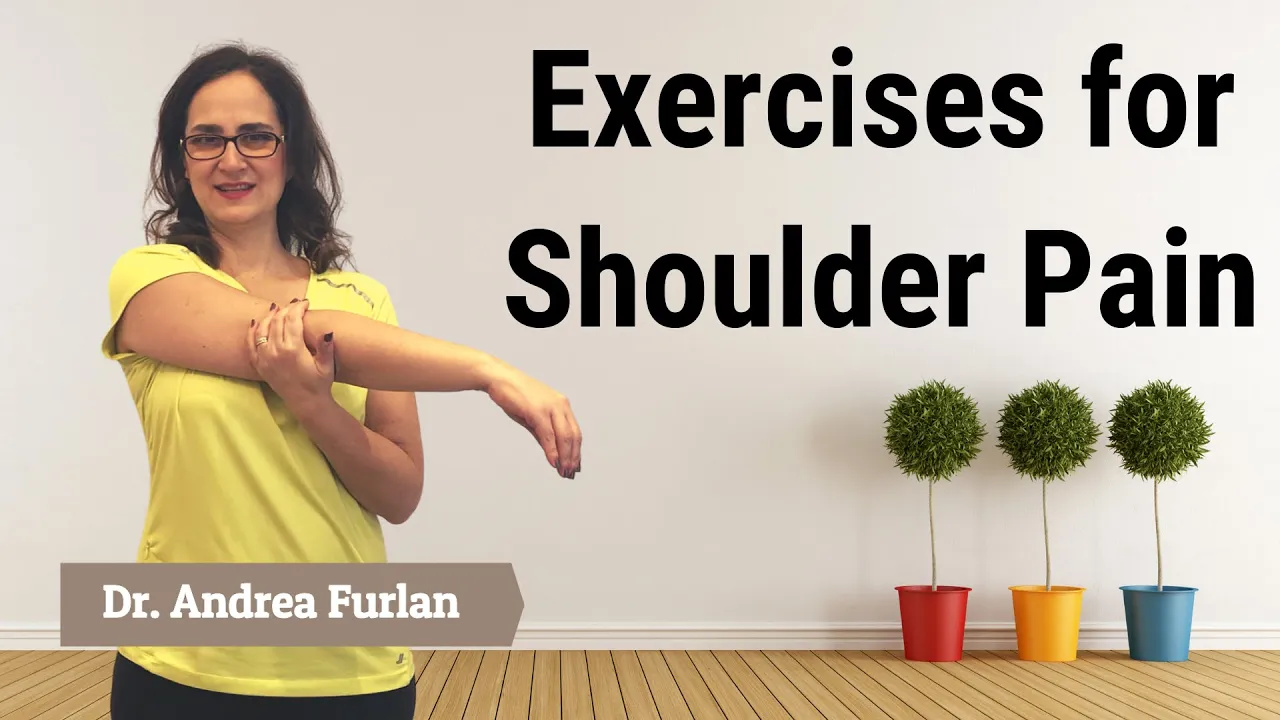
#027 Fifteen Exercises for Shoulder Pain, Impingement, Bursitis, Rotator Cuff Disease
Chronic Shoulder Pain and Impingement Syndrome
In this video, the speaker discusses chronic shoulder pain and its common causes, such as impingement syndrome, subacromial bursitis, and rotator cuff disease. They also provide exercises that can be done at home to alleviate shoulder pain and stiffness.
Causes of Chronic Shoulder Pain
- Seventy percent of chronic shoulder pain is caused by impingement syndrome, subacromial bursitis, or rotator cuff disease. These terms essentially refer to the same problem.
- Common symptoms include pain interfering with sleep when rolling onto the affected shoulder, pain during overhead activities, and difficulty lifting loads or putting on a shirt over the head.
The Structure of the Shoulder
- The shoulder is a ball-and-socket joint with a wide range of motion, power, and speed. It relies on tendons, ligaments, and muscles to maintain stability.
- The rotator cuff plays a crucial role in keeping the humerus (upper arm bone) in place. It consists of several muscles that cover the humerus like a sleeve cuff. A bursa acts as a cushion between these structures to reduce friction.
Impingement Syndrome and Rotator Cuff Disease
- When the supraspinatus tendon is pinched during arm elevation, it leads to impingement syndrome. This can cause inflammation and swelling of the bursa (bursitis). Additionally, the tendon may become irritated or damaged, resulting in rotator cuff disease or injury.
- Rotator cuff disease is typically a degenerative condition that affects individuals over 40 years old but can also occur in younger people who engage in sports like swimming, tennis, or baseball. The main symptom is pain during arm elevation or pressure on the tendon and bursa at night.
Managing Chronic Shoulder Pain
- To reduce pain and swelling from shoulder impingement, several strategies can be employed, summarized by "Be-Ma-MeMoRSS":
- BE: Pay attention to bed positioning and posture in general. Avoid raising arms above the head while sleeping and ensure proper pillow support.
- MA: Consider manual therapy and self-massage techniques to alleviate discomfort.
- Me: Use anti-inflammatory medication, such as NSAIDs, under medical guidance.
- Mo: Utilize modalities like heat or cold therapy to reduce pain.
- R: Perform range of motion exercises to prevent frozen shoulder.
- S1: Stretch tight muscles around the shoulder.
- S2: Strengthen weak muscles.
Sleep Position and Posture
- Proper sleep position is crucial for individuals with chronic shoulder pain:
- Back sleepers should avoid raising their arms above the head and ensure proper pillow support below the neck but not under the shoulder.
- Side sleepers should try not to sleep on the painful side and may benefit from additional pillows for back support and preventing upper shoulder drop.
- Stomach sleeping is generally discouraged due to its negative impact on both shoulders and neck alignment. Arms should be kept by the sides in this position.
Correcting Slouching Posture
- Maintaining good posture while using a computer, watching TV, or engaging in crafts is essential to prevent rounded shoulders that can lead to shoulder pain. Exercises demonstrated in the video can help correct slouching posture effectively.
Massage and Medication for Pain Relief
- In early stages of impingement syndrome, reducing inflammation and controlling pain are crucial. The speaker suggests two approaches:
- Massage tender points around the shoulder, including the trapezius, latissimus, pectoralis, and deltoid muscles.
- Consider over-the-counter anti-inflammatory medications (NSAIDs) for a limited duration under medical guidance.
Timestamps are approximate and may vary slightly depending on the video version.
New Section
This section provides important tips for using an electrical heating pad and applying ice after exercises to reduce swelling and pain.
Tips for Using an Electrical Heating Pad
- Be cautious when using an electrical heating pad while sleeping to avoid skin burns.
- It is recommended to apply ice after doing exercises to reduce swelling, inflammation, and pain.
- Use a piece of fabric between the ice pack and your skin to prevent skin irritation and burns.
Link to Products
- The description of the video contains a link to the products mentioned in the video.
15 Exercises You Can Do at Home
This section introduces 15 exercises that can be done at home without any specific equipment. Various household items such as a kitchen table, water bottle, wall, corner, doorway, towel, lower bench or sturdy chair, and mat or carpet are needed for these exercises.
Range of Motion Exercises
- The first exercise demonstrated is range of motion exercises.
- The pendulum exercise involves leaning on a desk or table with the arm hanging freely. By moving the legs back and forth and performing circular movements, stiffness in the shoulder can be reduced.
- Holding onto some sort of weight like a water bottle can help pull the shoulder capsule further during this exercise.
- Relaxation of the shoulder is crucial during this exercise.
Fingers on the Wall Exercise
- This exercise involves standing next to a wall with one hand touching it at hip level and gradually raising it upwards. It helps improve range of motion for abduction but may be painful for individuals with shoulder impingement problems.
Wall Angel Exercise
- For this exercise, one needs to find a wall behind them and touch their hips, shoulder blades, and head against it. By raising the hands with palms down and trying to touch the wall while going all the way up, range of motion for abduction can be improved.
The remaining exercises will be summarized in subsequent sections to maintain a clear and concise structure.
Shoulder Mobility Exercises
In this section, the speaker demonstrates exercises to improve shoulder mobility.
Exercise 1: Wall Touching
- Stand with your back against a wall.
- Try to touch the wall with your hips, shoulder blades, and head.
- Maintain contact with the wall while performing the exercise.
Exercise 2: Internal and External Rotation
- Stand against the wall with your hips, shoulder blades, and head touching it.
- Perform internal rotation by bending your elbows at 90 degrees and bringing them close to your chest.
- Perform external rotation by moving your elbows away from your body without touching the wall.
Exercise 3: Range of Motion for Internal Rotation
- Bend your elbows at 90 degrees and keep them close to your chest.
- Rotate your shoulders inward towards your belly.
- This movement helps improve internal rotation range of motion.
Exercise 4: Range of Motion for External Rotation
- Bend your elbows at 90 degrees and keep them close to your chest.
- Rotate your shoulders outward without touching the wall.
- This movement helps improve external rotation range of motion.
Exercise 5: Shoulder Circumference
- Perform forward circumferences by moving both arms in a circular motion forwards.
- Perform backward circumferences by moving both arms in a circular motion backwards.
Stretching Exercises
In this section, the speaker demonstrates stretching exercises for various muscles related to shoulder mobility.
Exercise 6: Pectoralis Muscles Stretch
Upper Fibers Stretch
- Stand near a doorway with one arm extended straight down along the side of the body.
- Move away from the doorway while keeping the elbow stationary. You should feel a stretch in the upper fibers of the pectoralis muscles.
Mid Fibers Stretch
- Place your elbow at a 90-degree angle with the shoulder.
- Move away from the doorway while keeping the elbow stationary. You should feel a stretch in the mid fibers of the pectoralis muscles.
Lower Fibers Stretch
- Raise your hand and elbow above your head.
- Turn your body away from the doorway while keeping the hand and elbow against it. You should feel a stretch in the lower fibers of the pectoralis muscles.
Exercise 7: Cross Chest Stretch
- Place one hand across your chest.
- Use the other hand to pull and stretch, targeting the posterior capsule of the shoulder.
- Perform this exercise within your limits, as it may be painful for individuals with shoulder issues.
Exercise 8: Towel Exercise
- Hold a towel with one hand over your shoulder.
- Use the other hand to hold onto the bottom end of the towel.
- Pull up and down on the towel, stretching different areas of the shoulder.
If any exercises cause pain or discomfort, it is recommended to consult with a physiotherapist.
Cross Chest Stretch
In this section, the cross chest stretch exercise is demonstrated to stretch the fibers on the back of the shoulder.
Cross Chest Stretch
- Stand straight and feel the fibers on the back of your shoulder stretching.
- This exercise helps in stretching the muscles on the back of your shoulder.
Shoulder Strengthening Against Wall
This section focuses on strengthening the shoulders against a wall using specific exercises.
Strengthening Against Wall
- With your elbow straight, place your hand against a wall and press.
- Be cautious if you have drywall as it may not withstand too much pressure.
- Press against the wall to strengthen the muscles on the anterior side of your shoulder.
- Repeat with the other hand to strengthen flexors of the shoulder.
- You can also press against the side of a wall with your elbow straight to target different muscles.
- Bend your elbow and touch it to your hand. Press your elbow against the wall, then press just your hand without touching it to strengthen external rotators.
- Repeat these exercises for both sides.
Corner Exercise
The corner exercise is demonstrated in this section, which involves using a corner to strengthen shoulder muscles.
Corner Exercise
- Stand a couple of steps away from a corner with elbows raised to shoulder level.
- Lower yourself down towards one corner and then come up again, ensuring that hips are not bending.
- Perform this movement eight times while maintaining proper form and posture.
Shoulder Press Down
This section demonstrates an exercise called "shoulder press down" that requires a lower bench or sturdy surface.
Shoulder Press Down
- Place both hands on an edge of a bench or sturdy surface at knee height.
- Lower yourself down and then push back up, focusing on the strength of your shoulders.
- Perform this movement eight times while maintaining proper form and breathing.
Front Plank
The front plank exercise is explained in this section, which helps strengthen the muscles around the shoulder.
Front Plank
- Get into a plank position with elbows below shoulders and gaze downwards.
- Avoid arching your back too much or lowering your hips.
- Hold this position for a certain duration, starting with 10 seconds and gradually increasing as tolerated.
- Focus on feeling the strength in your shoulders during the exercise.
Side Plank
This section introduces an easier variation of the side plank exercise that can be performed on knees.
Side Plank
- Raise your body on your knees to perform an easier version of the side plank exercise.
How to Relieve Shoulder Pain
In this video, the speaker provides exercises and tips to relieve shoulder pain. They demonstrate various movements and discuss potential causes of shoulder pain.
Proper Form for Exercises
- The speaker advises keeping the body straight while performing exercises.
- They suggest starting with either the hardest or easiest exercise and holding each position for 10 seconds or longer.
- After completing the routine, applying ice is recommended.
Preventive Measures
- The speaker recommends doing these exercises four times a week and gradually increasing repetitions.
- Wearing tight bras with narrow straps can compress muscles, tendons, veins, and nerves in the neck-to-arm area. Wider strap bras are suggested.
- Carrying bags or backpacks on one shoulder can also cause compression. Distributing weight evenly with wide straps is advised.
Potential Complications
- Shoulder impingement syndrome may lead to frozen shoulder, causing stiffness and limited movement.
- Some individuals may have partial or complete tears in their rotator cuff, requiring orthopedic surgery for repair.
Seeking Professional Help
- A proper diagnosis by a doctor or physiotherapist is important for impingement syndrome.
- If shoulder pain persists or worsens, consulting a healthcare professional is recommended.
Additional Information
The speaker encourages viewers to like and subscribe to their channel for more videos. They also provide contact information through social media platforms such as Twitter, Facebook, and Instagram.
This summary has been created based on the provided transcript.