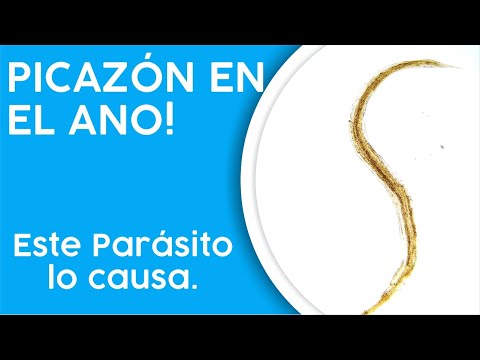
Oxiuros o Enterobius vermicularis
Introduction to Enterobius vermicularis
Overview of the Parasite
- The discussion begins with an introduction to Enterobius vermicularis, commonly known as the pinworm or "oh cielos" in colloquial terms. This parasite is particularly prevalent among children, hence its nickname "children's worm."
Morphology and Lifecycle
- The female pinworm is larger than the male, measuring approximately 12 mm compared to the male's 3-5 mm. Females have a pointed tail while males possess a curved posterior end. Both are white and inhabit the large intestine.
- Pinworms copulate in the cecum, after which females travel through the colon to deposit eggs around the anal region, uniquely laying eggs outside of the body rather than internally.
- Eggs are laid in the perianal area and can easily spread throughout living spaces when bedding is shaken or disturbed, leading to potential household contamination. This highlights how quickly pinworm infections can proliferate within families.
Transmission and Infection Cycle
Transmission Mechanisms
- Once deposited, eggs become infectious within 4 to 6 hours; children may inadvertently ingest them by scratching their anus and transferring eggs to their mouths (hand-to-mouth transmission). This makes pinworm infections common in schools and daycare settings.
- Upon ingestion, eggs hatch in the intestines where larvae develop into adult worms that eventually reproduce, continuing the cycle of infection as females exit to lay more eggs externally.
Clinical Manifestations
Symptoms of Infection
- The primary symptom associated with enterobiasis is intense itching around the anal area due to irritation caused by worms exiting for egg-laying during sleep; this often leads children to scratch themselves excessively.
- In severe cases of infestation, symptoms may include vaginal irritation in girls due to migration of worms from anal regions into vaginal areas, potentially causing vaginitis—a unique characteristic of this parasite among intestinal worms.
Additional Effects
Diagnosis and Treatment of Parasitic Infections
Importance of Treatment
- It is crucial to treat children for parasitic infections to prevent secondary bacterial infections that can arise from lesions.
Diagnostic Methods for Parasitic Infections
- Traditional coprological exams are ineffective for diagnosing parasitosis since eggs do not remain in the body and thus won't be found in feces. Instead, a specific method is employed.
The Graham Method
- The Graham method involves using a tongue depressor and transparent adhesive tape to collect samples from the anal region of children. This technique captures any eggs present.
- After applying the tape, it is placed on a microscope slide for examination, allowing identification of characteristic eggs based on their morphology (flat side resembling the letter "D" and transparency).
Treatment Protocol
- Antibiotic treatment targets adult parasites but may leave behind eggs, necessitating a repeat treatment two weeks later to address potential reinfestations. This ensures comprehensive management of the infection.
Key Aspects Reviewed
- The session covered essential aspects such as:
- Morphology and life cycle of the parasite.
- Clinical manifestations caused by these infections.
- Medications used for treatment.
- Preventive measures like maintaining short nails on children to avoid self-infection through scratching.
Prevention Strategies
- Effective prevention includes:
- Keeping children's living spaces well-aired since parasite eggs are sensitive to light.
- Ensuring proper handwashing practices among children to minimize transmission risks.
Upcoming Topics