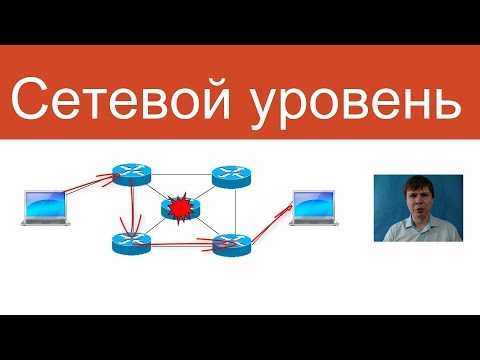
Сетевой уровень | Курс "Компьютерные сети"
Introduction to Network Layer in Telecommunications
Overview of the Course
- The course is presented by Andrey Sazykhin, focusing on networks and telecommunications systems.
- This lecture specifically addresses the network layer, continuing from previous discussions on physical and data link layers.
Importance of the Network Layer
- The network layer is essential for constructing large composite networks from various individual networks that utilize different technologies (e.g., Ethernet, Wi-Fi, cellular networks).
- Vinton Cerf and Robert Kahn proposed the concept of a separate network layer in 1974, which earned them the Turing Award—akin to a Nobel Prize in computer science.
Challenges with Data Transmission at the Data Link Layer
Limitations of Existing Technologies
- Despite existing capabilities for data transmission via various methods (wired or wireless), there are significant challenges when aiming for global connectivity.
- Two primary issues arise:
- The diversity of data link technologies complicates integration.
- Scalability limitations hinder local technology effectiveness for global applications.
Differences Among Data Link Technologies
Service Levels and Addressing
- Different data link technologies offer varying service levels; for instance:
- Internet protocols lack delivery guarantees.
- Wi-Fi ensures delivery through acknowledgment mechanisms.
- Addressing schemes also differ:
- Ethernet uses MAC addresses while cellular networks use IMEI addresses.
Broadcast Capabilities and Frame Sizes
- Some technologies support broadcast features while others do not.
- Maximum frame sizes vary significantly across technologies (e.g., Ethernet has a maximum frame size of 1500 bytes).
Solutions Provided by the Network Layer
Address Coordination and Fragmentation
- To reconcile differences among networks, devices can manage multiple service types; they may acknowledge frames differently based on underlying technology.
- Global addressing schemes are introduced to standardize device identification across diverse technologies. Each device maintains both global and local addresses.
Handling Broadcast and Frame Size Issues
- Devices can facilitate broadcasting even if some underlying technologies do not support it directly by sending broadcast frames to all devices individually.
Fragmentation and Network Technologies
Understanding Fragmentation in Networking
- Data is fragmented for transmission over networks, with reassembly occurring at the receiving device. The maximum frame size must be sufficient to send data intact.
- Ethernet and Wi-Fi technologies are similar, using MAC addresses and a common LLC layer format, allowing seamless integration between wired and wireless connections.
Limitations of Ethernet in Global Networks
- Ethernet's scalability issues arise from its reliance on switch tables that store MAC addresses; this becomes impractical for billions of devices in global networks.
- If a switch cannot determine where to send a frame, it broadcasts to all ports, which is inefficient and can lead to network congestion.
Challenges with Broadcast Traffic
- Broadcasting packets across the internet without knowledge of their destination leads to network clutter and potential denial-of-service scenarios.
- Ethernet requires single connections between switches to avoid broadcast storms; however, this limits redundancy in larger networks.
Protocol Improvements for Local Networks
- Spanning Tree Protocol (STP) helps manage redundant paths by disabling one connection while maintaining others active.
- In local networks with short distances between switches, STP effectively prevents loops but struggles with longer distances typical in global networking.
Role of the Network Layer
- The network layer enhances scalability by aggregating IP addresses into blocks or networks rather than managing individual addresses like Ethernet does.
- It discards packets without known delivery routes, preventing unnecessary traffic from clogging the network.
Routing and Network Management
Importance of Multiple Active Paths
- Having multiple active paths ensures reliability; if one path fails, others remain available for data transmission.
Key Functions of the Network Layer
- The network layer's primary tasks include interconnecting diverse networks (internet working), routing data through various paths, and ensuring quality service—though only the first two will be covered in detail here.
Introduction to Routers
- Routers serve as critical devices that connect different networks. Each router interface has an address unlike switches which do not have unique identifiers.
Understanding Routing Mechanisms
Network Topology and Routing Challenges
Understanding Network Changes
- The structure of a network can change over time, with new routers being added and existing ones failing. This necessitates consideration of changes in network topology.
- It is also important to account for variations in channel load to avoid overloading a single communication channel while leaving others underutilized.
Forwarding and Routing Concepts
- In English literature, the term "forwarding" refers to the process of finding a route for each packet that arrives at a router, which already knows the network topology and channel loads.
- For this course, both forwarding and routing will be treated under the umbrella term "routing," focusing on how data can be delivered across the network.
Dynamic Routing Example
- A composite network example includes five routers and two computers (sender and receiver). Each time data is sent, routing decisions are made anew for every packet.
- This dynamic approach allows different paths for different packets; if one router fails, alternative routes can still be found without manual reconfiguration.
Resilience Against Failures
- If routing is done independently for each packet, it provides resilience against failures at the network level.
- If a predetermined route fails due to a router outage, manual reconfiguration would be necessary or data delivery could cease entirely.
Key Protocols in Networking
- The main protocol discussed is IP (Internet Protocol), used for data transmission. Other important protocols include ICMP (Internet Control Message Protocol), ARP (Address Resolution Protocol), and DHCP (Dynamic Host Configuration Protocol).