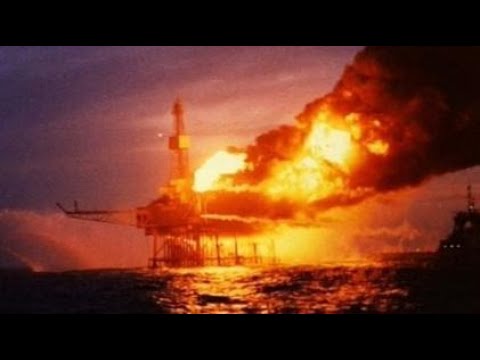
Seconds From Disaster: Explosion of Piper Alpha oil platform - Nat-Geo Full Documentary
Piper Alpha Disaster: A Sequence of Events
Overview of Piper Alpha
- Piper Alpha is one of the most productive oil platforms in the North Sea, supporting over 200 workers and operating continuously.
- The platform is located 176 km from Aberdeen, designed to withstand extreme weather conditions, including winds up to 185 km/h and waves as high as 28.5 m.
Daily Operations and Safety Protocols
- On a calm day, there are 226 men on board; maintenance work is crucial for the complex machinery that keeps operations running smoothly.
- Lead production operator Bernard Curtis issues permits for daily maintenance work, emphasizing strict safety protocols that require permits for any work on the platform.
Routine Maintenance and Initial Problems
- At noon, two maintenance workers begin removing a safety valve; this routine task is expected to be completed by the end of their shift at 6:00 p.m.
- Control room operator Jeff Bollins starts his final shift before leaving the rig; he notes everything seems normal with no unusual reports.
Escalation of Issues
- By 9:45 p.m., an urgent alarm signals a problem with the condensate pump; while it’s not uncommon for pumps to trip, it requires attention.
- The crew feels pressure as they attempt to restart the pump; if unsuccessful, it could lead to a complete loss of electrical power on the platform.
Critical Alarms and Gas Leaks
- As problems escalate, multiple alarms indicate small gas leaks followed by high gas alarms—an alarming situation that indicates serious danger.
Piper Alpha Disaster: A Night of Terror
The Explosion and Immediate Aftermath
- On July 6, 1988, at 1 p.m., an explosion occurs on the Piper Alpha oil rig in the North Sea, affecting 226 workers onboard.
- Operator Jeff Bollins experiences the explosion firsthand, which throws him from his desk; he quickly activates emergency shutdown controls as chaos ensues.
- A home movie captures the initial explosions; Jeff and 20 colleagues find themselves trapped amidst flames and smoke, needing to escape downwards.
- Some workers manage to climb down a rope to safety just above the water's surface and jump into the sea; they are rescued within five minutes by nearby boats.
- At 10:20 p.m., a second massive explosion engulfs a large section of the rig in flames while about 100 men gather in a canteen for what they believe is safety.
Trapped Workers' Desperation
- The helicopter landing deck becomes inaccessible due to smoke and flames, rendering rescue efforts impossible as panic begins to set in among trapped workers.
- Rigger Jim McDonald decides to attempt an escape despite others believing help will arrive; he explores potential routes but becomes disoriented in thick smoke.
- Jim's experience leads him to search for an escape route through the laundry area but finds himself lost instead of safe.
- Dave Lambert and colleagues flee from the canteen but become trapped inside a metal hut surrounded by fire with no exit available.
- Realizing he's one deck higher than intended, Jim makes another attempt at finding an escape route through laundry.
The Escape Attempts
- Jim finally locates the laundry room and escapes onto a blazing deck before jumping into the cold North Sea below.
- He clings to a leg of the rig until rescued by fast rescue craft; overwhelmed with emotion, he expresses relief upon being saved.
Rescue Operations Amidst Chaos
- Ian Letham’s crew manages to rescue six survivors from the water while battling debris entangled around their boat amid ongoing explosions overhead.
- Electrician Bob Balentine chooses not to follow his friends down one escape route, opting instead for another path that ultimately saves his life.
- As Bob climbs down precariously on another side of the platform, Ian Letham struggles against intense heat while trying to free his boat from debris.
Catastrophic Consequences
- At 10:50 p.m., yet another colossal explosion occurs on Piper Alpha, scattering debris over vast distances while engulfing Ian's boat in flames.
Piper Alpha Disaster: A Catastrophic Chain of Events
The Initial Ordeal
- As the platform begins to collapse, Eden floats down while Wagner pulls him in for human company amidst chaos. Bob and Ian cling to the structure as it shakes violently from explosions.
- The heat intensifies, causing severe burns; Bob and Ian leap into the sea, swimming to a nearby ship where they are rescued but suffer from exhaustion.
Escaping the Inferno
- Dave Lambert is trapped in a steel hut when a colossal explosion at 10:50 p.m. creates an escape route. He races out onto the blazing platform but is blown over the edge by another explosion.
- Despite surviving the fall into the sea, Dave struggles to reach rescuers due to exhaustion but is ultimately spotted and saved just as Piper Alpha collapses.
The Collapse of Piper Alpha
- At 11:20 p.m., another violent explosion causes cranes and drilling rigs to collapse, leading to a tilt of the entire platform towards the east.
- The main living area slips below waves, marking an end to rescue efforts as by 12:45 a.m., only a small section remains above water.
Casualties and Aftermath
- Of 226 men on board Piper Alpha, 167 perish including two rescue workers. This disaster shocks not only those involved but also has global implications for offshore oil safety.
- The incident unfolds within just 1 hour and 30 minutes; investigations begin immediately to uncover what led to this unprecedented catastrophe.
Investigative Insights
- A major inquiry led by Lord Cullen involves 89 experts analyzing every second of events despite limited evidence due to extensive destruction.
- Investigators rely heavily on eyewitness accounts and photographs since much of the wreckage lies scattered across the seabed.
Key Evidence Uncovered
- Control room operator Mr. Bolan reports gas alarms before explosions; investigators focus on module C where these alarms originated.
- Captain Michael CLE witnesses a blue flash from module C, indicating that this area may be central to understanding how disaster began.
Identifying Fuel Sources
- Investigators explore potential fuel sources for explosions—natural gas, liquefied petroleum gas (LPG), or crude oil—all highly flammable products produced by Piper Alpha.
- Expert Professor Dugall Dale notes that crude oil's burning characteristics do not match initial explosion descriptions; thus natural gas or condensate remain suspects.
Tracing Back Explosions
- Eyewitness testimony leads investigators back to condensate as likely fuel source for initial blue flash seen under module C; however, questions arise about how such a small leak escalated into widespread destruction.
Investigation of Gas Alarms and Condensate Release
Discovery of the Leak Source
- Investigators conclude that the gas alarms' pattern can only be explained by a condensate release at the eastern end of Module C, where two safety valves are located. These valves are designed to withstand pressures exceeding normal operating levels.
- A critical discovery reveals that one safety valve had been removed for routine maintenance, raising questions about whether an open pipe could be the leak's source.
Testing Safety Procedures
- Normal procedures involve inserting a flat metal disc to seal any holes left by removed valves, preventing leaks. Investigators find that if this disc is not tightened properly, it could lead to leaks. They conduct tests on an identical disc to confirm this theory.
- The test results indicate that if bolts securing the sealing disc are only hand-tightened, gaps may form, allowing condensate to escape—this becomes a pivotal breakthrough in understanding the leak's origin.
Tracing the Condensate Path
- Despite believing they found the leak's starting point, investigators face a challenge: there should have been no condensate in the pipe undergoing maintenance. They trace its path down to another deck connected to a pump that was out of service for maintenance.
- Evidence from night shift workers indicates another operational pump broke down shortly before the disaster; it is suggested that there was intent to swap pumps while introducing condensate into one without a safety valve just before the accident occurred.
Sequence Leading Up to Explosion
- Just prior to disaster striking, workers filled a new pump with condensate; however, due to improper sealing of the metal disc, this led to gas alarms being triggered as leaks began occurring within Module C. The first explosion occurs 1 hour and 30 minutes before total destruction of Piper Alpha.
- The initial explosion is minor but leads investigators to question how it caused significant damage despite firewalls designed for protection against flames lasting up to six hours; photographic evidence shows rapid spread through Module B following this event.
Fireball and Subsequent Explosions
- Computer simulations reveal firewalls can resist fires but fail against explosions; even minor blasts can compromise their integrity leading panels around Module B to act like missiles during an explosion which ruptures additional pipes fueling further fires.
- Although initial explosions create large fireballs visible in photographs taken post-event, these do not appear lethal enough alone; subsequent massive explosions occur 19 minutes later resulting in catastrophic failure of Piper Alpha platform structures due primarily due oil fires igniting below Module B where crude oil tanks were stored heavily contributing fuel sources for ongoing flames.
Investigation into Oil Fires
Piper Alpha Disaster: A Catastrophic Sequence of Events
The Initial Explosion and Its Consequences
- The pressure in the pipeline reached 120 atmospheres, significantly higher than a car tire, leading to catastrophic failure when the pipe burst due to weakened metal from intense heat.
- A fireball measuring 150 meters in diameter engulfed the platform as gas poured out at half a ton per second, equivalent to nearly all domestic gas consumption in the UK. This continued for an hour.
- The initial explosion compromised structural integrity, melting the center of the platform and leaving investigators with no hope of stopping further disasters.
Escalation of Explosions
- Investigators noted that another pipeline containing 1,120 tons of pressurized gas was at risk; it was only a matter of time before it failed as well. One hour and ten minutes before total destruction, they recognized this imminent danger.
- An explosion occurred when one of the remaining pipelines burst, killing many workers on board while Bob Valentine survived by being on the opposite side of the rig. Ian Leth's rescue boat was destroyed in another explosion, resulting in significant loss of life.
Final Pipeline Failure and Aftermath
- As investigators gathered electronic data from connected oil rigs, they discovered that gas pressure began to fall rapidly in one remaining pipeline just ten minutes before its eventual failure. This marked a critical point leading to disaster completion.
- The living quarters collapsed into the North Sea after an hour following multiple explosions, claiming more lives and leaving Piper Alpha as burnt wreckage with no survivors left aboard.
Investigation Insights
- Investigators pieced together events leading up to the disaster starting at 9:45 PM when workers attempted to start a pump without a critical safety valve present—an unsafe condition overlooked due to procedural failures related to permits-to-work (PTWs).
- Analysis revealed that two separate permits were issued for maintenance work—one for the pump and another for its safety valve—but these documents were not stored together as required by protocol, contributing directly to confusion during operations.
Recovery Efforts and Findings
- Three months post-disaster, salvage teams recovered blocks from living quarters along with 81 bodies; crucial paperwork was found intact despite being submerged underwater for months after extensive fires had ravaged Piper Alpha.
- Among recovered documents was Permit Number 23434 for maintenance on Valve PSV 504 dated July 6th, which confirmed suspicions about procedural errors leading up to the catastrophe involving separated storage locations for permits related to different parts of equipment on Piper Alpha.
Systemic Failures Leading to Catastrophe
- Investigators concluded that clerical mistakes led to permits being stored separately rather than together; this oversight meant operators were unaware that essential safety measures had been bypassed during maintenance checks on pumps amidst ongoing operations on Piper Alpha.
Piper Alpha Disaster: Key Insights and Lessons
The Role of Safety Measures in the Piper Alpha Tragedy
- The effectiveness of the permit system was crucial; had it been properly implemented, the night shift would have been aware that a safety valve was missing.
- If critical components like the flat metal disc had been fully tightened, leaks could have been prevented, averting the disaster.
- The Cullen inquiry highlighted significant flaws in North Sea oil rig operations, particularly criticizing the permit to work system as a major factor in the tragedy.
- Despite compensation paid by Accidental Petroleum to victims' families, no criminal charges were filed due to lack of evidence.
Survivor Experiences and Psychological Impact
- Survivors like Dave Lambert expressed feelings of guilt over their survival, indicating profound psychological effects post-disaster.
- For survivors such as Foran Letham, life perspectives shifted dramatically; they now prioritize important matters over trivial concerns.
Recommendations from the Cullen Report
- The Cullen report called for extensive changes across British offshore operations to prevent future disasters.