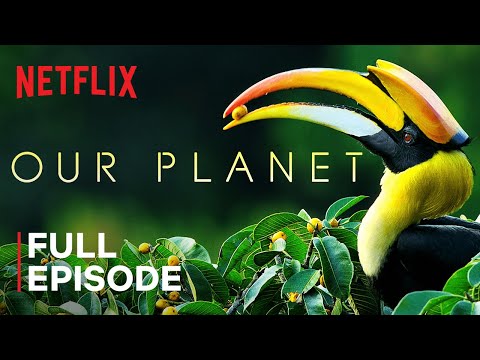
Our Planet | Forests | FULL EPISODE | Netflix
Introduction
The introduction sets the stage for the series and highlights the importance of preserving natural wonders.
- Just 50 years ago, humans ventured to the moon.
- The human population has more than doubled since then.
- This series celebrates natural wonders that remain and reveals what we must preserve to ensure people and nature thrive.
Forests
This section focuses on forests, their importance, and how they are key to our climate.
- Over half of all the world's trees stand in forests.
- Forests are places of mystery and darkness for many people.
- They are home to countless unique species and are key to our climate.
- Forests have an astonishing ability to recover from destruction.
Siberian Tigers
This section focuses on Siberian tigers, their habitat, and their struggle for survival.
- The boreal forest is the home of an animal so rare it's almost mythical - a Siberian tiger.
- There are less than 600 of them left in the wild.
- Poaching has taken them to the brink of extinction, but their numbers have slowly increased since the 1980s.
- These rare glimpses reveal that their future still depends on having vast areas of forest in which to hunt.
Boreal Forest
This section provides an overview of the boreal forest, its size, carbon storage capacity, and its role in fighting climate change.
- The boreal forest extends from Russia across Europe to North America.
- It contains 750 billion trees and stores over 40 percent of the world's carbon.
- During winter growth is at a standstill due to short days and low temperatures.
- The forest can support very few animals compared to the rainforests of the tropics.
Salmon Migration
This section focuses on salmon migration, its importance, and how it represents the greatest transfer of nutrients from one habitat to another anywhere on Earth.
- In western Alaska, salmon swim up rivers to reach their ancestral spawning grounds.
- Their journey from the sea into the forest represents the greatest transfer of nutrients from one habitat to another anywhere on Earth.
- The fish are crucial seasonal food for all predators that live in this forest.
- Bald eagles nest close to the river and depend on salmon as a food source.
Female Salmon Compete for a Place in the River
This section focuses on female salmon competing for a place in the river to spawn.
Competition for Food and Space
- Four-year-old female salmon compete with others for food and space.
- Initially, she can only get scraps left by others.
- She has to fight to get even these scraps.
Survival of the Fittest
- The young female salmon must look elsewhere as competition becomes more intense.
- The places where the salmon spawn are known to all predators.
- Females have an advantage because they are larger than males, and size matters.
Surviving Winter in the Boreal Forest
This section focuses on how animals survive winter in the boreal forest.
Meeting the Challenge of Cold Weather
- Young and old animals have to meet the challenge of intense cold weather.
- If they can survive, they will gain a place in one of the greatest forests on Earth.
Life in Redwood Forest
This section focuses on life in redwood forests.
Conditions for Growth
- Only five percent of great redwood trees remain today.
- Warm, humid air from Pacific Ocean allows trees to grow year-round.
- The moist forest floor is a richly populated underworld.
Mating Season for Rough-Skinned Newts
- Male rough-skinned newts return to the pool where they hatched as tadpoles.
- Competition is strong, and males have to trek across hundreds of meters of old-growth forest.
- Once paired, the male hangs on while the female discharges her eggs.
Forest Fires
- By the end of summer, the sun bakes the forest so intensely that it becomes dry as tinder.
- Strong winds drive flames and temperatures rise to 700 degrees Celsius.
- The aftermath seems like total destruction.
Resilience of Redwood Trees
- The forest is far from dead; within months, flowers and tree seedlings will rise from the soil.
- Older redwoods have survived due to their thick, fire-resistant bark which is essential for continued health of these forests.
The Interdependence of Trees and Animals
This section explores the interdependence between trees and animals in India's Western Ghats.
Lion-tailed macaques
- These monkeys feed on the fruits of many kinds of tree, distributing seeds with their droppings.
- If plants are to distribute their seeds across great distances, they need another kind of transport.
Great hornbills
- Hornbills have wings that enable them to travel long distances in search of food.
- They feed on the fruit of 40 or so different kinds of trees, transporting the indigestible seeds they contain all over the Western Ghats.
- It's to the trees' advantage to attract the hornbill's attention by producing fruit that is not very nutritious but tastes nice.
- A single fig tree in fruit attracts great numbers of hornbills. Competition between them is intense.
Hornbill mating rituals
- Males engage in aerial jousting, which has never been filmed before and its purpose is not really understood.
- The winner demonstrates his strength and skill to visiting females.
- Once established, the bond between male and female will last a lifetime.
The Miombo Forest: Elephants vs Caterpillars
This section explores how elephants and caterpillars compete for resources in Africa's largest forest, the Miombo.
Elephants
- Elephants prefer grass if they can get it because it's very nutritious. In its absence, they browse on leaves and branches.
Mopane worms
- These caterpillars hatch simultaneously in huge numbers just as new leaves are put out by the forest.
- They feed so voraciously that in just six weeks they increase their size 40 times.
- By the time they're fully developed, this million-strong army competes with elephants for resources.
The Miombo Forest
The Miombo forest is a resilient ecosystem that bounces back after destruction. Elephants are attracted to the fresh growth of leaves and can eat up to 200 kilos of vegetation in a day. This destruction has its benefits as it shapes the forest in a way that helps one of Africa's most endangered animals, hunting dogs.
Hunting Dogs
- Hunting dogs prefer open forests as their habitat.
- Browsing elephants open up the forest, which attracts the animals on which the dogs prey.
- The Miombo forest is perfect hunting country for the dogs and an excellent place to bring up pups.
- Playing is important for young hunting dogs as they establish social bonds needed when they start to hunt together as a team.
Madagascar's Forest
Madagascar's unique baobab trees dominate this isolated island's forest, home to at least 40 different kinds of lemurs, all endangered.
Lemurs
- Lemurs are crucial to the survival of some species of trees in Madagascar's forest.
- There are at least 40 different kinds of lemurs unique to Madagascar and all endangered.
Fossas
- Fossas are Madagascar's top predator and grow up to one and a half meters long but are seldom seen in the wild.
- Each mature female fossa takes up residence in a special mating tree during breeding season while males leave their scent below it just to show that they called.
Nightlife in Madagascar
In this section, we learn about the nocturnal activities of various animals in Madagascar.
Leaf Bugs and Lemurs
- Immature leaf bugs are found only in Madagascar.
- They feed on tree sap and excrete a sweet liquid known as honeydew.
- Honeydew provides food for a particular species of small lemur called the gray mouse lemur.
Fossas and Mating Trees
- Male fossas await their turn to mate with a female fossa who has eaten as much as she can.
- A third of Madagascar's fossas have disappeared in the last 20 years due to deforestation by humans.
The Resilience of Forests
This section discusses the resilience of forests and how they can recover from disasters.
Chernobyl's Recovery
- Despite being declared uninhabitable for 20,000 years after the nuclear disaster, Chernobyl has seen a remarkable recovery.
- Within only a decade, vegetation began to germinate in the ruined city.
- Animals such as roe deer, Przewalski's horses, and wolves have reappeared within only 20 years.
Destruction of Forests
- Over half of the world's forests have been destroyed.
- This destruction not only leads to the loss of animals but also changes the climate of the entire globe.
The transcript is relatively short, so there are only two sections.
The Resilience of Forests
In this section, the speaker discusses how radiation from the Chernobyl disaster has created space for wildlife to return and how forests have shown extraordinary resilience in recolonizing the area.
Forests' Extraordinary Resilience
- Studies have shown that there are seven times more wolves inside the exclusion zone than outside it.
- The dramatic recolonization of Chernobyl in only 30 years is proof of forests' extraordinary resilience.
- If we choose to give forests time and space, they could reclothe the earth with much of the rich and varied communities of animals and plants which we have recently robbed it.
- A future with more forests is key to the resilience of our planet.
Restoring Our Forests
- Please visit ourplanet.com to discover what we need to do now to restore our forests.
Singing Together
- I can hear the whole world singing together.
- 'Cause it's not too late if we change our ways and connect the dots to our problems.
- I can hear the whole world say we're in this together.