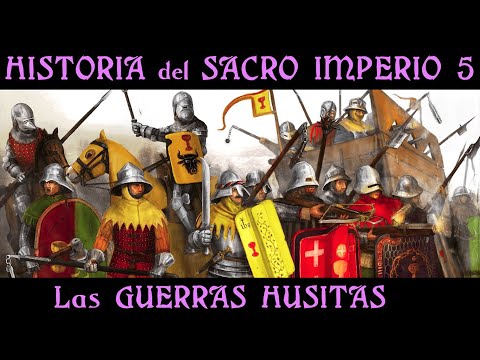
Las GUERRAS HUSITAS, la LIGA de HANSA, y los Luxemburgo 🏰 Documental Historia del SACRO IMPERIO 5
The Holy Roman Empire: The Luxemburg, the Hansa League, and the Hussite Wars
The Great Interregnum and Rise of the Habsburgs (1268-1308)
- The story unfolds between 1268 and 1437, focusing on the internal conflicts of the Holy Roman Empire known as the Great Interregnum following Federico II's death.
- Rudolph I of Habsburg was crowned in 1273, marking the beginning of Habsburg influence after gaining lands through alliances with Federico II.
- Despite his election as king, Rudolph I resigned from imperial control over much of Italy; King Otakar II of Bohemia protested this decision.
- Conflict ensued leading to the Battle of Marchfeld in 1278 where Rudolph defeated Otakar II, solidifying Habsburg power in Austria.
- After Rudolph's death in 1291, Count Adolfo de Nassau was briefly crowned but was ultimately replaced by Alberto I of Habsburg due to political instability.
Swiss Confederation and Flanders (1291-1302)
- During Alberto I's reign, three Swiss cantons formed a defensive league under the Federal Pact of 1291 for mutual protection and trade.
- Flanders engaged in conflict against France at the Battle of Kortrijk in 1302, which would later impact Habsburg history significantly.
Transition to Luxembourg Rule (1308-1347)
- Following Alberto I’s assassination in 1308, Enrique VII from Luxembourg ascended to power with papal support amid ongoing struggles for authority within Italy.
- Enrique VII faced challenges from free cities like Florence while Italian poet Dante Alighieri referenced these events in his work "Divine Comedy."
- A power struggle ensued between Frederick IV and Luis IV de Wittelsbach; Luis emerged victorious at Mühldorf but faced similar issues as previous rulers regarding papal relations.
Charles IV: Stability Amidst Turmoil (1346-1378)
- In response to ongoing failures under Luis IV’s rule, Charles IV was elected king in 1346 amidst fears of civil war following Luis' death during a bear hunt.
- Charles IV’s reign marked a significant period for stability despite Europe facing crises such as the Hundred Years' War and plagues affecting Germany.
Charles IV: The King of Bohemia and Holy Roman Emperor
Expansion and Development of Prague
- Charles IV, as the king of Bohemia, focused on enhancing his capital, Prague, which would later become part of the Czech Republic. He constructed Gothic-style cathedrals like St. Vitus and Karlštejn Castle located 30 km from Prague.
- In 1348, he established the University of Prague, marking it as the oldest university in Central Europe.
Architectural Contributions and Religious Context
- Charles IV had a fondness for Nuremberg where he built the Church of Our Lady in Gothic style over a synagogue due to anti-Semitic sentiments during the Black Plague.
- His reign saw significant persecution against Jews leading many to flee to Poland; this reflects broader societal tensions during his time.
Political Maneuvering and Imperial Constitution
- In 1356, Charles IV authored the Golden Bull, an important imperial constitution that outlined election procedures for kings within the Holy Roman Empire.
- The Golden Bull established seven prince electors (three ecclesiastical and four lay), setting a precedent for future elections by requiring only four votes for approval.
Family Dynamics and Political Alliances
- Charles IV was married four times; his notable wives were Anna of Swidnica (mother of heir Wenceslaus) and Elizabeth of Pomerania (mother of Sigismund).
- During his reign, free imperial cities formed leagues like the Hanseatic League (founded in 1358), aimed at protecting their rights against powerful houses such as Luxembourg and Habsburg.
Conflicts with City Leagues
- The League of Cities in Swabia re-emerged around 1376 due to tensions with Charles IV's desire for his son Wenceslaus to be elected king after him.
- In 1365, Charles IV became King of Burgundy, consolidating power across various kingdoms within the Holy Roman Empire.
Territorial Changes and Succession Issues
- The Duchy of Austria was elevated to Archduke status through a falsified document by Rudolf IV; this situation persisted until discovered by Charles IV.
- In 1373, Charles purchased Brandenburg from Margrave Otto VII for 500,000 florins for his son Wenceslaus while also granting him electoral powers.
Final Years and Legacy
- Charles IV died in Prague in 1378; shortly before his death, Pope Gregory XI returned papal residence to Rome amidst rising religious conflicts known as the Great Schism.
The Role of Christ and the Pope in Church Leadership
Schisms and Corruption in the Church
- The speaker discusses a viewpoint that Christ should be the head of the Church rather than the pope, attributing many schisms to corruption within religious institutions and their wealth accumulation.
- Following this perspective, Wenceslaus condemned these ideas, leading to a group of Germans from the University of Prague founding a new university in Leipzig in 1409.
- The electors perceived King Wenceslaus as incompetent, prompting plans for his overthrow.
The Crusade of Nicopolis and Its Aftermath
- The narrative shifts to the disastrous Crusade of Nicopolis led by Sigismund against Turkish forces; despite support from various nations, it ended poorly.
- Sigismund's survival was described as miraculous amidst this failure.
Political Maneuvering in Germany
- In 1396, Wenceslaus returned to Germany to appoint Sigismund as regent before heading to France regarding papal issues. This created an opportunity for four princes electors to rebel during the Diet of Oberlahnstein.
- Robert III was elected as Roman king at Lahneck Fortress in 1400 but faced challenges on his journey to Rome for coronation due to conflicts with Milan.
Sigismund's Ascendancy
- In 1410, Sigismund became king of Romans while also holding titles in Hungary and Croatia; he ceded electoral power over Brandenburg to Frederick I of Nuremberg.
- Sigismund viewed Hungary as his home base and established a significant royal presence there.
Establishment of Orders and Council Meetings
- He married Barbara de Celje and founded the Order of the Dragon in 1408 aimed at defending Christianity against Muslim threats; notable members included Vlad II Dracul.
- The Council of Constance convened under Sigismund’s presidency with aims including resolving the Western Schism by appointing Martin V as pope.
Hussite Wars: Causes and Consequences
Jan Hus and His Impact
- Jan Hus emerged as a vocal critic against church abuses; he was invited to discuss his views at Constance but was ultimately condemned alongside Jerome of Prague.
Bohemian Response
- Hus's execution incited outrage among Bohemians, particularly after Wenceslaus's death during a bear hunt left Sigismund next in line for the throne.
- Bohemians blamed Sigismund for Hus’s death, leading them into conflict known as the Hussite Wars.
Outbreak of Conflict
- The first defenestration marked a pivotal moment where radical followers threw council members out windows, highlighting Bohemian resistance tactics.
Division Among Hussites
- Hussites split into two factions: Utraquistas (moderates) and Taboritas (extremists), with leaders like Jan Zizka emerging who innovated military strategies using War Wagons.
Conclusion of Hostilities
- Internal strife between Utraquistas and Taboritas began around 1423 after Zizka’s death. Eventually, moderates recognized Sigismund’s kingship through agreements like Compactata of Prague.