UD2 Componentes fundamentales de los sistemas microinformáticos 20
Overview of Graphics Card Manufacturers
Major Graphics Card Manufacturers
- Discussion on leading graphics card manufacturers, including NVIDIA and Intel's integrated graphics.
- Introduction to NVIDIA's three families of graphics cards: GeForce, Titan, and Quadro. GeForce is primarily aimed at gaming but can also serve workstations.
GeForce Series
- The Titan series features high-end models for AI applications and professional licensing, though they are expensive compared to the more commonly purchased GeForce or Quadro cards.
- The top-tier GeForce model currently is the RTX 2080 Ti priced around €1259, showcasing advanced cooling technology.
Quadro Series
- Quadro cards are designed for workstation tasks such as graphic design, 3D modeling, and video editing while still being capable of gaming performance.
Interconnecting Graphics Cards
NUvelin Technology
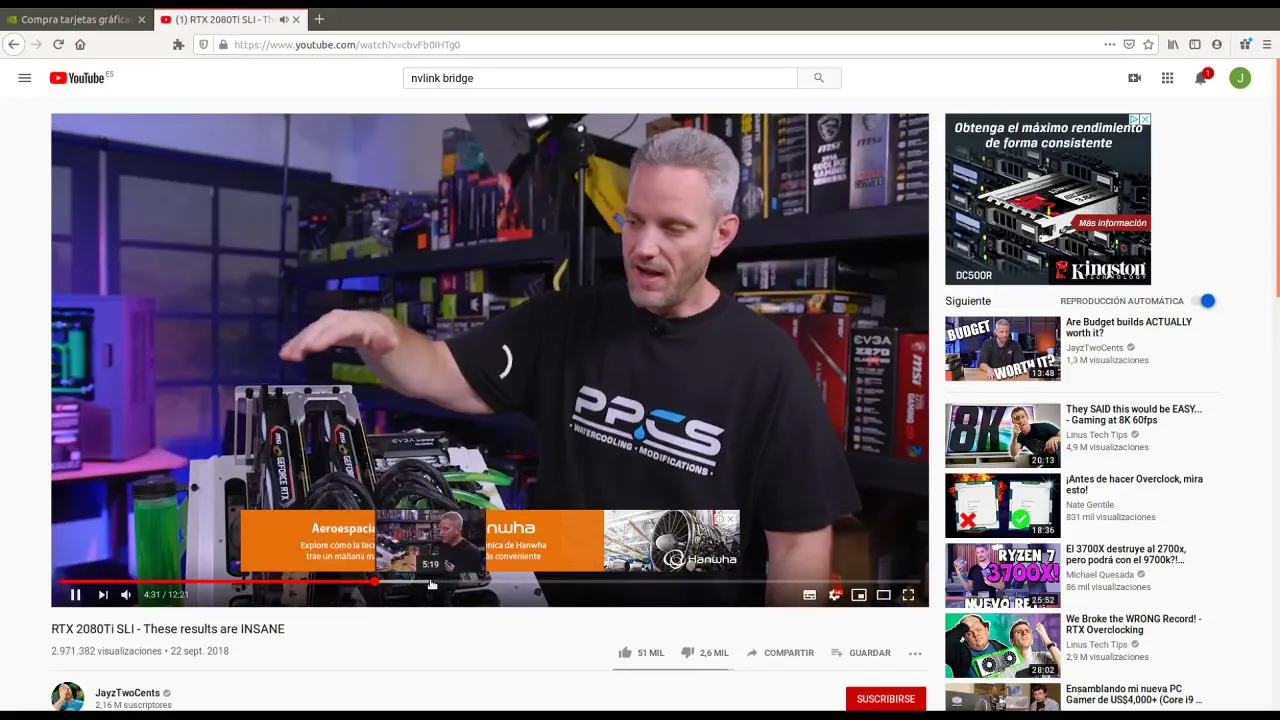
- Introduction of NUvelin hardware that allows two graphics cards to be interconnected on a single motherboard for enhanced performance.
- Explanation of how NUvelin connects two RTX 2080 Ti cards using specific slots on the motherboard.
Performance Insights
- Clarification that while NUvelin does not double performance, it provides a percentage increase in power by utilizing both GPUs effectively.
AMD Radeon Overview
Radeon Product Lines
- Discussion about AMD’s Radeon line with distinctions between consumer-grade Radeon and professional-grade Radeon Pro products.
Technical Specifications
- Mention of AMD's internal TNGPU manufacturing within CPUs and an overview of various Radeon models like RX 5700 XT with specifications such as base frequency and memory capacity.
Comparative Technologies
Ray Tracing Technology
- Brief mention of ray tracing technology as part of ongoing advancements in GPU capabilities across different brands.
Workstation Graphics Overview
Introduction to Workstation Graphics
- The discussion begins with an introduction to workstation graphics, specifically focusing on applications in the media and entertainment sector.
Video Editing Software
- Mentioned software includes DaVinci Resolve and Fusion, which are used for video editing. Recommendations for graphics cards suitable for these applications are also provided.
Intel's GPU Development
- Intel is noted for not having a dedicated graphics card yet but plans to release one in 2020. Current integrated GPUs have evolved from Intel HD Graphics technology.
Integrated vs. Dedicated GPUs
- Integrated GPUs consume around 8GB of RAM but do not match the performance of dedicated graphics cards, especially in gaming contexts where CPU generations show significant improvements.
Evolution of Intel's Graphics Technology
- The latest generation of Intel Core i7 processors features improved internal GPU capabilities, enhancing overall graphical performance.
Graphics Standards and Libraries
OpenGL and DirectX Explained
- OpenGL is described as an open standard for creating 3D games, while DirectX is a Microsoft standard. Many games require these libraries for optimal performance.
Display Resolutions and Features
- Discussion includes various display resolutions such as 4K and the characteristics of graphic engines relevant to modern applications.
Major Graphics Card Manufacturers
NVIDIA's Product Lines
- NVIDIA’s product lines include GeForce (for gaming), Titan (for AI applications), and Quadro (for professional workstations). Each line serves different market needs based on performance and pricing.
GeForce Series Insights
- The GeForce series offers good value for gaming but can also be utilized in workstation settings due to their powerful specifications.
Titan Series Applications
- Titans are high-end models designed with cutting-edge technology primarily aimed at professional use cases like AI development, though they come at a premium price point.
Quadro Series Suitability
- Quadro cards are tailored for workstation tasks such as graphic design, 3D modeling, and video editing while still being capable of handling gaming demands effectively.
Interconnecting Multiple GPUs
NVLink Technology Overview
- NVLink allows two graphics cards to be interconnected on a single motherboard, enhancing computational power without doubling it directly; it provides incremental performance boosts instead.
Installation Considerations
- Proper installation requires additional power connections due to the increased demand from dual GPU setups.
Overview of AMD and Graphics Cards
Introduction to Graphics Models
- Discussion on three models, including the NUvelin system for interconnection. Emphasis on the importance of understanding different graphics card models.
- Introduction to AMD's Radeon series, distinguishing between consumer-grade Radeon cards and Radeon Pro designed for professional use.
AMD Radeon Series
- Overview of various Radeon models such as the Radeon 7 and RX 5700, highlighting their specifications and performance capabilities.
- Detailed specifications of the Radeon RX 5700 XT, including base frequency, boost frequency, memory speed (14 Gbps), and support for 4K encoding.
NVIDIA GeForce Comparison
- Transition to NVIDIA's GeForce series with a focus on the RTX 2080 Ti. Discussion on ray tracing technology that enhances graphical rendering.
- Importance of internal GPU design over mere frequency metrics when comparing performance between AMD and NVIDIA cards.
Workstation Graphics Cards
- Examination of workstation-oriented graphics cards from AMD, particularly in sectors like media production where specific software recommendations are provided.
- Mention of popular video editing software (e.g., Adobe Premiere, DaVinci Resolve) that benefits from recommended graphics cards tailored for professional use.
Intel's Position in the Graphics Market
Current Status of Intel GPUs
- Intel currently lacks dedicated graphics cards but plans to release its own GPU by next year (2020).
- Overview of Intel’s integrated graphics solutions within CPUs and their evolution over time. Discussion about shared memory usage in gaming contexts.
Conclusion on Integrated vs Dedicated GPUs
Overview of Modern Graphics Technology
Evolution of CPU and GPU Technologies
- Discussion on the advancements in video production technologies, particularly in manufacturing and architecture, emphasizing the importance of workstations for AI applications.
- Mention of the evolution across CPU generations, highlighting the exclusivity and high pricing of 10th generation CPUs, with a focus on 4K resolution gaming capabilities.
- Reference to Intel's website for graphics design tools suitable for video editing and 3D modeling, indicating that certain GPUs are versatile enough for both professional use and gaming.
Graphics Card Performance
- Overview of high-end graphics cards from Intel’s 10th generation Core i7 series, noting that GeForce cards are generally better suited for performance-intensive tasks.
- Identification of top-tier graphics cards like the RTX 2080 Ti priced at €1259, discussing their execution units and core specifications relevant to 3D rendering.
Software Libraries and Standards
- Explanation of software libraries such as OpenGL and DirectX used in modern gaming; these standards facilitate compatibility with various graphics hardware.
- Insight into how these libraries support game development using architectures like Turing, which is essential for creating advanced 3D objects.
Multi-GPU Configurations
- Discussion on utilizing multiple GPUs within a single motherboard setup to enhance performance; highlights potential configurations involving two RTX 2080 Ti cards.
- Emphasis on optimizing graphical performance through interconnecting multiple GPUs while maintaining high resolutions (e.g., 4K).
Conclusion on Graphics Technology
- Final remarks about Intel's offerings in relation to multi-GPU setups and their compatibility with modern software standards.
Turn any video into a summary like this
YouTube links, meetings, lectures. With transcripts, search, and chat.